Mostrar mensagens com a etiqueta NIH. Mostrar todas as mensagens

quinta-feira, 19 de fevereiro de 2026

The Human Superorganism: 9 out of 10 cells on or in us are not really “us”


Here’s a great chart from a terrific 2008 manuscript that gives a hint of our complex ecosystem. I think we’ll look back on this time with some nostalgia– much as we did in the pre-antibiotic era or perhaps the pre-bloodletting era. As our tools move from Pasteur to CSI, so does our understanding of the microbiome.

This figure depicts different microbes and other organisms that have been intimately associated with humans as commensals or potential pathogens. The numbers correspond to images of organisms and approximate anatomic locations where these organisms may reside on the human body. 
1. Trichophyton and Epidermophyton are filamentous, parasitic microbes that cause athlete’s foot. 
2. Vaginal microbiota, mostly Lactobacillus species secrete lactic acid and other antimicrobial compounds that prevent pathogen overgrowth. 
3. More than 500 species of bacteria, weighing approximately 3.3 pounds in the average human adult, live inside the gastrointestinal tract. 
4. More than 100 strains of human papillomavirus (HPV) can infect humans, causing a variety of warts from the common wart to plantar and flat warts. 
5. Pediculus humanus capitis, the head louse, may have co-evolved with recent H. sapiens. 
6. Oral Streptococcus species form biofilms that may be 300–500 cells in thickness on the surfaces of unbrushed teeth. 
7. Demodex mites inhabit the follicles of the eyelashes and infest about 20 percent of people under the age of 20. 
8. After initial infection with the varicella-zoster virus (chickenpox), the virus remains dormant in nerve ganglia and may cause disease due to re-activation later in life. 
9. Approximately 1/12 of the human genome consists of DNA from fossil viruses that infected human ancestors millions of years ago. 10. Prevalent bacterial genera on the human skin include Streptococcus, Staphylococcus, and Corynebacterium.

quinta-feira, 20 de fevereiro de 2025

Critics say Trump’s executive orders to reshape the NIH ‘will kill’ Americans


Academics and scientists who work with the National Institutes of Health (NIH) said the Trump administration’s orders have severely disrupted work – delaying projects and casting the future of research funding and jobs into doubt as chaos in the agency reigns.

An array of orders seeks to fundamentally reshape the NIH, the world’s largest public funder of biomedical and behavioral research, in the Trump administration’s image. The agency’s work is the wellspring of scientific advancement in the US, and helped make the country a dominant force in health and science.

“They will have drastic effects on all of us – this is not hyperbole, this is fact,” said Todd Wolfson, the president of the American Association of University Professors and an anthropologist at Rutgers University in New Jersey.

The orders “will kill”, Wolfson said, as advances in the treatment of diseases as diverse as cancer, Alzheimer’s and diabetes are delayed.

“Donald Trump and Elon Musk are taking a sledgehammer to the greatest biomedical infrastructure in the world to extend tax cuts,” Wolfson said.

NIH-funded basic or applied research has also contributed to 386 of the 387 drugs the Food and Drug Administration approved between 2000 and 2019, and more than 100 Nobel prizes have been awarded to scientists based on NIH-funded work. NIH grants often fund basic research conducted at universities and colleges across the country, touching every state and nearly every congressional district.

Since taking office, the Trump administration has issued a bevy of executive orders and administrative actions that seek to fundamentally alter American health and science agencies – from appointing the nation’s foremost vaccine critic to head the Department of Health and Human Services to scrubbing websites of information the administration finds objectionable.

Trump’s executive orders prohibit grant funding containing a long list of words associated with “diversity, equity and inclusion”; attempt to cut scientific research funding by $4bn; fired thousands of employees and stopped recruitment; imposed communications blackouts; and blocked committees from meeting to evaluate new scientific research, effectively freezing funds.

Together, those orders have sown a sense of chaos and fear throughout the agency and academia, even as many are tied up in court battles.

That has left the most severe proposal, a 15% cap on “indirect costs”, hanging like the sword of Damocles over scientific research – forcing institutions to impose sweeping spending freezes and casting the future of whole labs into doubt.

“I have to decide as a professor whether to take new students into my lab, and I don’t know if I can afford them,” said Rutgers University biochemist and professor Annika Barber.

Barber added that she was supposed to spend her Thursday afternoon reviewing grant proposals for the NIH at a legally mandated review committee. The meeting was canceled with less than 24 hours notice as the Trump administration has put a hold on submissions to the Federal Register, a legal requirement for upcoming meetings.

“As of today, there are no NIH study sections going forward, which means we are not funding the grants scored last fall and not funding the grants meant to be scored this spring,” she said. “That means there is a six-month funding gap … That is going to close small labs.”

Critics say Trump’s executive orders to reshape the NIH ‘will kill’ Americans

Academics and scientists who work with the National Institutes of Health (NIH) said the Trump administration’s orders have severely disrupted work – delaying projects and casting the future of research funding and jobs into doubt as chaos in the agency reigns.

An array of orders seeks to fundamentally reshape the NIH, the world’s largest public funder of biomedical and behavioral research, in the Trump administration’s image. The agency’s work is the wellspring of scientific advancement in the US, and helped make the country a dominant force in health and science.

“They will have drastic effects on all of us – this is not hyperbole, this is fact,” said Todd Wolfson, the president of the American Association of University Professors and an anthropologist at Rutgers University in New Jersey.

The orders “will kill”, Wolfson said, as advances in the treatment of diseases as diverse as cancer, Alzheimer’s and diabetes are delayed.

“Donald Trump and Elon Musk are taking a sledgehammer to the greatest biomedical infrastructure in the world to extend tax cuts,” Wolfson said.

NIH-funded basic or applied research has also contributed to 386 of the 387 drugs the Food and Drug Administration approved between 2000 and 2019, and more than 100 Nobel prizes have been awarded to scientists based on NIH-funded work. NIH grants often fund basic research conducted at universities and colleges across the country, touching every state and nearly every congressional district.

Since taking office, the Trump administration has issued a bevy of executive orders and administrative actions that seek to fundamentally alter American health and science agencies – from appointing the nation’s foremost vaccine critic to head the Department of Health and Human Services to scrubbing websites of information the administration finds objectionable.

Trump’s executive orders prohibit grant funding containing a long list of words associated with “diversity, equity and inclusion”; attempt to cut scientific research funding by $4bn; fired thousands of employees and stopped recruitment; imposed communications blackouts; and blocked committees from meeting to evaluate new scientific research, effectively freezing funds.

Together, those orders have sown a sense of chaos and fear throughout the agency and academia, even as many are tied up in court battles.

That has left the most severe proposal, a 15% cap on “indirect costs”, hanging like the sword of Damocles over scientific research – forcing institutions to impose sweeping spending freezes and casting the future of whole labs into doubt.

“I have to decide as a professor whether to take new students into my lab, and I don’t know if I can afford them,” said Rutgers University biochemist and professor Annika Barber.

Barber added that she was supposed to spend her Thursday afternoon reviewing grant proposals for the NIH at a legally mandated review committee. The meeting was canceled with less than 24 hours notice as the Trump administration has put a hold on submissions to the Federal Register, a legal requirement for upcoming meetings.

“As of today, there are no NIH study sections going forward, which means we are not funding the grants scored last fall and not funding the grants meant to be scored this spring,” she said. “That means there is a six-month funding gap … That is going to close small labs.”

terça-feira, 3 de outubro de 2023

Nobel da Medicina 2023: dois cientistas galardoados pela tecnologia que levou à vacina contra a Covid-19


Durante a pandemia muitas pessoas se questionaram como tinha sido possível desenvolver vacinas contra a Covid-19 em tão pouco tempo. Na verdade, a investigação que mudou a compreensão de como o RNA mensageiro (ARN - ácido ribonucleico em português) interage com o nosso sistema imunitário já estava a ser desenolvida há cerca de 30 anos, pelos cientistas Katalin Karikó e Drew Weissman, agora laureados com o Prémio Nobel da Medicina de 2023.
As descobertas foram fundamentais para o desenvolvimento de vacinas de RNA mensageiro eficazes contra a COVID-19 durante a pandemia. Através das suas descobertas "os laureados contribuíram para o desenvolvimento de vacinas, a uma taxa de resposta sem precedentes, durante uma das maiores ameaças à saúde humana nos tempos modernos", revelou o Comité do Prémio Nobel no Instituto Karolinska, na Suécia.
Para a docente da Faculdade de Medicina da Universidade de Coimbra, Helena Sá, "o trabalho pioneiro conjunto e extraordinário na descoberta da forma como a molécula do RNA mensageiro pode ser utilizada, in vivo, na área de prevenção e tratamento de doenças" permitiu que se iniciasse uma "era de grande interesse para a medicina".

A Assembleia do Nobel é composta por 50 professores do Instituto Karolinska e concede o Prémio Nobel de Fisiologia ou Medicina. Desde 1901, este prémio é atribuído aos cientistas que fizeram as descobertas mais importantes para o benefício da humanidade.

Katalin Karikó e Drew Weissman

Katalin Karikó nasceu em 1955 em Szolnok, Hungria. Recebeu o doutoramento pela Universidade de Szeged em 1982 e realizou posteriormente investigações de pós-doutoramento na Academia Húngara de Ciências, em Szeged, na Temple University, Filadélfia, e na Universidade de Ciências da Saúde, Bethesda. Em 1989, foi nomeada professora assistente na Universidade da Pensilvânia, onde permaneceu até 2013. Depois disso, tornou-se vice-presidente da BioNTech RNA Pharmaceuticals. Desde 2021, é professora na Universidade de Szeged e professora adjunta na Perelman School of Medicine da Universidade da Pensilvânia.

Drew Weissman nasceu em 1959 em Massachusetts, EUA. Recebeu o doutoramento pela Universidade de Boston em 1987, fez formação clínica no Beth Israel Deaconess Medical Center na Harvard Medical School e fez investigação de pós-doutoramento no National Institutes of Health. Em 1997, Weissman criou um grupo de investigação na Perelman School of Medicine da Universidade da Pensilvânia e é diretor do Penn Institute for RNA Innovations.

Saber mais:

sábado, 8 de julho de 2023

Criatura marinha pode ser a chave da fonte da juventude


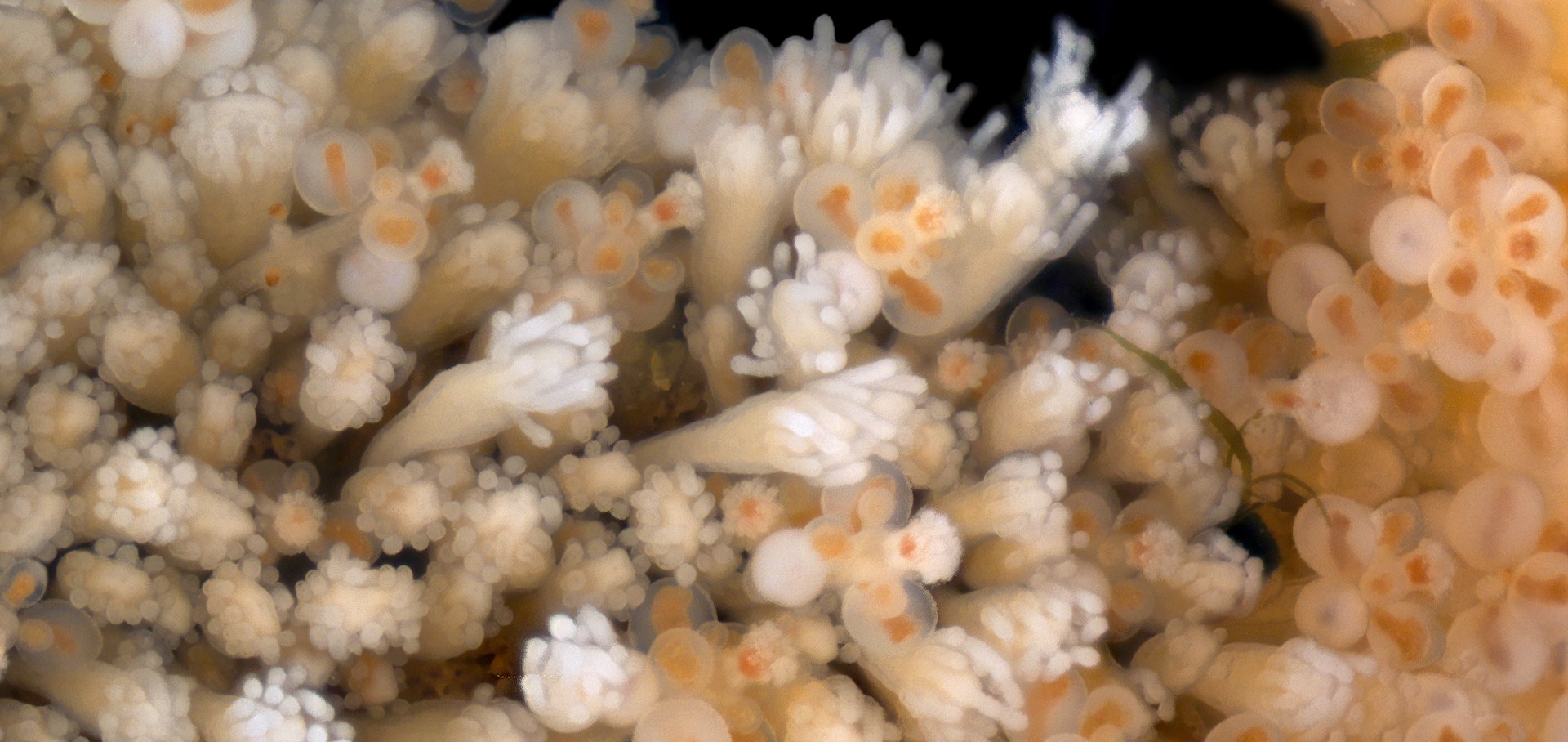
Os investigadores da Universidade Nacional da Irlanda e do Instituto Nacional de Investigação do Genoma Humano (NHGRI) dos Institutos Nacionais de Saúde podem ter descoberto alguns dos segredos da regeneração e as suas raízes evolutivas numa criatura marinha chamada Hydractinia symbiolongicarpus.

Segundo um estudo publicado na revista Cell Reports, os investigadores e os seus colaboradores descobriram pistas sobre a cura e o envelhecimento, estudando a forma como uma pequena criatura marinha regenera um corpo inteiro a partir apenas da sua boca.

Os investigadores sequenciaram o ARN da Hydractinia symbiolongicarpus, um pequeno animal em forma de tubo que vive nas carapaças dos caranguejos eremitas. No momento em que começavam a regenerar novos corpos, os investigadores detetaram uma assinatura molecular associada ao processo biológico de envelhecimento, também conhecido como senescência. De acordo com o estudo, a Hydractinia demonstra que os processos biológicos fundamentais da cura e do envelhecimento estão interligados, fornecendo uma nova perspetiva sobre como o envelhecimento evoluiu.

Para os investigadores, desvendar as origens evolutivas de processos biológicos fundamentais, como o envelhecimento e a cura, “é essencial para compreender a saúde e a doença humanas”. Os seres humanos têm alguma capacidade de regeneração, como a cura de um osso partido, mas os animais com corpos simples, como a Hydractinia, “têm frequentemente as capacidades regenerativas mais extremas, como fazer crescer um corpo novo a partir de um fragmento de tecido”.

Anteriormente, os investigadores descobriram que a Hydractinia “tem um grupo especial de células estaminais para regeneração”. As células estaminais podem transformar-se noutros tipos de células, “pelo que são úteis para criar novas partes do corpo”. Nos seres humanos, as células estaminais atuam principalmente no desenvolvimento, mas os organismos altamente regenerativos como a Hydractinia utilizam as células estaminais ao longo de toda a sua vida. A Hydractinia armazena as suas células estaminais regeneradoras no tronco inferior do seu corpo.

No entanto, quando os investigadores retiram a boca – uma parte distante do local onde residem as células estaminais – a boca desenvolve um novo corpo. “Ao contrário das células humanas, que estão bloqueadas nos seus destinos, as células adultas de alguns organismos altamente regenerativos podem reverter em células estaminais quando o organismo é ferido, embora este processo não seja bem compreendido”. Assim, os investigadores teorizaram que a Hydractinia “deve gerar novas células estaminais e procuraram sinais moleculares que pudessem estar a dirigir este processo”.

Os investigadores seguiram as células senescentes em Hydractinia para descobrir como é que este animal contorna os efeitos nocivos da senescência. Inesperadamente, os animais ejectaram as células senescentes para fora da boca. Embora os humanos não consigam livrar-se das células envelhecidas tão facilmente, os papéis dos genes relacionados com a senescência na Hydractinia sugerem como o processo de envelhecimento evoluiu.

“Nós, humanos, partilhámos pela última vez um antepassado com a Hydractinia – e os seus parentes próximos, medusas e corais – há mais de 600 milhões de anos, e estes animais não envelhecem de todo. Devido a estes fatores, a Hydractinia pode fornecer informações cruciais sobre os nossos primeiros antepassados animais”. Assim, os investigadores teorizam que a regeneração pode ter sido a função original da senescência nos primeiros animais.

“Ainda não compreendemos como é que as células senescentes desencadeiam a regeneração ou qual a extensão deste processo no reino animal”, afirmou Andy Baxevanis, coautor do estudo e cientista sénior do NHGRI, num comunicado divulgado no site do National Institutes of Health (NIH).”Felizmente, ao estudar alguns dos nossos parentes animais mais distantes, podemos começar a desvendar alguns dos segredos da regeneração e do envelhecimento – segredos que podem, em última análise, fazer avançar o campo da medicina regenerativa e também o estudo das doenças relacionadas com a idade”, concluiu.

segunda-feira, 28 de fevereiro de 2022

Count Down: How Our Modern World Is Threatening Sperm Counts, Altering Male and Female Reproductive Development, and Imperiling the Future of the Human Race

Webinar 
Slides & Resources

Slides

Shanna Swan: Count Down: How Our Modern World Is Threatening Sperm Counts, Altering Male and Female Reproductive Development, and Imperiling the Future of the Human Race.
Resources

Swan, Shanna. (2021). Count Down: How Our Modern World Is Threatening Sperm Counts, Altering Male and Female Reproductive Development, and Imperiling the Future of the Human Race. Simon and Schuster.


When Dr. Shanna Swan first read a report about declining sperm counts that was published in 1992, she was skeptical but intrigued. She spent the subsequent 25 years investigating this alarming drop, first looking for ways to explain it away, and when she could not, looking for the “bad actors” that could explain this real and persistent decline. During this quest, Dr. Swan learned about the devastating power that chemicals, hidden but prevalent in our daily lives, have in altering men’s and women’s ability to conceive and deliver a healthy baby. She learned that these chemicals do far more than just lower sperm count; they take a toll on many aspects of our health and longevity, as well as that of future generations. What Dr. Swan found was so disturbing that she felt compelled to write Count Down in the hope that she could be heard outside the scientific community and hopefully motivate the action this reproductive and environmental crisis demands. During this webinar she shared highlights of that journey and read some excerpts from Count Down. Dr. Swan hopes to convince you (beyond reading the book) that the threats she describes are real and imminent and must be addressed now.

This webinar is one in a monthly series sponsored by the Collaborative on Health and the Environment’s EDC Strategies Partnership. The CHE EDC Strategies Partnership is chaired by Sharyle Patton (Commonweal Biomonitoring Resource Center), Jerry Heindel (Commonweal HEEDS, Healthy Environment and Endocrine Disruptor Strategies), and Genon Jensen (HEAL) and coordinated by Hannah Donart (Collaborative on Health and the Environment, a Commonweal program). To see a full list of past calls and webinars related to EDCs and listen to or view recordings, please visit our partnership page.

This webinar was moderated by Jerry Heindel, PhD, founder and director of Commonweal's Healthy Environment and Endocrine Disruptor Strategies (HEEDS). It was pre-recorded and lasted for 70 minutes. Dr. Swan will respond to questions as she is able via her twitter account @DrShannaSwan.

segunda-feira, 18 de maio de 2020

"A única coisa que nos vai ajudar a sair desta crise é a investigação científica" por Caetano Reis e Sousa

Caetano Reis e Sousa dirige o Laboratório de Imunobiologia no Instituto Francis Crick, no Reino Unido, onde integra também a direção científica. Doutorado na Universidade de Oxford, é desde o ano passado membro da Royal Society Britânica. Já neste ano ganhou o Prémio Bial de Biomedicina.

Fonte: aqui

O Instituto Francis Crick, uma referência internacional na investigação em ciências biomédicas também participa desde há semanas no Reino Unido no esforço do diagnóstico de doentes de covid-19 e é o laboratório do Caetano Reis e Sousa que lidera essa área na instituição. É também o seu laboratório que está a desenvolver um teste de diagnóstico rápido para ser usado em larga escala e sem necessidade de equipamentos pesados, mas ainda sem data certa para estar pronto. Será "o mais depressa possível", diz o investigador, que integra igualmente a direção científica do instituto.

Era ainda estudante quando decidiu sair de Portugal. "Fiz o liceu até 11º ano em Lisboa, e depois saí de Portugal, porque tive oportunidade de concluir o liceu no País de Gales, no Reino Unido", conta. Depois não parou. Fez biologia no Imperial College de Londres e em 1992 doutorou-se em imunobiologia na Universidade de Oxford. Rumou então aos Estados Unidos, onde fez investigação científica nos National Institutes of Health, e em 1998 regressou a Londres, onde passou a liderar o laboratório de imunobiologia do Cancer Research UK, que em 2015 foi integrado no Instituto Francis Crick.

Cientista premiado e reconhecido pelo seu contributo na área da imunobiologia associada ao cancro, Caetano Reis e Sousa foi eleito no ano passado membro da Royal Society britânica pelas suas "contribuições para perceber os mecanismos pelos quais o sistema imunitário deteta a invasão de patógenos, cancro e danos nos tecidos", como foi anunciado na altura pelo Instituto Francis Crick. Já este ano, o investigador ganhou o Prémio Bial de Biomedicina.

Em entrevista ao DN, o cientista fala dos desafios que a nova pandemia coloca, da imprudência do Reino Unido na sua aposta inicial na imunidade de grupo em relação ao SARS-CoV-2, numa altura em que se desconhecem os seus parâmetros, e do esforço que os cientistas estão a fazer para compreender o vírus e a doença. A solução, diz, há de vir daí.

A pandemia de covid-19 veio mudar abruptamente as nossas vidas. Também mudou a sua?
Sim, mudou muito. E de todos nós no instituto. Muita gente está a trabalhar em casa. A nossa investigação habitual está parada, mas há investigadores que estão nos laboratórios a trabalhar em diferentes questões sobre este vírus. A minha equipa também. Estamos a fazer testes de rastreio do pessoal médico do University College London Hospital, e de outros hospitais.

Estão só a trabalhar em covid-19 no instituto, nesta altura?
Sim. O dia-a-dia da investigação, num instituto de 1500 pessoas, está reduzido a cerca de 200. No meu laboratório fazemos a testagem e o objetivo é ter os resultados o mais rapidamente possível. Para além disso há vários outros programas de investigação em covid-19 que estão a ser iniciados no instituto. No meu grupo estamos também a desenvolver novos métodos mais rápidos de deteção do vírus.

Como é que esses testes diagnóstico rápido poderão fazer a diferença no combate à pandemia?
Não é só serem mais rápidos, é serem ser também mais simples, e o mais eficientes possível. Neste momento recebemos amostras que têm de vir todos os dias do hospital, várias vezes ao dia, em transporte especializado, têm de ser processadas aqui, com a extração do vírus, para depois ser amplificado e analisado, para haver resultados. A ideia é ter um teste que permita fazer isto mais rapidamente, que simplifique o processo e não exija equipamento tão especializado. Os testes poderiam até passar a ser feitos no hospital. É nesse sentido que estamos a estudar as alternativas. O nosso instituto tem uma projeção e uma responsabilidade internacional, estamos também a pensar nas vantagens que isso teria em sistemas de saúde de outros países menos desenvolvidos.

Quando é que esses testes poderão vir a ser usados?
Gostávamos de ter isso pronto em semanas ou meses, mas é difícil dizer. Não se trata tanto de inventar um teste, mas de validar um processo experimental já proposto por outros e adaptá-lo a larga escala para lidar com um grande número de amostras e, talvez, num futuro não muito longínquo, embora ninguém saiba bem quando, fazer um rastreio da população. E estes testes alternativos poderiam ser usados para isso.

Disse que a pandemia mudou a sua vida. Como é agora o seu dia de trabalho?
É complicado. Na maior parte dos dias trabalho a partir de casa. Os meus dois filhos estão em idade escolar e têm a escola também em casa. Eu e a minha mulher somos ambos cientistas, cada um tem o seu próprio trabalho, e temos que nos dividir um pouco. Tenho de gerir o meu laboratório com 17 pessoas e, apesar de não termos agora experiências a decorrer, ainda temos muitos dados para analisar e discutir e portanto temos reuniões. E para além disso há agora também toda a parte dos testes, e a gestão do instituto, porque faço parte da direção científica. Estamos todos a tentar adaptar-nos à situação. Pode ser que quando isto acabar pode ser que surjam algumas coisas positivas desta situação. Vê-se, tanto em Portugal como aqui, um certo espírito de apoio mútuo, de responsabilidade cívica e de ajuda aos outros. É uma das poucas coisas boas que têm surgido desta pandemia.

Em que momento percebeu que este ia ser um problema de grande dimensão para o mundo?
Nestas coisas não há um momento eureka. Muitos dos meus colegas e eu começámos a preocupar-nos desde que os primeiros casos surgiram na China, porque era de prever que alastrasse, e a preocupação foi depois aumentando. Mas ninguém podia prever a que ponto isto ia alastrar. Mesmo neste momento penso que ninguém sabe o que vai acontecer.

Esta é afinal aquela pandemia que os especialistas temiam que um dia viesse a acontecer?
Toda a gente pensava que ia ser um vírus da gripe. Havia a ideia de uma possível pandemia, e basta ver os discursos nesse sentido, de há bastante tempo, ​​​​​de Bill Gates ou Barack Obama, dizendo que era bom que estivéssemos preparados, e que os políticos estivessem preparados.

Olhando agora para a situação, os políticos estavam preparados?
Alguns menos do que outros. Se olharmos por exemplo para a Coreia do Sul, Singapura, Hong Kong e até a China, não sei se estavam preparados, mas reagiram rapidamente, e bem. E há outros exemplos, como a Nova Zelândia. Noutros países parece-me que se perdeu bastante tempo. O Reino Unido foi um deles, ou os Estados Unidos. E depois há outros que continuam com uma política que ninguém percebe bem, como a Suécia. Veremos como as coisas vão evoluir aí.

Na Suécia estaremos ainda a ver só a ver o princípio?
A Suécia tem mais do dobro das mortes em relação a Portugal, tendo o mesmo número de habitantes e uma densidade populacional muito menor. Mas é verdade que a curva do número de casos não parece estar a acelerar, como se poderia prever, visto que não tomaram grandes medidas de afastamento social. Pelo menos até agora.

É um caso para estudar?
Os casos são todos para estudar, porque há grandes diferenças. Portugal, com 22% da população com mais de 65 anos de idade, no fundo até nem tem uma grande taxa de mortalidade por milhão de habitantes. Comparando com Espanha, França e Itália, e considerando que temos uma grande faixa de população mais idosa, Portugal não está entre os piores.

Será por a doença ter chegado mais tarde e terem sido tomadas medidas de contenção rapidamente?
Penso que sim. O governo e a oposição agiram corretamente. Levaram isto a sério. Todos os países são diferentes e a situação política de cada país também influencia a situação, e é difícil comparar. O número de casos, por exemplo, é impossível de comparar porque isso tem a ver com o número de testes feitos. O que vale a pena comparar é o número de mortes por milhão de habitantes, mas mesmo aí também há falhas. Por exemplo, no Reino Unido não têm sido incluídas nos números da mortalidade pela doença as pessoas que morrem fora dos hospitais.

Disse que Reino Unido acordou tarde para a situação. Até houve muitas críticas, incluindo da OMS, acerca das opções tomadas. Como vê essas críticas?
Nenhum de nós tem o conhecimento total dos factos e dos fatores que levaram às decisões tomadas e portanto temos de ter cuidado, mas penso que houve ali uma altura em que se podia ter feito mais, de forma a diminuir o impacto que estamos agora a ver [até este sábado, o Reino Unido registou mais de 133 mil casos, dos quais 18.100 mortais]. Podiam-se ter preparado um pouco melhor em relação aos centros de testagem, ao equipamento de proteção essencial nos hospitais, e na questão do afastamento social. Mas, mais vale tarde do que nunca. Isso agora está a ser feito.

A ideia foi apostar na imunidade de grupo, numa altura em que não se sabia ainda como isso funciona em relação a este vírus.
Não se sabia, e ainda não se sabe. Foi uma aposta que me pareceu um bocadinho louca. É também a aposta da Suécia, que continuo a achar um bocadinho imprudente porque não sabemos quais são os parâmetros da imunidade adquirida em relação ao vírus, quanto tempo é que dura a proteção, quais são os mecanismos que levam a essa proteção, e nem sequer sabemos quais são os parâmetros que levam à própria doença. Para uma grande parte dos doentes mais graves, o problema é uma reação imunopatológica, que é a a própria resposta exagerada do sistema imunitário e que, em muitos casos, leva à morte. Ainda vai levar muito tempo para termos uma visão mais global da reação do sistema imunitário a este vírus.

Apostar na imunidade de grupo foi um equívoco?
Foi uma aposta de alto risco. Na Suécia, se ganharem a aposta mantêm a sociedade a funcionar, o que não aconteceu nos outros países. Mas neste momento não se sabe ainda o que isto vai dar em termos de imunidade, qual é a prevalência da infeção e, em relação às pessoas que foram infetadas e não tiveram sintomas, se estão realmente protegidas de uma reinfeção pelo vírus. Às vezes o problema dessas imunidades de grupo é não haver uma proteção completa. Há sempre a possibilidade de uma mutação no vírus que depois permita uma nova infeção. Isso aumenta o risco deste tipo de aposta.

Quais são os principais desafios que este vírus nos coloca?
Este é um vírus com uma taxa de infeção altíssima, que alastra muito facilmente e que tem risco de doença muito grave que pode levar à morte, sobretudo para os mais idosos, embora possa afetar também jovens. O desafio é científico. A única coisa que nos vai ajudar a sair desta crise é a investigação científica. Estamos perante o desconhecido. Ninguém sabe bem como o vírus funciona na sua interação com o sistema imunitário, o que é uma infeção assintomática e o que leva a uma doença grave, e ninguém sabe bem como se vai vacinar contra este vírus e se haverá medicamentos para a controlar. Tudo isso representa um desafio na imunologia, virologia, biologia celular e saúde pública. E a única forma é investir esforço e dinheiro para tentar perceber todas estas questões, o que terá de ser um esforço internacional. Em todo o mundo os cientistas mudaram parte do seu foco de investigação para trabalhar sobre este vírus, como acontece no nosso instituto. É importante dedicarmo-nos a este trabalho, mas temos de nos lembrar que às vezes as grandes descobertas em medicina vêm por vias inesperadas e portanto todos este esforço para estudar esta infeção tem de ser acompanhada de investigação básica sobre o corpo humano, o sistema imunitário, a epidemiologia e outros vírus em geral. E, em termos de saúde pública, o que está a acontecer não afeta só quem tem a doença, mas todos os outros que têm doenças crónicas e graves, como cancro ou doenças cardiovasculares, e que vão sofrer por não terem os tratamentos de que precisam porque os nossos sistemas de saúde estão completamente sobrecarregados. Isso vai contribuir para uma maior mortalidade em geral. Não podemos esquecer isso.

Este é o momento de aumentar verbas para a investigação científica?
Espero que os políticos e a população se deem conta de que uma das funções da investigação científica é dar resposta a este tipo de situação, e que todo o investimento feito ao longo dos anos deu frutos que podem ser usados em situações como esta. Se os políticos se lembrarem daqui a cinco anos, partindo do princípio que vamos estar fora desta situação daqui a cinco anos, que é importante investir na ciência e na formação de cientistas, será muito bom. Em geral, os políticos têm memória curta. Não sei se as coisas mudarão fundamentalmente, mas pelo menos de momento a população dá-se conta de que os únicos que podem tirar-nos desta situação são os cientistas, os médicos e as pessoas ligadas à saúde. Esperemos que isso perdure.

Vamos ter de ficar mais ou menos confinados até aparecer uma vacina?
Esperamos obviamente que haja uma vacina, mas todos sabemos que isso vai demorar bastante tempo, e temos de ver se será eficiente. Há países como a China e outros que estão cautelosamente a retomar a uma certa normalidade. Seria bom que houvesse um rastreio da população e uma forma de isolar os casos positivos muito rapidamente, e todos os seus contactos, o que talvez não seja uma política muito a nosso gosto nos países ocidentais, em que há uma certa relutância em perder uma parte da liberdade pessoal. É possível que não funcione em determinados países, ou que não seja possível fazê-lo. Vai haver soluções diferentes em países diferentes. Esperemos é que se baseiem em dados da ciência e sejam implementadas de forma racional. Reconheço que a economia e o bem-estar das populações são ambas prioridades, e os políticos vão ter de jogar com esses parâmetros e decidir o que será melhor para os seus países. Isto não vai desaparecer daqui a poucas semanas, mas também não sabemos quanto tempo isto vai durar.

sexta-feira, 25 de outubro de 2019

Meet the Money Behind The Climate Denial Movement

Nearly a billion dollars a year is flowing into the organized climate change counter-movement


The overwhelming majority of climate scientists, international governmental bodies, relevant research institutes and scientific societies are in unison in saying that climate change is real, that it's a problem, and that we should probably do something about it now, not later. And yet, for some reason, the idea persists in some peoples' minds that climate change is up for debate, or that climate change is no big deal.

Actually, it's not “for some reason” that people are confused. There's a very obvious reason. There is a very well-funded, well-orchestrated climate change-denial movement, one funded by powerful people with very deep pockets. In a new and incredibly thorough study, Drexel University sociologist Robert Brulle took a deep dive into the financial structure of the climate deniers, to see who is holding the purse strings.

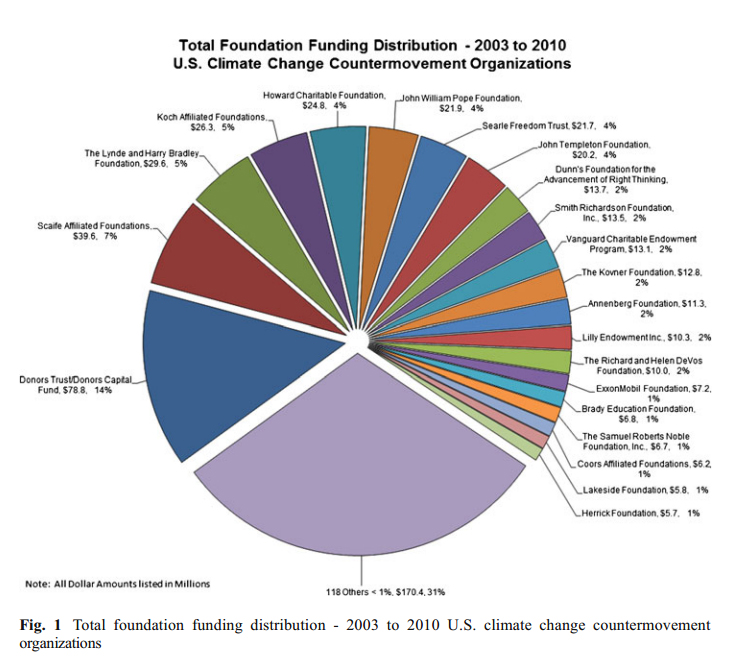
According to Brulle's research, the 91 think tanks and advocacy organizations and trade associations that make up the American climate denial industry pull down just shy of a billion dollars each year, money used to lobby or sway public opinion on climate change and other issues. (The grand total also includes funds used to support initiatives unrelated to climate change denial, as explained in a quote Brulle gave to The Guardian: “Since the majority of the organizations are multiple focus organizations, not all of this income was devoted to climate change activities.”)

“The anti-climate effort has been largely underwritten by conservative billionaires,” says the Guardian, “often working through secretive funding networks. They have displaced corporations as the prime supporters of 91 think tanks, advocacy groups and industry associations which have worked to block action on climate change.”
“This is how wealthy individuals or corporations translate their economic power into political and cultural power,” he said. “They have their profits and they hire people to write books that say climate change is not real. They hire people to go on TV and say climate change is not real. It ends up that people without economic power don't have the same size voice as the people who have economic power, and so it ends up distorting democracy.
Last year, PBS talked to Brulle about his investigation into the climate change countermovement. The project, says Brulle, is the first part of three: in the future he'll turn a similar eye to the climate movement and to the environmental movement. But for now, the focus is on the deniers.
Now, what you can see in the movement itself is that it has two real roots. One is in the conservative movement itself, in that you see a lot of conservative foundations that had been funding the growth of the conservative movement all along now appear as funding the climate countermovement. You also can see dedicated industry foundations that come in to start funding the climate countermovement.
So it’s kind of a combination of both industry and conservative philanthropies that are funding this process, and what they did was they borrowed a great deal of the strategy and tactics that came out of the tobacco industry’s efforts to prevent action on the health impacts of smoking.

What you see is the tactics that this movement uses were developed and tested in the tobacco industry first, and now they’re being applied to the climate change movement, and in fact, some of the same people and some of the same organizations that were involved in the tobacco issue are also involved in climate change.

Here's where the money is coming from:

Click to legibilize. Funding breakdown of a subset of the climate change countermovement players in Brulle's analysis. Photo: Brulle

The climate denial movement is a powerful political force, says Brulle. They've got to be, too, to outweigh in the public's mind the opinions of pretty much every relevant scientist. Brulle:
With delay and obfuscation as their goals, the U.S. CCCM has been quite successful in recent decades. However, the key actors in this cultural and political conflict are not just the “experts” who appear in the media spotlight. The roots of climate-change denial go deeper, because individuals’ efforts have been bankrolled and directed by organizations that receive sustained support from foundations and funders known for their overall commitments to conservative causes. Thus to fully understand the opposition to climate change legislation, we need to focus on the institutionalized efforts that have built and maintain this organized campaign. Just as in a theatrical show, there are stars in the spotlight. In the drama of climate change, these are often prominent contrarian scientists or conservative politicians, such as Senator James Inhofe. However, they are only the most visible and transparent parts of a larger production. Supporting this effort are directors, script writers, and, most importantly, a series of producers, in the form of conservative foundations. Clarifying the institutional dynamics of the CCCM can aid our understanding of how anthropogenic climate change has been turned into a controversy rather than a scientific fact in the U.S.
More from Smithsonian magazine:

Editor's note, October 25, 2019: This story has been updated to clarify that total amount includes funds spent on initiatives unrelated to climate change.

segunda-feira, 12 de março de 2018

Essay - Unified theory of evolution


The unifying theme for much of modern biology is based on Charles Darwin’s theory of evolution, the process of natural selection by which nature selects the fittest, best-adapted organisms to reproduce, multiply and survive. The process is also called adaptation, and traits most likely to help an individual survive are considered adaptive. As organisms change and new variants thrive, species emerge and evolve. In the 1850s, when Darwin described this engine of natural selection, the underlying molecular mechanisms were unknown. But over the past century, advances in genetics and molecular biology have outlined a modern, neo-Darwinian theory of how evolution works: DNA sequences randomly mutate, and organisms with the specific sequences best adapted to the environment multiply and prevail. Those are the species that dominate a niche, until the environment changes and the engine of evolution fires up again.
But this explanation for evolution turns out to be incomplete, suggesting that other molecular mechanisms also play a role in how species evolve. One problem with Darwin’s theory is that, while species do evolve more adaptive traits (called phenotypes by biologists), the rate of random DNA sequence mutation turns out to be too slow to explain many of the changes observed. Scientists, well-aware of the issue, have proposed a variety of genetic mechanisms to compensate: genetic drift, in which small groups of individuals undergo dramatic genetic change; or epistasis, in which one set of genes suppress another, to name just two.
Yet even with such mechanisms in play, genetic mutation rates for complex organisms such as humans are dramatically lower than the frequency of change for a host of traits, from adjustments in metabolism to resistance to disease. The rapid emergence of trait variety is difficult to explain  just through classic genetics and neo-Darwinian theory. To quote the prominent evolutionary biologist Jonathan B L Bard, who was paraphrasing T S Eliot: ‘Between the phenotype and genotype falls the shadow.’
And the problems with Darwin’s theory extend out of evolutionary science into other areas of biology and biomedicine. For instance, if genetic inheritance determines our traits, then why do identical twins with the same genes generally have different types of diseases? And why do just a low percentage (often less than 1 per cent) of those with many specific diseases share a common genetic mutation? If the rate of mutation is random and steady, then why have many diseases increased more than 10-fold in frequency in only a couple decades? How is it that hundreds of environmental contaminants can alter disease onset, but not DNA sequences? In evolution and biomedicine, the rates of phenotypic trait divergence is far more rapid than the rate of genetic variation and mutation – but why?
Part of the explanation can be found in some concepts that Jean-Baptiste Lamarck proposed 50 years before Darwin published his work. Lamarck’s theory, long relegated to the dustbin of science, held, among other things, ‘that the environment can directly alter traits, which are then inherited by generations to come’. Lamarck, a professor of invertebrate zoology at the National Museum of Natural History in Paris, studied many organisms including insects and worms in the late 18th and early 19th centuries. He introduced the words ‘biology’ and ‘invertebrate’ into the scientific lexicon, and wrote books on biology, invertebrates and evolution. Despite this significant academic career, Lamarck antagonised many of his contemporaries and 200 years of scientists with his blasphemous evolutionary ideas.
At the start, Lamarck might have been pilloried as a religious heretic, but in modern times, it is the orthodoxy of science – and especially Darwin’s untouchable theory of evolution – that has caused his name to be treated as a joke. Yet by the end of his career, Darwin himself had come around; even without the benefit of molecular biology, he could see that random changes were not fast enough to support his theory in full.
The question is this: if natural selection isn’t acting on genetic mutations alone, then what molecular forces create the full suite of variation in traits required for natural selection to finish the job? One clue came almost a century after Darwin proposed his theory, in 1953, just as James Watson and Francis Crick were unravelling the mysteries of DNA and the double helix. In that year, the developmental biologist Conrad Waddington of the University of Edinburgh reported that fruit flies exposed to outside chemical stimulus or changes in temperature during embryonic development could be pushed to develop varying wing structures. The changes the scientists induced in that single generation would, thereafter, be inherited by progeny down the lineage. Waddington coined a modern term – ‘epigenetics’ – to describe this phenomenon of rapid change. Notably, before Watson and Crick had even revealed their DNA structure, Waddington recognised the potential impact his discovery could have on the theory of evolution: the single-generation change in the fruit-fly wings were supportive of the original ideas of the heretic Lamarck. It appeared that the environment could directly impact traits.
The regulation of biology will never involve a ‘genetic-only process’, nor an ‘epigenetic-only process’. They are completely integrated
Although Waddington described the general role of epigenetics, he was no more aware of the molecular elements or mechanisms involved than Lamarck or Darwin. But the more molecular biology decodes the workings of life, the more Waddington’s concepts – and Lamarck’s – make sense. Indeed, although the vast majority of environmental factors cannot directly alter the molecular sequence of DNA, they do regulate a host of epigenetic mechanisms that regulate how DNA functions – turning the expression of genes up or down, or dictating how proteins, the products of our genes, are expressed in cells.
Today, that is the precise definition of epigenetics: the molecular factors that regulate how DNA functions and what genes are turned on or off, independent of the DNA sequence itself. Epigenetics involves a number of molecular processes that can dramatically influence the activity of the genome without altering the sequence of DNA in the genes themselves.
One of the most common such processes is ‘DNA methylation’, in which molecular components called methyl groups (made of methane) attach to DNA, turning genes on or off, and regulating the level of gene expression. Environmental factors such as temperature or emotional stress have been shown to alter DNA methylation, and these changes can be permanently programmed and inherited over generations – a process known as epigenetic transgenerational inheritance.
Another major epigenetic process discovered in recent years is ‘histone modification’. Histones are proteins that attach to and alter the structure of DNA, which in turn wraps around the histones like beads on a string. The combination of DNA and histone together has been called ‘chromatin structures’ – and the coils, loops and twists in chromatin structures in response to environmental stress can permanently alter gene expression as well.
More recently, researchers have documented ‘RNA methylation’ in which methyl groups attach to the genetic helper molecules, in the process altering gene expression and subsequent protein production for generations down the line. Likewise, the action of so-called ‘non-coding RNA’, small RNA molecules that bind to DNA, RNA and proteins, also alter the expression of genes, independent of DNA sequence.
All of these epigenetic mechanisms are critical and have unique roles in the molecular regulation of how DNA functions. The regulation of biology, it follows, will never involve a ‘genetic-only process’, nor an ‘epigenetic-only process’. Instead, the processes of epigenetics and genetics are completely integrated. One does not work without the other.
For epigenetics to have a significant impact on evolution, its alterations must be inherited by subsequent generations, just like DNA sequences and gene mutations. But epigenetic inheritance does not follow many of the Mendelian rules that apply to classic genetics and the neo-Darwinian theory of evolution. These rules hold that DNA sequences and genes function discretely, like particles; upon reproduction, the ‘particles’ from each parent unite at random with a matching pair from the other parent, leading to a new DNA sequence and new expression of inherited traits.
Epigenetic transgenerational inheritance, by contrast, occurs when the germline (sperm or egg) transmits epigenetic information between generations, even in the absence of continued direct environmental exposures. Environmental stress and exposure is especially impactful during germline development – for instance, when foetal sex organs develop into testis for men or ovaries for women to produce sperm or eggs later in life. Indeed, environmental exposure during this critical time can trigger permanent epigenetic changes via DNA methylation, histone modifications and alteration of non-coding RNA.
Evidence for this non-genetic form of inheritance, which my team at Washington State University identified in 2000, is persuasive. Findings published by my group in Science in 2005 showed the ability of environmental chemicals to promote inheritance of disease in rats through three generations, to great-grand offspring and beyond, in the absence of any continued exposures. The phenomenon has been further documented by many labs in a number of different species over the past decade. An example is when Graham Burdge and his team at the University of Southampton in the United Kingdom reported that excessive nutrition in rats created epigenetically induced metabolic abnormalities three generations out.
In other work, Sibum Sung and his colleagues at the University of Texas Austin found that drought and changes in temperature induced epigenetic evolution in plants, leading to alterations in growth and flowering traits, generations out. More recently, a number of studies have indicated that environmental stress can promote epigenetic alterations that are transmitted to and induce pathologies in subsequent generations. A recent study by Gerlinde Metz and her colleagues at the University of Lethbridge in Canada demonstrated that restraining pregnant rats or, alternatively, forcing them to swim, produced epigenetic damage that put newborns at risk. This ancestral stress also promoted the epigenetic transgenerational inheritance of abnormalities in the great-grand offspring of the exposed gestating female. Several studies now support the role of environmental stress in promoting the epigenetic transgenerational inheritance of disease.
Environmentally induced epigenetic transgenerational inheritance has now been observed in plants, insects, fish, birds, rodents, pigs and humans. It is, therefore, a highly conserved phenomenon. The epigenetic transgenerational inheritance of phenotypic trait variation and disease has been shown to occur across a span of at least 10 generations in most organisms, with the most extensive studies done in plants for hundreds of generations. One example in plants, a heat-induced flowering trait first observed by Carl Linnaeus in the 18th century, was later found to be due to a DNA methylation modification that occurred in the initial plant, and has been maintained for 100 generations. In worms, traits altered by changes in nutrition have been shown to propagate over 50 generations. In mammals with longer generation times, we have found toxicant-induced abnormal traits propagated for nearly 10 generations. In most of these studies, the transgenerational traits do not degenerate but continue. Even Waddington’s experiment with flies was taken out to 16 generations, and the altered traits have been propagated and continue to exist today.
Three generations after exposure to the fungicide, we saw abnormalities in the testis, ovaries, kidneys, prostate, mammary glands and brain
Much as Lamarck suggested, changes in the environment literally alter our biology. And even in the absence of continued exposure, the altered biology, expressed as traits or in the form of disease, is transmitted from one generation to the next.
The environment plays an essential role in evolution. In a Darwinian sense, it determines which individuals and species will survive through the inexorable engine of natural selection. But a large number of environmental factors can also impact evolution and biology more directly, through epigenetic means: traits can shift through exposures to temperature and light or in response to nutritional parameters such as high fat or caloric restriction diets. A host of chemicals or toxins from plants and the general environment can impact phenotypic variation and health.
One example that we studied in our lab involved the impact of environmental chemical exposure on trait variation and disease. In our study, we set out to investigate the ability of an environmental toxicant – vinclozolin, the most commonly used fungicide in agriculture today – to alter traits through epigenetic change. First, we briefly exposed a gestating female rat to the fungicide; then we bred her progeny for three generations, to great-grand-offspring, in the absence of any continued exposures. For nearly all males down through the lineage, we observed a decrease in the number and viability of sperm and an associated incidence of infertility with age. And we observed a variety of other disease conditions in both males and females three generations removed from the direct exposure, including abnormalities in the testis, ovaries, kidneys, prostate, mammary glands and brain. Corresponding epigenetic alterations in the sperm involve changes in DNA methylation and non-coding RNA expression.
Our research showed that ancestral exposure to the toxicant vinclozolin also affected sexual selection in animals three generations down the lineage. Considered a major force in evolution since Darwin first posed his theory, sexual selection – also known as mate preference – was assessed by allowing females from other litters to choose between either descendants of exposed or unexposed males. Females overwhelmingly selected those who lacked the transgenerational epigenetic alterations and whose ancestors had not been exposed. In conclusion, exposure to the fungicide permanently altered the descendant’s sperm epigenetics; that, in turn, led to inheritance of sexual selection characteristics known to reduce the frequency with which their genes might propagate in the broader population and directly influence evolution on a micro-evolutionary scale.
In another recent study, we examined evolution on the macro-evolutionary scale – speciation. One of the classic examples of speciation involves Darwin’s finches in the Galapagos Islands. A group of finches radiated out from a single species to become 16 different species of varying size and with different traits such as altered beak structure. Our team and collaborators set out to examine the DNA from five of those distinct species. We observed DNA sequence mutations from one species to the next, but the epigenetic changes in DNA methylation (epimutations) were higher in number and more correlated with the phylogenetic (family tree) distance between the species. Although the field of evolution is currently focused on neo-Darwinian genetic concepts, our findings suggest that epigenetics also has a role in the speciation and evolution of Darwin’s finches.
Support for an epigenetic role in evolution continues to mount. One interesting study compares Neanderthal and human DNA, where genetic differences are significantly less pronounced than the epigenetic ones, which involve alterations in DNA methylation in the genomes. In short, integration of neo-Lamarckian and neo-Darwinian concepts into a unified theory provides a far more efficient molecular basis for how evolution works.
Neo-Darwinian and neo-Lamarckian mechanisms both drive evolution, and they appear to be intertwined. Indeed, because environmental epigenetics can increase trait variation within a population, it empowers natural selection, which works by promoting adaptive traits over others. Classic neo-Darwinian evolution involves genetic mutation and genetic variation as the main molecular mechanisms generating variation. Add to these mechanisms the phenomenon of environmental epigenetics, which directly increases trait variation, and you enhance the ability of the environment to mediate natural selection and evolution.
Table 1. Evolution Theory Components
A critical additional consideration for our lab involves the ability of epigenetics to alter genome stability and, thus, to directly induce the kind of genetic mutations observed in cancer biology. The gene mutations we’ve found here include copy number variation (the number of times a short DNA sequence is repeated) and point mutations (alteration of a single nucleotide within the DNA sequence) in later generations. Nearly all types of genetic mutations are known to have a precursor epigenetic change that increases the susceptibility to develop that mutation. We observed that direct environmental exposure in the first generation had epigenetic changes and no genetic mutations but, transgenerationally, an increase in genetic mutations was identified. Since environmental epigenetics can promote both trait variation and mutations, it accelerates the engine of evolution in a way that Darwinian mechanisms alone cannot.
Figure 1. Unified Theory of Evolution
The unified theory of evolution has many skeptics, especially in light of the genetic determinism paradigm that has influenced the biological sciences for more than 100 years. Genetic determinism sees DNA as the basic building block of biology, and the DNA sequence as the ultimate molecular control.
Perhaps the key pentacle of genetic determinism was the sequencing of the human genome, which was to provide the ultimate proof of the primacy of the gene. Genome-wide association studies were predicted to provide biological marks for normal and abnormal phenomena of life and reveal the underpinnings of disease. But in the wake of that sequencing, the major prediction of genetic determinism – that the majority of human biology and disease could be understood through the lens of genetics – has not borne out.
Generations of scientists and the public have been taught genetics, but few have been exposed to the relatively new science of epigenetics – in fact, inclusion of epigenetics into the molecular elements of biology and evolution has been met with opposition. Watson, who played a role in the discovery of the DNA structure, and Francis Collins, who played a significant role in sequencing the human genome and is the director of the US National Institutes of Health, both initially questioned the significance of epigenetics beyond a few common measurements, but today are more supportive. It is no surprise that, after 100 years of genetic determinism, resistance to a paradigm shift is strong.
It was Thomas Kuhn who suggested that when a current paradigm reveals anomalies then new science needs to be considered – that is how scientific revolutions are born
A month after I suggested this unified theory of evolution and it was published in Genome Biology and Evolution in 2015, David Penny of Massey University in New Zealand suggested that epigenetics was largely an ancestral feature of genetics and simply a component of genetics. Other recent publications, including one from Emma Whitelaw of La Trobe University in Australia, have disputed the concept of Lamarckian epigenetic inheritance in mammals.
Despite the pushback, I’m convinced that we have reached the point where a paradigm shift is due. Accepting that epigenetics plays a role in evolution does not topple the science of genetics; embracing neo-Lamarckian ideas does nothing to challenge classic neo-Darwinian theory. The accepted sciences are essential and accurate, but part of a bigger, more nuanced story that expands our understanding and integrates all our observations into a cohesive whole. The unified theory explains how the environment can both act to directly influence phenotypic variation and directly facilitate natural selection, as shown in the diagram above.
With a growing number of evolutionary biologists developing an interest in the role of epigenetics, there are now some mathematical models that integrate genetics and epigenetics into a system, and the work has paid off. Consideration of epigenetics as an additional molecular mechanism has assisted in understanding genetic drift; genetic assimilation (when a trait produced in response to the environment ultimately becomes encoded in the genes); and even the theory of neutral evolution, whereby most change happens not in response to natural selection, but by chance. By providing an expanded molecular mechanism for what biologists observe, the new models provide a deeper, more nuanced and more precise roadmap to evolution at large.

Taken together, these findings demand that we hold the old standard, genetic determinism, up to the light to find the gaps. It was Thomas Kuhn who in 1962 suggested that when a current paradigm reveals anomalies then new science needs to be considered – that is how scientific revolutions are born.

A unified theory of evolution should combine both neo-Lamarckian and neo-Darwinian aspects to expand our understanding of how environment impacts evolution. The contributions of Lamarck more than 200 years ago should not be discounted because of Darwin, but instead integrated to generate a more impactful and insightful theory. Likewise, genetics and epigenetics must not be seen as conflicting areas, but instead, integrated to provide a broader repertoire of molecular factors to explain how life is controlled.

segunda-feira, 15 de maio de 2006

Dossiê Perigos dos OGM - GMO Dangers

ATENÇÃO © Copyleft - É permitida a partilha do dossiê exclusivamente para fins não comerciais e desde que o autor e o BioTerra sejam citados.


Não esqueças de visitar regularmente este espaço para manteres-te actualizado
Prémios

Transgénicos são um verdadeiro perigo- Porquê?
10 reasons why we don't need GM foods 
Carta Aberta de Cientistas de todo o Mundo preocupados com os perigos dos OGM
Mass Deaths in Sheep Grazing on Bt Cotton
OGM, Não Obrigado - Um manifesto em 10 pontos
Somos o que semeamos- artigos científicos sobre efeitos dos transgénicos

Zonas Livres de Transgénicos (ZLT) em Portugal:

O que pode fazer? 
Actua!

ONG || Activismo
GRAIN
Hej Da GMO (Suécia)

Instituições

Pró-OGM

Tratados Internacionais

As agriculturas do mundo e o negócio das sementes, fertilizantes e pesticidas

Livros || E-Livros
Documentos vasados

Revistas
BioTech Info


Televisão

Dossiês Relacionados


NOVA ATENÇÃO © COPYRIGHT-  Ao partilhar, agradeço atempadamente a indicação do autor e do meu blogue Bioterra. Estes dossiês resultam de um apurado trabalho de pesquisa, selecção de qualidade e organização.