Mostrar mensagens com a etiqueta Bioinformática. Mostrar todas as mensagens

quarta-feira, 19 de junho de 2024

Nature’s Warning: Early Signs in Marine Life Predicting the Next Mass Extinction


A study using foraminifera fossils suggests that shifts in marine community structures can predict future extinctions, highlighting the role of historical data in forecasting climate change impacts on biodiversity.

For hundreds of millions of years, single-celled organisms known as foraminifera, which are microscopic and hard-shelled, have thrived in the oceans. These tiny creatures form the foundation of the food chain. The fossils of these ancient organisms provide insights into potential shifts in global biodiversity linked to our warming climate.

Using a high-resolution global dataset of planktonic foraminifera fossils that are among the richest biological archives available to science, researchers have found that major environmental stress events leading to mass extinctions are reliably preceded by subtle changes in how a biological community is composed, acting as a pre-extinction early warning signal.

The results are in Nature, co-led by Anshuman Swain, a Junior Fellow in the Harvard Society of Fellows, a researcher in the Department of Organismic and Evolutionary Biology, and an affiliate of the Museum of Comparative Zoology. A physicist by training who applies networks to biological and paleontological data, Swain teamed with co-first author Adam Woodhouse at the University of Bristol to probe the global, community structure of ancient marine plankton that could serve as an early warning system for future extinction of ocean life.

“Can we leverage the past to understand what might happen in the future, in the context of global change?” said Swain, who previously co-authored a study about the formation of polar ice caps driving changes in marine plankton communities over the last 15 million years. “Our work offers new insight into how biodiversity responds spatially to global changes in climate, especially during intervals of global warmth, which are relevant to future warming projections.”

Leveraging Historical Data for Future Predictions
The researchers used the Triton database, developed by Woodhouse, to ascertain how the composition of foraminifera communities changed over millions of years – orders of magnitude longer time spans than are typically studied at this scale. They focused on the Early Eocene Climatic Optimum, the last major period of sustained high global temperatures since the dinosaurs, analogous to worst-case global warming scenarios.

They found that, before an extinction pulse of 34 million years ago, marine communities became highly specialized everywhere but southern high latitudes, implying that these micro-plankton migrated en masse to higher latitudes and away from the tropics. This finding indicates that community-scale changes like the ones seen in these migration patterns are evident in fossil records long before actual extinctions and losses in biodiversity occur.

The researchers thus think it’s important to place emphasis on monitoring the structure of biological communities to predict future extinctions.

According to Swain, the results from the foraminifera studies open avenues of inquiry into other organismal groups, including other marine life, sharks, and insects. Such studies may spark a revolution in an emerging field called paleoinformatics, or use large spatiotemporally resolved databases of fossil records to glean new insights into the future of Earth.

Reference: “Biogeographic response of marine plankton to Cenozoic environmental changes” by Anshuman Swain, Adam Woodhouse, William F. Fagan, Andrew J. Fraass and Christopher M. Lowery, 17 April 2024, Nature.

terça-feira, 18 de junho de 2024

Mapear a “árvore da superfamília” de uma planta pode criar culturas resilientes face às crises climáticas


Tendo crescido no Punjab, conhecido como “o celeiro da Índia”, o percurso profissional da investigadora da Universidade de Murdoch, Vanika Garg, no domínio da genómica das culturas esteve profundamente ligado à sua herança.

Sendo a agricultura a espinha dorsal da sua região, desenvolveu desde cedo uma apreciação tanto do significado da agricultura como do seu impacto nas comunidades.

A sua investigação atual como bióloga computacional centra-se na genómica do grão-de-bico, do trigo e das culturas hortícolas – e é coautora de uma série de artigos que exploram a utilização do super-pangenoma.

Ao construir e analisar a “árvore genealógica” de cada cultura, a investigação de Garg ajudará os agricultores e os cientistas a combater novas doenças e a resistir à alteração dos padrões climáticos.

Garg disse que o pangenoma tradicional, uma coleção de DNA compartilhada por todos os indivíduos de uma espécie, agia como um “álbum de família”, e o super-pangenoma que inclui um perfil distinto da genética de uma cultura, incluindo seus parentes selvagens, fornece um contexto extra crucial.

O conceito de super-pangenoma foi introduzido pela primeira vez num artigo de coautoria de investigadores, incluindo Garg, sob a liderança do Professor da Universidade de Murdoch, Rajeev Varshney, em 2019.

“Imagine criar um ‘álbum de superfamília’. Em vez de fotografias de uma só família, reúne fotografias de várias famílias, dos seus familiares, dos seus vizinhos e até de amigos de diferentes cidades”, afirmou Garg, citada em comunicado.

“Este álbum de superfamílias dá-lhe uma perspetiva muito mais ampla do aspeto das famílias e das variações de aparência, personalidades e estilos de vida”, acrescentou.

Segundo ela, através do estudo e, por vezes, do cruzamento de culturas domesticadas com parentes selvagens, os agricultores podem introduzir características especiais nas suas culturas, tornando-as mais fortes e adaptáveis.

“Quando os agricultores ou os cientistas se vêem confrontados com desafios, como uma nova doença que afecta as culturas ou a alteração dos padrões meteorológicos devido às alterações climáticas, podem procurar soluções nestes parentes selvagens”, sublinhou.

“Em termos simples, os parentes selvagens das culturas são como os primos distantes resistentes e engenhosos de uma família que podem ensinar às nossas culturas normais alguns truques de sobrevivência”, concluiu.

terça-feira, 18 de abril de 2023

‘Fungicultura’: Estes besouros aprenderam a usar o odor para distinguir entre fungos ‘bons’ e ‘maus’

Besouro da espécie Xylosandrus germanus

Na madeira de troncos de árvores da floresta, os besouros cuidam dos fungos que são mais importantes para a sobrevivência e prosperidade da comunidade e procuram erradicar aqueles que podem causar doenças e ameaçar a colónia, muito à semelhança do que um agricultor humano faz num campo de cultivo, ao cuidar de certas plantas e arrancar as que podem colocar em risco a cultura.

Um grupo de investigadores de Itália, Alemanha e Estados Unidos da América fala mesmo da existência de uma ‘fungicultura’, própria destes grupos taxonómicos, que tem por base o odor.

Num artigo divulgado na revista ‘Frontiers in Microbiology’, os cientistas revelam que os X. germanus conseguem distinguir entre as espécies de fungos ‘bons’ e ‘maus’ através dos odores.

Antonio Gugliuzzo, da Universidade de Catania, em Itália, e um dos principais autores da investigação, explica que o odor produzido pelos fungos dos quais os besouros se alimentam atuam como ‘feromonas de agregação’, que atraem os coleópteros para árvores que estão já colonizadas por esses fungos.

Acontece que, por vezes, os fungos dos quais os X. germanus se alimentam estão alojados em árvores de fruto, pelo que o ‘chamamento odorífero’ pode atrair grandes números de besouros e levar a prejuízos agrícolas consideráveis. Explicam os cientistas que o X. germanus é considerado uma espécie invasora, tendo já uma distribuição ampla em toda a Alemanha.

“Até agora, não conseguíamos explicar como estes besouros atacavam as árvores em grupos”, reconhece Peter Biedermann, da Universidade de Freiburg, na Alemanha, e outro dos principais autores do artigo. No entanto, as experiências realizadas permitiram perceber que esses coleópteros são atraídos pelo odor dos fungos dos quais se alimentam, e que tinham já sido ‘cultivados’ nos ramos das árvores por membros da mesma espécie.

“Isto permite aos besouros colonizar árvores fragilizadas em número muito maior e tomar de assalto as defesas da árvore mais facilmente”, explica Biedermann, apontando que isso poderá resultar na morte da árvore.

Os cientistas acreditam que, com mais investigações científicas, será possível identificar o componente específico do odor dos fungos que atrai os besouros, e depois usá-lo para criar armadilhas que afastem os coleópteros dos frutos.

Esta relação entre fungo e besouro foi também documentada num outro artigo, publicado no final de março na ‘Symbiosis’. Nesse trabalho, os investigadores revelam que uma outra espécie, a Xyleborinus saxesenii, é também capaz de diferenciar entre os fungos bons e os maus, através do odor.

Neste trabalho, os cientistas conseguiram confirmar que essa capacidade não se cinge aos indivíduos adultos, mas que também as larvas são capazes de distinguir entre os fungos que servem de alimento e os que podem ser prejudiciais à sua saúde.

Os resultados de ambos os estudos, segundo Biedermann, podem resultar em “ideias para a nossa agricultura [a feita pelos humanos] controlar organismos prejudiciais de uma forma sustentável e amiga do ambiente”.

terça-feira, 20 de dezembro de 2022

COP 15 - acordo histórico?


Após mais de quatro anos de negociações, quase 200 países assinaram um acordo na Cop15 da biodiversidade para colocar a humanidade no caminho de viver em harmonia com a natureza até meados do século. O acordo inclui objetivos de proteger 30% do planeta para a natureza até ao final da década, eliminar 500 mil milhões de dólares de subsídios prejudiciais para o ambiente, e restaurar 30% dos ecossistemas terrestres, de águas interiores, costeiros e marinhos degradados do planeta. Os governos também acordaram acções urgentes para travar a extinção de espécies em vias de extinção e promover a sua recuperação. Tal como na Cop27 do mês passado no Egipto, as divisões em relação ao dinheiro foram o principal ponto de atrito nas últimas horas de negociações. No acordo final, os países decidiram criar um novo fundo no âmbito do principal mecanismo de financiamento da biodiversidade existente na ONU e comprometerem-se a convergir sobre um fundo separado em conversações futuras. Os países ricos concordaram em fornecer 30 mil milhões de dólares de ajuda para a biodiversidade até ao final da década. Embora este acordo não seja juridicamente vinculativo, os governos terão a obrigação de mostrar os seus progressos no cumprimento dos objetivos com planos nacionais de biodiversidade, à semelhança das contribuições determinadas a nível nacional, que os países utilizam para mostrar progressos no cumprimento do acordo climático de Paris. Há quem se manifeste desiludido com a linguagem mais fraca do que o esperado sobre o consumo e a utilização de pesticidas, fatores significativos de perda de biodiversidade. O conceito de "natureza positiva", considerado por alguns cientistas como o equivalente da biodiversidade ao "net zero" (neutralidade carbónica), não consta do acordo.

Saber mais:

domingo, 6 de fevereiro de 2022

Scientists ID Dozens of Plants, Animals from Free-Floating DNA

In a trio of studies, researchers report capturing and analyzing airborne environmental DNA from a wide variety of plants and animals, suggesting a new way of monitoring which terrestrial species are present in an area.

For a little more than a decade, scientists have been filtering water samples from aquariums, rivers, lakes, and even the ocean to obtain DNA that was shed by fish and other aquatic life. The goal: to use this environmental DNA (eDNA) to monitor aquatic species. Now, a trio of papers—two on animals, and one on plants—suggest it’s also possible to detect and identify terrestrial organisms using eDNA floating in the air.

Although the research (along with the entire field of eDNA) is in early stages, experts tell The Scientist that the technology could make it more logistically and financially feasible to find and monitor rare, endangered, invasive, or shy species. Such studies will likely complement rather than replace existing monitoring methods such as camera traps, say scientists working with eDNA, but the ability to fill in the blind spots left by current methods could be immensely beneficial to ecologists.

Genetic analyses including eDNA are “a way of democratizing and enhancing our ability to know what’s going on in the natural world, and also what we’re doing to it,” Mark Stoeckle, an environmental genomicist at the Rockefeller University who uses eDNA to monitor fish populations and was not involved in any of the new studies, tells The Scientist.

Two of the three studies, both published today (January 6) in Current Biology, demonstrated the successful collection and analysis of airborne eDNA shed by animals. Those experiments, one conducted at and around the Hamerton Zoo in the UK and the other at the Copenhagen Zoo in Denmark, relied on the assumption that animals in pens, enclosures, and indoor exhibits would give off strong, consistent signals. The authors of both papers were able to detect and identify the DNA of dozens of different animal species.

By sheer coincidence, the two experiments were conducted in parallel without either team knowing about the other until one team led by York University molecular ecologist Elizabeth Clare, then at Queen Mary University of London, posted its work as a preprint on bioRxiv just days before the other group, led by evolutionary genomicist Kristine Bohmann from the University of Copenhagen’s GLOBE Institute planned to submit its own. After Bohmann’s and first author Christina Lynggaard’s panic over being “scooped” subsided, they tell The Scientist, the two teams got in touch—it’s a small community and they already knew each other—and decided to submit their papers to journals as a package deal. Having “two independent confirmations of the same thing,” Clare tells The Scientist, makes her “feel way more confident that what we’ve done is really replicable.”

The studies differ in important ways, but their similarities are more prominent. Both captured eDNA using vacuums to pass air through a filter at various sites at their respective zoos. Both used PCR amplification with primers for known species in the area to identify and verify zoo animals, a process called eDNA metabarcoding. And in both cases, their results blew their authors’ expectations out of the water, especially for proof-of-concept research. Based on their findings, the researchers conclude that animal DNA can travel much farther through the air than they expected—both teams were able to detect zoo animals as well as those living outside the zoo, even from hundreds of meters away.

“We were seriously worried it wouldn’t work,” Clare tells The Scientist. Lynggaard echoes that sentiment. “When I was planning this, I thought of the worst-case scenario. . . Most likely we’re not going to get anything,” she says of her initial expectations. But the results were unexpectedly robust, with each sample yielding detectable DNA from between 6 and 21 species.

Altogether, Clare’s team was able to identify DNA from 25 different mammal and bird species that live in or near the zoo, as well as DNA from the food being fed to those animals. Sometimes a sensor located outside of a building would pick up identifiable quantities of DNA from a species housed inside, or from an enclosure located all the way across the zoo. Meanwhile, Bohmann’s team detected 49 vertebrate species: 30 mammals, 13 birds, a handful of fishes, one amphibian, and one reptile—a taxonomic range that left Bohmann and her colleagues “sitting in awe,” she tells The Scientist.
There's something in the air

The studies follow up on earlier work in which Clare’s team detected airborne eDNA from a colony of naked mole rats maintained in a laboratory setting—an environment with far fewer variables than the zoo.

“The perfect thing about zoos is you have all these nonnative species you cannot mix up with anything else,” Clare tells The Scientist. “And you also know precisely where they are. That became really important for both of us because we were picking up the animals we were near [the sensors], but a lot of other animals as well.”

The zoo research is still considered proof-of-concept for terrestrial eDNA monitoring, though taking the eDNA sensors outdoors represents a notable step forward for the field. In this case, the two teams took a variety of approaches to collection, which the study authors say should be informative as airborne eDNA monitoring makes its way into applied ecological research. Bohmann’s team developed three different types of sensors that sucked in air through both conventional and water vacuums and positioned them in and around the zoo, where they filtered air for hours at a time. By contrast, Clare’s team only used one kind of sensor and ran collections for, at most, half-hour bursts. Having both approaches published side by side, experts tell The Scientist, will serve as a valuable reference when determining which approaches are better for various settings.

“We had forensically-tiny amounts of DNA,” Clare tells The Scientist. “They had tons of DNA,” she adds, but because the other team ran fewer collections for longer periods of time, “they didn’t have as much detail on where it [came from].”

For now, the process is far from perfect. Some animals living in the zoos, such as a tiger that Clare’s team attempted to detect, were missing from the eDNA samples altogether. That might be due to experimental error or the animal shedding less DNA than other creatures, or a combination of myriad other factors. For now, any attempt to explain why some animals were more readily detected than others, Clare says, would be pure speculation.

The tiger question also confused Stoeckle, who didn’t work on either of the new papers. He tells The Scientist he would have liked to see more discussion of possible reasons that some animals went undetected, but is overall very complimentary of both zoo studies.

“When you’re starting out, the positive results are the most important ones,” he says. “The negative ones are less important, and the positive results in these papers are great.”

Passively detecting plants

Meanwhile, research on airborne plant eDNA is a few steps ahead, giving animal researchers hints as to what they might attempt next. Last month, Texas Tech University doctoral candidate Mark Johnson, his advisor, ecologist Matthew Barnes’, and their colleagues reported in BMC Ecology and Evolution the results of a study in which they sequenced eDNA from dust traps, which passively collect pollen as well as any other airborne molecules, in a field owned by the university. The team found several species of grass, fungi, and even an invasive species called tree of heaven (Ailanthus altissima) that had all been overlooked by more conventional surveys.

“Airborne eDNA continues to surprise us with how much material is in the environment,” Johnson tells The Scientist.

Johnson and Barnes have conducted similar experiments before, but this paper looked at a year’s worth of collection data, offering new insight into how seasonal changes, weather, and other factors impact the species detected by eDNA, offering new insight into the ecosystem’s dynamics.

Other researchers are also trying to do the same with insect eDNA. Preprint research presented at last month’s Ecology Across Borders conference reportedly identified 85 insect species—and some vertebrates—from airborne eDNA.

The scientists behind the trio of recent papers all agree that there’s lots of work to be done in order to make eDNA an established and useful tool for ecological research. “We’ve shown that it works, now we need to try to understand some of the nuances of it,” Johnson tells The Scientist. “How does wind, how does weather, how does height affect our collection?”
Leaving the lab

As the field forges ahead, airborne eDNA scientists do have one major source of guidance: the field of aquatic eDNA research, in which researchers have several years’ worth of a head start. Scientists working with aquatic eDNA have already thoroughly demonstrated that the technology works and are now making strides toward using it as a standard ecological tool. Airborne eDNA research is a few years behind, but it’s “following a similar trajectory,” Johnson explains.

For both animal and plant studies, the next stage of research involves taking collections out of artificial environments and into natural settings. In some cases, this work is already underway: Johnson is now working on follow-up research in natural environments that takes a closer look at specific variables such as distance, weather, and altitude, and a paper in which he uses his passive dust traps to collect animal eDNA is making its way through the peer review process.

Bohmann, Lynggaard, and Clare note that many basic questions remain unanswered. For example, they won’t be able to glean any sort of temporal resolution—how long ago an animal can pass through the area and still get detected—until they bring their work out of a zoo and into a forest or jungle, where animals roam free rather than being confined to one area. Unfortunately, that kind of research brings new challenges.

“We can’t plug a water vacuum in in the rainforest in Madagascar,” Bohmann tells The Scientist. “And also we can’t make too much noise,” which would disturb the wildlife. That’s why her team tested a few different types of sensors, and why Johnson’s passive collection research will likely prove valuable. “We wanted something that would be transferrable to a natural environment,” Bohmann adds.

University of Guelph biologist Robert Hanner, who didn’t work on any of the studies but helped shape the field of eDNA research, says that the aquatic eDNA research community still has plenty of challenges of its own; although it has progressed further than the airborne eDNA field, scientists don’t yet have all the answers they need to make eDNA surveys practical. For example, ecologists are often interested in measuring the abundance of a given species in an area, and so far, aquatic eDNA surveys only detect their presence.

“There are so many caveats,” Hanner tells The Scientist, adding that the two zoo studies serve as valuable proof-of-concept papers, but that he’s skeptical of their practical utility. Their success “warrants a bit of cautious optimism rather than irrational exuberance,” he says.

Much like Clare’s issue with the zoo’s tiger, Hanner recalls a researcher working in his lab who failed to gather eDNA from a crustacean from water in its immediate vicinity. The challenge, he explains, is that the field doesn’t yet know why that would happen. The conventional explanation would be that the PCR amplification somehow went wrong. But it’s also possible, Hanner says, that certain organisms shed less eDNA than others, or that the primers used to identify them are faulty or can’t handle the degree to which eDNA tends to be fragmented. For all he knows, certain sediments in the water might bind to eDNA or the particles ferrying it, preventing collection of that DNA from happening in the first place.

And that’s just to name a few; Hanner notes that factors such as air or water flow, seasonal changes, time of day, temperature, and, as Johnson examined, altitude, may all play a role in determining how much eDNA is obtained or what species are detected. Yet these details often go unreported in the literature, which has primarily been saturated with proof-of-concept studies focused on showing that eDNA analysis works at all. That, Hanner says, is currently holding the field back.

Still, many researchers are hopeful that eDNA holds the key to understanding what happens in natural environments when scientists are not around to see or hear it.

“It’s surprising how much we don’t know about the natural world, even for familiar animals,” Stoeckle tells The Scientist. “These new technologies are going to help us understand that better, and hopefully be better stewards of the environment. That’s ultimately the goal, and in that way, I’m optimistic.”


segunda-feira, 25 de outubro de 2021

É da U.Porto a melhor tese de doutoramento do ano em Ecologia


A investigadora Vanessa Mata, do Centro de Investigação em Biodiversidade e Recursos Genéticos da Universidade do Porto (CIBIO-InBIO), e antiga estudante da Faculdade de Ciências da U.Porto (FCUP), é a vencedora da edição 2021 do Prémio de Doutoramento em Ecologia – Fundação Amadeu Dias, atribuído anualmente pela Sociedade Portuguesa de Ecologia (SPECO) ao autor da melhor tese de doutoramento naquela área, apresentada em Portugal durante o ano anterior.

Desenvolvido no âmbito do doutoramento em Biodiversidade, Genética e Evolução da FCUP, o trabalho agora premiado – com 3 mil euros – consistiu no desenvolvimento de uma ferramenta de metabarcoding aplicável no estudo das interações entre espécies.

“O metabarcoding funciona como um código de barras de DNA (ou RNA) que permite a identificação simultânea de muitas espécies dentro da mesma amostra. A vantagem de usar uma ferramenta do tipo metabarcoding é usar DNA (ou RNA) de vários organismos diferentes provenientes de uma amostra global”, destaca a SPECO em comunicado.

Com a utilização desta ferramenta molecular, a aluna e investigadora da U.Porto conseguiu detetar variações subtis, intra- e inter-específicas, na dieta de morcegos, o que lhe “permitiu a descrição da primeira rede de interações predador-presa entre morcegos e pragas agroflorestais”.

A utilização desta ferramenta científica tem elevada relevância do ponto de vista aplicado ao permitir “identificar espécies de morcegos cuja presença pode ser favorecida para intensificar o controlo de pragas”. Já do ponto de vista da biodiversidade, “chama a atenção para a importância de conservar comunidades diversas de vertebrados em paisagens multifuncionais”, nota a SPECO.

Para além de Vanessa Mata, a edição deste ano do Prémio de Doutoramento em Ecologia – Fundação Amadeu Dias distinguiu ainda os trabalhos dos investigadores Miguel Baptista do Centro de Ciências Marinhas e Ambientais (MARE) da Faculdade de Ciências da Universidade de Lisboa, e Tiago Morais, do Centro de Investigação Marinha, Ambiente e Tecnologia (MARETEC) do Instituto Superior Técnico da Universidade de Lisboa, segundo e terceiros classificados, respetivamente.

Os três investigadores vão receber os respetivos prémios durante o 20.º Encontro Nacional de Ecologia (2 a 4 de dezembro, na Escola Superior Agrária do Instituto Politécnico de Viana do Castelo), ocasião em que terão a oportunidade de apresentar os respetivos trabalhos.

Ao todo, a edição deste ano Prémio de Doutoramento em Ecologia – Fundação Amadeu Dias recebeu 20 candidaturas elegíveis, de doutorados com teses defendidas nas Universidades de Aveiro, Coimbra, Évora, Lisboa, Nova de Lisboa, Porto e Trás-os Montes e Alto Douro.

Fonte: UP

sábado, 3 de abril de 2021

Edward O. Wilson- biografia

Fonte da imagem aqui
Edward Wilson é um dos maiores naturalistas vivos (1929 - ), associando uma obra científica de excepcional qualidade com uma faceta de divulgação ao grande público que já lhe valeu dois prémios Pulitzer.

Eward Wilson, considerado por muitos como o mais proeminente biólogo do século XX e certamente um dos maiores naturalistas da história americana, nasceu em Birmingham, no Alabama, em 1929. Conseguiu os seus graus de bacharel e de mestre, ambos em biologia, pela Universidade de Alabama, e doutorou-se, também em biologia, pela Universidade de Harvard - instituição em que é professor desde 1953. Foi professor de zoologia em Harvard, curador de entomologia (no Museu do Zoologia Comparativa), professor de Ciências em Baird, professor de ciências em Mellon e professor da Universidade de Pellegrino.
Wilson devotou uma fracção significativa da sua carreira às formigas, tendo publicado recentemente dois livros notáveis sobre estes fascinantes insectos, ambos com Bert Holldobler: The Ants (1991), que ganhou o Prémio Pulitzer e Journey to the Ants (1994), que ganhou o Prémio Alemão do Livro Científico do Ano.

A carreira de Wilson foi, no entanto, muito mais abrangente do que a sua notável pesquisa sobre formigas. A sua carreira como pensador e autor no campo da biologia começou com o seu livro de 1967 The Theory of Island Biogeography (escrito com o ecologista Robert MacArthur), o qual forneceu a fundamentação científica para toda a subsequente discussão sobre o declínio dos ecossistemas de ilhas, reais e funcionais. Oito anos mais tarde, o seu quinto livro, Sociobiology: The New Synthesis, apresenta a teoria revolucionária de que os comportamentos sociais humanos, da guerra ao altruismo, têm uma componente genética fundamental.

Wilson é autor, co-autor ou editor de outros 20 livros, entre os quais se destacam On Human Nature (1978) que lhe granjeou o seu primeiro "Prémio Pulitzer"; The Diversity of Live (1992), nomeado pela "New York Public Library" como um dos mais proeminentes livros do século; e Naturalist (1994), citado como um dos melhores livros do ano pela "New York Times Book Review". Naturalist, um maravilhoso relato sobre a infância itinerante de Wilson, a sua solidão e o seu precoce fascínio com os insectos no campo, granjeou a Wilson muitos prémios, entre os quais o "Los Angeles Times Book Prize" e o "Publishers Marketing Association´s Benjamin Franklin Award", e ainda o merecido renome de escritor refinado e a honra, da qual ele tem particular orgulho, que é o "John Hay Award" da "Orion Society".

Por outro lado, são inúmeros os prémios científicos ganhos por Wilson. Como exemplo podem-se citar o U.S. National Medal of Science, o Japan´s International Prize for Biology, o Royal Swedish Academy of Sciences Crafoord Prize, o French Prix du Institut de la Vie, o Germany´s Terrestrial Ecology Prize e o England´s Kent Conservation Book Prize. Wilson foi ainda nomeado com uma das 25 personalidades mais influentes dos E.U.A.pela revista Time, em 1996.

Alarmado pela perda acelerada de espécies em todo o mundo no nosso século (Wilson estimou que 20% das espécies do planeta perder-se-ão nos próximos 23 anos), transformou-se numa voz eloquente e poderosa na defesa das diversidade biológica. Segundo Wilson, "a perca de biodiversidade é provavelmente o facto que os nossos descendentes estarão menos dispostos a nos perdoar."

Para saberes mais:

quarta-feira, 7 de outubro de 2020

Counting the species: how DNA barcoding is rewriting the book of life


Guanacaste conservation area in north-west Costa Rica is the most DNA barcoded place on Earth. On its western frontier, jaguars hunt turtles from the mangrove swamps that line the Pacific coast. Endangered spider monkeys swing through dry tropical forest, the remnants of a rapidly disappearing ecosystem that once ran from northern Mexico to Panama.

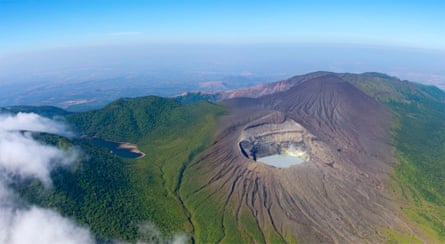
On the slopes of volcanoes, the last before Lake Nicaragua to the north, rainforest covers the land. High on the volcanic peaks, cool, moist air brought by the Atlantic trade winds forms cloud forests. There is a lot of life to document in this world heritage site, which is roughly the size of New York City.

As the sixth mass extinction of life on Earth gathers pace, humanity can only manage a well-informed guess about the true magnitude of the loss. We have identified around 2 million species on the planet. We know their abundance has plummeted. But with estimates for the total ranging from 8.7 million to a trillion, we are still unable to answer a fundamental question: how many species are there on Earth?

Until recently, there was little hope of a quick solution to the so-called “taxonomic impediment”, the phrase used to describe our inadequate account of the world’s library of life and the scarcity of taxonomists. Detailed species knowledge was routinely lost when experts died. Most plants and animals that went extinct slipped away unnoticed and unrecorded, anonymous casualties of human overconsumption and overpopulation.

But that was before the invention of DNA barcoding. In 2003, Canadian scientist Paul Hebert published a study claiming to have developed a technique that could identify and differentiate between all animal species on Earth. Using common moths collected in his own backyard, he successfully identified 200 closely related species using the mitochondrial gene cytochrome c oxidase I (COI), which is present in all aerobic life.

Rincon de la Vieja volcano, the highest point in Área de Conservación Guanacaste (ACG), home to cloud forests and a variety of wildlife. 

Hebert, known primarily for his expertise in water fleas at the time, had cracked it. The short genetic sequence would serve as a DNA barcode for all animals, separating species by their genetic divergence. An equivalent section of DNA could be used to discriminate between plants and fungi. Museum collections could be identified, too. Barcoding was also cheap. All he needed now was $1bn to identify the millions of animals unknown to science, a fraction of the cost of the International Space Station or the Human Genome Project, the paper concluded. But Hebert’s study was not met with universal acclaim.

“I was surprised. I had anticipated harsh criticism from morphologists. But I had not expected critiques from my peers in evolutionary biology,” Hebert recounts. He was accused of acting like a “creationist”. Others said his findings were uninteresting.

But nearly two decades later DNA barcoding has become mainstream. In August, Hebert, a professor at the University of Guelph in Ontario, was awarded the prestigious Midori prize for creating “a research alliance which is revolutionising our understanding of planetary biodiversity”.

DNA barcoding has been used to track the illegal trade in wildlife and plants, monitor water quality and even uncover the sale of endangered sharks in fish and chips. The technique has unmasked so-called cryptic species that were identified as one animal by traditional taxonomic approaches but are in fact many distinct creatures that appear the same to the human eye.

So far the reference library of species overseen by the International Barcode of Life (iBOL), where Hebert is the scientific director, numbers around 750,000 species. Last year the group launched a $180m project to barcode two million more species around the world, approximately the total number of flora and fauna already described using traditional taxonomy. While estimates for the number of plants, animals and fungi species range from eight to 20 million, insects are believed to account for a huge number of undiscovered species. Around $60m has been raised for the project so far.
Benefits

The benefits of knowing the Earth’s library of life are not limited to understanding the extent of biodiversity loss. Discoveries in medicine, agriculture, food, engineering and even beauty products are hidden in the genomes of the species that will be barcoded. A complete library of life could underpin food distribution networks, allow a smartphone attachment to identify any piece of organic material on Earth and integrate natural history into the social, cultural and economic fabric of society.

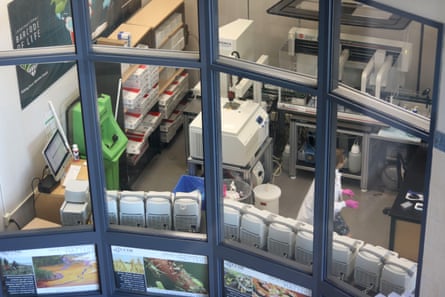
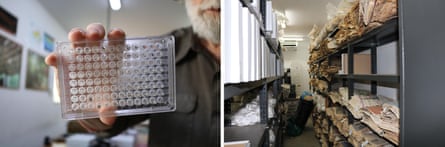
Inside the Centre for Biodiversity Genomics’ DNA extraction lab, part of the University of Guelph’s International Barcode of Life consortium. 

Now Hebert has turned his attention to the creation of a global biosurveillance system underpinned by barcoding that will continuously monitor the planet and check the health of global ecosystems in near real time. A network of satellites, underwater drones and DNA sequencers would patrol Earth, alerting scientists and governments to any dangerous changes, intercepting new diseases and highlighting harmful human activity. He estimates it would cost $1bn over 20 years.
Every species, that’s a book of life, and it’s about 10 times bigger than the longest book ever written by any humanProf Paul Hebert

There are good reasons to create such a system. Compared with the atmospheric monitoring infrastructure and billions of research money for combating the climate crisis, the resources dedicated to measuring the ongoing biological annihilation of life on Earth are pitiful. The tale of our heating planet is based on more than 150 years of weather records, while it is not uncommon for studies on insect collapse to be based on figures compiled by amateur entomologists.

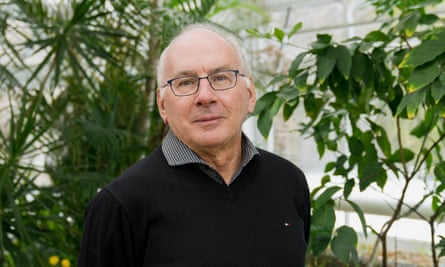
Prof. Paul Hebert, the ‘father of DNA barcoding’

“It’s a million centuries between every mass extinction event and we’re living in the century that brings the next one,” Hebert says. “We’re talking about the irrevocable loss of knowledge on the largest scale ever experienced by humanity – driven by humanity. Because every one of those genomes and every one of those species: that’s a book of life, and it’s about 10 times bigger than the longest book ever written by any human. So I think history will indict us severely for allowing this erosion of knowledge on an absolutely unprecedented scale.”
Pioneers

Guanacaste conservation area World Heritage site (ACG in its Spanish acronym) exists largely thanks to a lifetime of work by University of Pennsylvania professors Daniel Janzen and Winnie Hallwachs. Dan and Winnie, as they are known to everyone, split their lives between Philadelphia and a forest cabin in Santa Rosa national park, which is part of the ACG. They immediately understood the potential of Hebert’s innovation and are the major drivers behind Costa Rica’s bid to become the most extensively barcoded country on Earth with a new project: BioAlfa.

“For me, the invention of DNA barcoding is easily as significant as the discovery of DNA,” Janzen says as we sit outside their forest home. “And you could even go further back to some bigger discovery that we’ve had – the microscope, for example.” The 81-year-old evolutionary ecologist is a generational talent in his field, recipient of the Crafoord prize and a MacArthur fellow. His peers also admire his bravery, hard work and excellent salesmanship.

BioAlfa aims to systematically record and describe all of Costa Rica’s biodiversity, with barcoding at its heart. In 2019, President Carlos Alvarado Quesada designated the scheme of national importance, but it still needs $100m to make its goals a self-sustaining reality. While temperate countries have launched similar schemes, the sheer abundance of life in the tropics makes BioAlfa a completely different challenge.

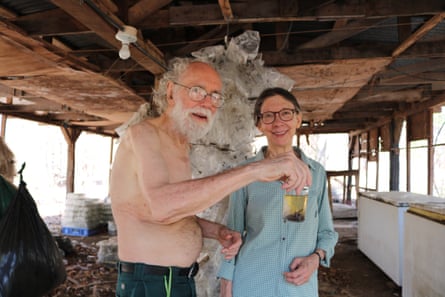
Daniel Janzen and Winnie Hallwachs in an outhouse filled with samples near their cabin in the ACG. Janzen is holding a jar of insects that will be DNA barcoded in Canada. 

The Central American country is home to an estimated 4% of the world’s biodiversity. Coexistence with nature is part of Costa Rica’s essence and it promotes ambitious decarbonisation plans and wields international influence in the environmental arena. Overcoming the taxonomic impediment within its borders by identifying and understanding all of its flora and flora would be an unprecedented achievement. Hebert has reserved half of his barcoding capacity for BioAlfa this year.

Janzen began documenting life in the dry tropical forests of northern Costa Rica after collecting leaves to feed Rufus, an excitable teenage tapir, in the mid-70s. The pig-like herbivore had been orphaned and entrusted to friends, surviving on scraps from the kitchen table. But Rufus was no longer welcome at dinner after he learned that a swift tug on the tablecloth would bring a feast crashing to the floor.

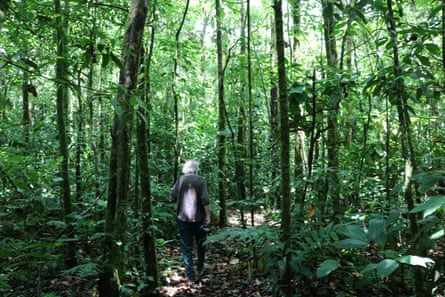
Daniel Janzen walks through rainforest in the ACG

“When he was banished outside, I came to the question of what kinds of leaves he would eat,” Janzen says, chuckling as he recounts the tale.

Janzen drove to the forest of Santa Rosa national park, which now forms part of the ACG, and filled plastic bags with an array of leaves for Rufus. But when he returned to the corral, he realised he could not identify the leaves the grateful tapir was devouring. So he returned to Santa Rosa with a botanist and spent the next six months identifying the plants in the forests. Then he moved on to insects.

‘Butterfly factories’
A network of malaise traps, moth lamp stations and rearing barns – jokingly known as “butterfly factories” to those who work in them – has been established across the different ecosystems to record insect life. The painstaking research will help make a global biosurveillance system possible but it needs to be conducted everywhere.

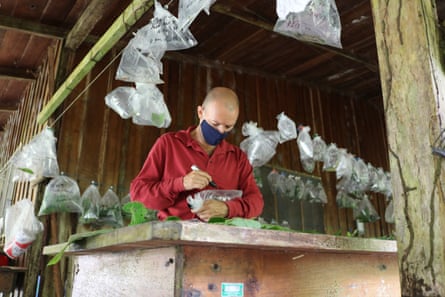
A former water buffalo shed is filled with carefully organised rows of plastic bags, each containing a caterpillar feasting on leaves from the nearby rainforest. Osvaldo, a former shark fisherman and field assistant to the couple for 30 years, is holding a hungry caterpillar hidden under a leaf. The insect will be carefully reared and ultimately sent to Canada for DNA barcoding analysis in Hebert’s lab once it has completed its life cycle.

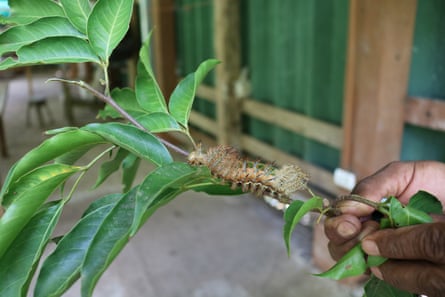
The caterpillar is a chaotic creature that writhes in the light when Osvaldo turns over the leaf, the end of its body quivering like the rattle of a poisonous snake. Its shades of brown and beige combine like a cubist artwork. Barcoding might show it is a new species.

A parataxonomist monitors the health of caterpillars in a butterfly-rearing barn in the ACG.
 
“There are much bigger ones than that,” Osvaldo tells me, disappearing back into the lines of plastic bags.

The next caterpillar is huge, covered in orange and blue spikes. It makes a low-level, muttered clicking sound as Osvaldo strokes its back. We cross to the other side of the rearing barn to inspect pupae undergoing their final stage of development. Osvaldo delights in the range of chrysalis shapes and colours.

But not all become butterflies and moths. The bags filled with dead pupae are moved to another line in the barn. From them, parasitoids emerge from eggs that were laid inside the unsuspecting hosts they have slowly devoured.

In the main building on a hill above the rearing barn, Gloria, another parataxonimist, shows me photos of how the pupae are changed by the parasitoids. Some look like they’ve been stuffed with polystyrene. Others look normal apart from small groups of black bubbles on the pupa. Sometimes flies emerge from them, sometimes wasps.

Gloria is carefully inspecting glass jars filled with the parasitoids’ pupae, inputting information about the host specimen they emerged from and taking photos. They, too, will be sent for DNA barcoding to better understand the web of life in the ACG.

Osvaldo, a parataxonomist, holds a caterpillar that was collected from the nearby rainforest. 

The results of this process have been astonishing. Almost 200 new parasitoid wasp species were discovered where only three had previously been described. At least 3,000 more species have been barcoded and are awaiting the attention of a taxonomist to formally introduce them to science.

While the thrill of discovery is an end in itself, the library of species that BioAlfa will help create will also be of economic importance. A DNA barcode is just a way to identify an organism but the genome – its entire sequence – can prove lucrative: the basis for new discoveries in medicine, agriculture, food and beauty.

Alongside conservation and sustainability, sharing the benefits from genetic resources is the third and often ignored pillar of the UN convention on biological diversity which will hopefully produce the “Paris agreement for nature” in 2021. Developing countries, which are normally the most biodiverse, want just payment for the riches that might hide in their ecosystems.

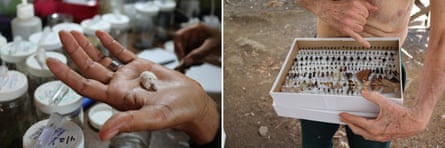
Clockwise from top left: Parataxonomist Gloria holds a larva killed by parasitoids; Janzen points to a box of dried and preserved insects; boxes of insect and plant samples collected in the ACG for analysis; Janzen holds insect leg samples that will be sent for DNA barcoding analysis in Canada. P

Janzen and Hallwachs, alongside the Costa Rican government, are well aware of this issue and the potential economic benefits of BioAlfa. Anyone who spends long enough with Janzen will see his trusty comb emerge from his back pocket – the beginning of a story about the future of being able to identify any organism anywhere with a device that connects to an iPhone. Using a sensor the size of a comb, he says, farmers will be able to calculate the economic cost of cutting down rainforest for cattle or monoculture crops by rapidly checking areas for potential discoveries.

Costa Rica already has had early success bioprospecting. South of the ACG is the Nicoya peninsula, one of the four blue zones on Earth where humans routinely live above the age of 100. In 2017, Chanel launched its Blue Serum skincare range, which uses ingredients from here. Antioxidants from the region’s green coffee were used and the Costa Rican government received payment. BioAlfa’s library of life might bring many more paydays.
Unknown extinctions

Heading out into the dry tropical forest a short drive from Janzen and Hallwachs’ cabin, we inspect the number of moths that have emerged in the first few weeks of the rainy season.

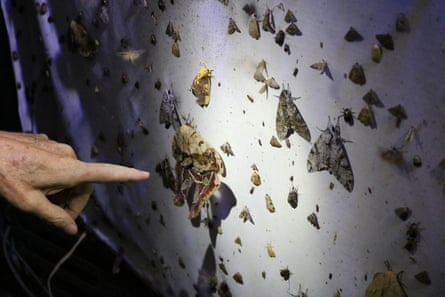
To the untrained eye, the hundreds of insects on the white sheet in the darkness overwhelm and exhilarate in equal measure. Moths the size of birds flutter around my head, brushing my ears, legs and every uncovered body part. Geckos lurk on the corner of the sheet picking off the smaller moths. Mexican burrowing toads belch in unison in the valley below the lamp station. But the couple are quick to temper my naive exuberance.

There used to be many more, Hallwachs quietly assures me as we stand with the darkness at our backs, looking at the spectacular display. “There are all kinds of species missing,” she says.

The next day Janzen shows me a picture of the same light station in 1984 – it is barely possible to see the white linen under the layer of moths.

Daniel Janzen points to a large moth at a lamp station in the dry tropical forest in the ACG. 


As Hallwachs shows me to my room on the first night of my second visit to the park, I point through stormy weather conditions to fireflies blinking around the trees. It is a species of firefly that only appears in the first few weeks of the rainy season, she says.

“Firefly numbers are going down around the world. And they’re not nearly as abundant as they used to be. But they are magical. They’re totally magical,” she says, as we crouch together in the rain admiring them.
We have endangered species eating endangered species to keep themselves goingDaniel Janzen

The ACG is marked by human extraction: scar marks on the chicle trees, which were targeted in the second world war to provide chewing gum; stumps of mahogany, still rock solid decades after they were felled; the mangrove forest that was cut down for textile dye. All are indicators of the overconsumption driving biodiversity loss around the world.

On my final day with the couple, they indulge my interest in the beach on the western flank of the ACG, which might have the largest concentration of jaguars in Central America. In the middle of another rainy season storm, Janzen stops the 4x4 we are travelling in to explain why.

“When I got here in about 1971, I met an old jaguar hunter who hunted with dogs. And he said to me, not bragging, just matter-of-factly, that he normally got five to six jaguars per year out of this valley. So a few years later, I’m exploring this valley for caterpillars and all that. And I look around me as a hunter, as somebody who understands wild food. And I say to myself, ‘no way does this valley support five to six jaguars a year’.

“Years later, a biologist named Luis Fonseca started studying the nesting of sea turtles on this beach down here. And right away he discovered the jaguars were killing the sea turtles – not the eggs – but the whole adult.

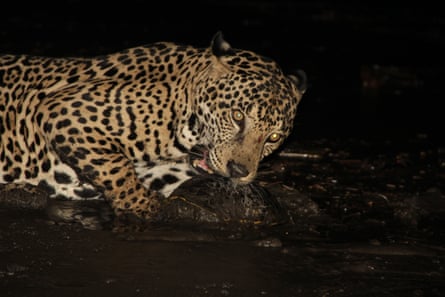
A jaguar gnaws on a recently-killed freshwater turtle on Nancite Beach. 

“There are four species of turtles that nest on this beach. Two are regular all year round. So there’s the food! We have endangered species eating endangered species to keep themselves going.”

There used to be more of everything, everyone is certain, but quantifying what else might be slipping away is hard when there are millions of species left to document. Maybe DNA barcoding can rectify that.

quinta-feira, 7 de março de 2019

Fungo da Amazónia Digere Plástico (com vídeo)


Trata-se do fungo conhecido como Pestalotiopsis microspora, um cogumelo que pode se alimentar de plástico. Foi descoberta essa sua qualidade por um grupo de estudantes da Universidade de Yale, ao pesquisar a Amazónia equatoriana, com o professor de biologia molecular Scott Strobel.

E mais, o Pestalotiopsis comedor de plástico não precisa de oxigénio para sua alimentação. Quer dizer, a degradação e transformação promovida por este fungo pode se dar, inclusive, nas camadas mais profundas dos aterros sanitários, por inoculação dos seus micélios.

Realmente, o Pestalotiopsis microspora será uma mão na roda para nós, humanos, já que o tipo de plástico do qual pode se alimentar este fungo é justamente o mais difícil dos plásticos para ser reciclado - o poliuretano.

O poliuretano é um plástico termorrígido e sua reciclagem é muito complexa já que não pode ser derretido e misturado a outros plásticos.

Atualmente é possível seu reuso na fabricação de pistas de atletismo, ao misturá-lo com a resina de poliuretano, e também na feitura de sola para calçados. Para além do mais, o poliuretano é um POP - Poluente Orgânico Persistente - um dos flagelos do meio ambiente e promotor de profundos desequilíbrios ambientais já que são compostos altamente estáveis, que resistem à degradação química, fotolítica e biológica e podem também, entrar na cadeia alimentar pelo processo de bioacumulação em organismos vivos.

O trabalho em questão, Biodegradation of Polyester Polyurethane by Endophytic Fungi, pode ser lido na revista científica Applied and Environmental Microbiology (AEM), aqui mas, antecipe seu interesse lendo abaixo o resumo do mesmo, em livre tradução nossa:

“A biorremediação é uma importante abordagem à redução de resíduos que se baseia em processos biológicos para quebrar uma variedade de poluentes. Isto é tornado possível pela vasta diversidade metabólica do mundo microbiano. Para explorar essa diversidade para a degradação do plástico, nós analisamos várias dezenas de fungos endofíticos por sua capacidade de degradar o poliéster poliuretano polímero sintético (PUR). Vários organismos demonstraram a capacidade de degradar eficazmente o PUR em ambas as suspensões de sólidos e líquidos. Particularmente foi observada atividade robusta entre vários isolados do género Pestalotiopsis, embora não tenha sido uma característica universal do género. Dois isolados de Pestalotiopsis microspora eram capazes de desenvolver-se com uma alimentação do polímero unicamente, como a única fonte de carbono sob condições aeróbicas e anaeróbicas. A caracterização molecular desta atividade sugere que uma hidrolase serina é responsável pela degradação de PUR. A ampla distribuição da atividade observada e o caso sem precedentes de crescimento anaeróbio utilizando PUR como única fonte de carbono sugerem que endófitas são uma promissora fonte de biodiversidade de partida para o rastreio de propriedades metabólicas úteis para a biorremediação.”
Nosso mar de plástico na natureza precisa ser, urgentemente, degradado e, esta pesquisa é uma das alternativas interessantes que surgiram.


foto: radicalmycology


Veja no vídeo abaixo, um trabalho de estudantes da Universidade Autônoma de Puebla, no México, que também estão estudando a aplicação prática deste fungo.
Fonte da notícia aqui

sexta-feira, 15 de junho de 2018

An Outbreak of Nipah Virus in India Can Help Explain the Future of Infectious Disease


India’s Kerala state has just faced an outbreak of Nipah virus. Seventeen people have died so far. That wouldn’t seem so serious, but only eighteen people were infected.  To make matters worse, there is no known cure or vaccine for Nipah – all doctors can offer is supportive treatment while the victim’s immune system attempts to fight off the virus, which causes brain damage.

Nipah is a near perfect example of an emerging infectious disease. Its history and evolution follow the pattern of almost every new virus.

First of all, it’s not actually new. When we say Nipah is an “emerging” infectious disease, we mean that it is emerging into humans and domestic animals. The virus itself has been in existence for a long time; it’s not something that recently evolved out of nowhere. But it was only identified in 1998, when it first infected humans in Malaysia in the village of Sungai Nipah. In the 1970s, intensive pig farming started in Malaysia, with farmers expanding farmland into wild areas. Nipah, it turns out, was already present in fruit bats. Bats infected pigs, and then pigs infected people. 265 people were infected, and 40% of them died.

Next, Nipah is a Zoonotic disease. It circulates among animals, and can then infect humans. In this case, Nipah has a wild animal reservoir – bats – and when humans began to expand into bat territory, the infection spread. Ebola is the same way; it’s present among wild bats and every so often it spreads into the human population and then among people. As people take over the last wild spaces on the planet, we’re going to see more virus outbreaks like Nipah.

And, finally, like so many viruses, Nipah has no cure. Bacterial infections can almost always be treated or cured through some combination of antibacterial drugs. Viruses are much more difficult to target. HIV can be treated, not cured; the same is true of the herpes virus. There are drugs that treat the influenza virus, but their effectiveness is limited.

This Nipah outbreak was probably caused by bats. Pigs have been ruled out as the infection source. While the India health authorities have not yet identified Nipah in bats in Kerala, Nipah is present it bats all through South and Southeast Asia and it is challenging to identify viruses in wild animals like bats, especially since bats carry the circus without actually getting sick. It’s most likely that some unfortunate person came into contact with a bat or a fruit contaminated with bat saliva and was directly infected.

So far the Indian response has also been exemplary. The outbreak in India seems to be under control. The first cases were identified in Kozhikode district, and were promptly reported to the Indian Ministry of Health and the World Health Organization. The Ministry of Health sent a response team immediately to support response. The Kerala Department of Health and Family Welfare has identified and quarantined every Nipah patient, and they are tracing their contacts to identify people who may have been exposed.

This, though, is what the future looks like. Zoonotic diseases and human deaths, apparently out of the blue. When we’re lucky, the response will look like this too.

Artigos científicos

terça-feira, 24 de abril de 2018

DNA Barcoding Pioneer Wins Global Research Prize


The University of Guelph-based “father of DNA barcoding” has been chosen to receive a top international honour.

Prof. Paul Hebert will receive the 2018 Dr. A.H. Heineken Prize for Environmental Sciences from the Royal Netherlands Academy of Arts and Sciences.

Hebert will be the first Canadian to receive the award, given every two years since 1990. He will receive the prize, worth US$200,000, in the Netherlands this fall.

The prize has been awarded to recipients worldwide, including Paul Ehrlich, author of the 1968 book The Population Bomb, and the Gaia hypothesis proponent James Lovelock.

“These are among the top biodiversity scientists on the planet,” said Hebert, director of U of G’s Centre for Biodiversity Genomics and a professor in the Department of Integrative Biology. “To find myself in that company is startling. It’s recognition of the role of DNA barcoding in revolutionizing biodiversity science.”

Malcolm Campbell, vice-president (research), said the new award acknowledges the international impact of DNA technology developed at the University of Guelph. “Professor Hebert has led a revolution in access to biological information that is central to understanding and improving life on our planet,” he said.

An academy citation said Hebert will be honoured “for his pivotal contribution to developing a genetic barcode capable of classifying every biological species on Earth.”

In 2003, the U of G biologist proposed a method for using a short DNA segment to distinguish among species.

He is now scientific director of the International Barcode of Life project, in which researchers from 25 countries are assigning DNA barcodes to millions of specimens. The database currently contains records for 600,000 species and is used by almost 25,000 researchers worldwide.

DNA barcoding has led to the discovery of thousands of new species. It’s also being used to identify mislabelled foods and natural health products, to improve environmental monitoring and to understand the impacts of human activities.

In 2016, DNA barcoding became part of the UN strategic plan for enhancing and protecting biodiversity. Referring to the loss of species in recent decades, Hebert said he fears continued declines in biodiversity. “That may be the planet we’re headed for, and our work is to stop it.”

Hebert is now preparing for the first phase of a major biosurveillance project, beginning in southern Ontario this year and extending across Canada over the next few years. By combining barcoding data with information about the country’s eco-regions, he said, researchers will launch the world’s first national biodiversity monitoring program.

Referring to a planned Planetary Biodiversity Mission, he said, “By 2045, we expect that a global biosurveillance system will be reading life on a planetary scale.”

Contrasting DNA technology with traditional morphological ways of identifying organisms, he added, “DNA barcoding is giving humanity the capacity to read nature on scales that were previously impossible.”

Holder of the Canada Research Chair in Molecular Biodiversity, Hebert is an Officer of the Order of Canada and a Fellow of the Royal Society of Canada.

segunda-feira, 12 de março de 2018

Essay - Unified theory of evolution


The unifying theme for much of modern biology is based on Charles Darwin’s theory of evolution, the process of natural selection by which nature selects the fittest, best-adapted organisms to reproduce, multiply and survive. The process is also called adaptation, and traits most likely to help an individual survive are considered adaptive. As organisms change and new variants thrive, species emerge and evolve. In the 1850s, when Darwin described this engine of natural selection, the underlying molecular mechanisms were unknown. But over the past century, advances in genetics and molecular biology have outlined a modern, neo-Darwinian theory of how evolution works: DNA sequences randomly mutate, and organisms with the specific sequences best adapted to the environment multiply and prevail. Those are the species that dominate a niche, until the environment changes and the engine of evolution fires up again.
But this explanation for evolution turns out to be incomplete, suggesting that other molecular mechanisms also play a role in how species evolve. One problem with Darwin’s theory is that, while species do evolve more adaptive traits (called phenotypes by biologists), the rate of random DNA sequence mutation turns out to be too slow to explain many of the changes observed. Scientists, well-aware of the issue, have proposed a variety of genetic mechanisms to compensate: genetic drift, in which small groups of individuals undergo dramatic genetic change; or epistasis, in which one set of genes suppress another, to name just two.
Yet even with such mechanisms in play, genetic mutation rates for complex organisms such as humans are dramatically lower than the frequency of change for a host of traits, from adjustments in metabolism to resistance to disease. The rapid emergence of trait variety is difficult to explain  just through classic genetics and neo-Darwinian theory. To quote the prominent evolutionary biologist Jonathan B L Bard, who was paraphrasing T S Eliot: ‘Between the phenotype and genotype falls the shadow.’
And the problems with Darwin’s theory extend out of evolutionary science into other areas of biology and biomedicine. For instance, if genetic inheritance determines our traits, then why do identical twins with the same genes generally have different types of diseases? And why do just a low percentage (often less than 1 per cent) of those with many specific diseases share a common genetic mutation? If the rate of mutation is random and steady, then why have many diseases increased more than 10-fold in frequency in only a couple decades? How is it that hundreds of environmental contaminants can alter disease onset, but not DNA sequences? In evolution and biomedicine, the rates of phenotypic trait divergence is far more rapid than the rate of genetic variation and mutation – but why?
Part of the explanation can be found in some concepts that Jean-Baptiste Lamarck proposed 50 years before Darwin published his work. Lamarck’s theory, long relegated to the dustbin of science, held, among other things, ‘that the environment can directly alter traits, which are then inherited by generations to come’. Lamarck, a professor of invertebrate zoology at the National Museum of Natural History in Paris, studied many organisms including insects and worms in the late 18th and early 19th centuries. He introduced the words ‘biology’ and ‘invertebrate’ into the scientific lexicon, and wrote books on biology, invertebrates and evolution. Despite this significant academic career, Lamarck antagonised many of his contemporaries and 200 years of scientists with his blasphemous evolutionary ideas.
At the start, Lamarck might have been pilloried as a religious heretic, but in modern times, it is the orthodoxy of science – and especially Darwin’s untouchable theory of evolution – that has caused his name to be treated as a joke. Yet by the end of his career, Darwin himself had come around; even without the benefit of molecular biology, he could see that random changes were not fast enough to support his theory in full.
The question is this: if natural selection isn’t acting on genetic mutations alone, then what molecular forces create the full suite of variation in traits required for natural selection to finish the job? One clue came almost a century after Darwin proposed his theory, in 1953, just as James Watson and Francis Crick were unravelling the mysteries of DNA and the double helix. In that year, the developmental biologist Conrad Waddington of the University of Edinburgh reported that fruit flies exposed to outside chemical stimulus or changes in temperature during embryonic development could be pushed to develop varying wing structures. The changes the scientists induced in that single generation would, thereafter, be inherited by progeny down the lineage. Waddington coined a modern term – ‘epigenetics’ – to describe this phenomenon of rapid change. Notably, before Watson and Crick had even revealed their DNA structure, Waddington recognised the potential impact his discovery could have on the theory of evolution: the single-generation change in the fruit-fly wings were supportive of the original ideas of the heretic Lamarck. It appeared that the environment could directly impact traits.
The regulation of biology will never involve a ‘genetic-only process’, nor an ‘epigenetic-only process’. They are completely integrated
Although Waddington described the general role of epigenetics, he was no more aware of the molecular elements or mechanisms involved than Lamarck or Darwin. But the more molecular biology decodes the workings of life, the more Waddington’s concepts – and Lamarck’s – make sense. Indeed, although the vast majority of environmental factors cannot directly alter the molecular sequence of DNA, they do regulate a host of epigenetic mechanisms that regulate how DNA functions – turning the expression of genes up or down, or dictating how proteins, the products of our genes, are expressed in cells.
Today, that is the precise definition of epigenetics: the molecular factors that regulate how DNA functions and what genes are turned on or off, independent of the DNA sequence itself. Epigenetics involves a number of molecular processes that can dramatically influence the activity of the genome without altering the sequence of DNA in the genes themselves.
One of the most common such processes is ‘DNA methylation’, in which molecular components called methyl groups (made of methane) attach to DNA, turning genes on or off, and regulating the level of gene expression. Environmental factors such as temperature or emotional stress have been shown to alter DNA methylation, and these changes can be permanently programmed and inherited over generations – a process known as epigenetic transgenerational inheritance.
Another major epigenetic process discovered in recent years is ‘histone modification’. Histones are proteins that attach to and alter the structure of DNA, which in turn wraps around the histones like beads on a string. The combination of DNA and histone together has been called ‘chromatin structures’ – and the coils, loops and twists in chromatin structures in response to environmental stress can permanently alter gene expression as well.
More recently, researchers have documented ‘RNA methylation’ in which methyl groups attach to the genetic helper molecules, in the process altering gene expression and subsequent protein production for generations down the line. Likewise, the action of so-called ‘non-coding RNA’, small RNA molecules that bind to DNA, RNA and proteins, also alter the expression of genes, independent of DNA sequence.
All of these epigenetic mechanisms are critical and have unique roles in the molecular regulation of how DNA functions. The regulation of biology, it follows, will never involve a ‘genetic-only process’, nor an ‘epigenetic-only process’. Instead, the processes of epigenetics and genetics are completely integrated. One does not work without the other.
For epigenetics to have a significant impact on evolution, its alterations must be inherited by subsequent generations, just like DNA sequences and gene mutations. But epigenetic inheritance does not follow many of the Mendelian rules that apply to classic genetics and the neo-Darwinian theory of evolution. These rules hold that DNA sequences and genes function discretely, like particles; upon reproduction, the ‘particles’ from each parent unite at random with a matching pair from the other parent, leading to a new DNA sequence and new expression of inherited traits.
Epigenetic transgenerational inheritance, by contrast, occurs when the germline (sperm or egg) transmits epigenetic information between generations, even in the absence of continued direct environmental exposures. Environmental stress and exposure is especially impactful during germline development – for instance, when foetal sex organs develop into testis for men or ovaries for women to produce sperm or eggs later in life. Indeed, environmental exposure during this critical time can trigger permanent epigenetic changes via DNA methylation, histone modifications and alteration of non-coding RNA.
Evidence for this non-genetic form of inheritance, which my team at Washington State University identified in 2000, is persuasive. Findings published by my group in Science in 2005 showed the ability of environmental chemicals to promote inheritance of disease in rats through three generations, to great-grand offspring and beyond, in the absence of any continued exposures. The phenomenon has been further documented by many labs in a number of different species over the past decade. An example is when Graham Burdge and his team at the University of Southampton in the United Kingdom reported that excessive nutrition in rats created epigenetically induced metabolic abnormalities three generations out.
In other work, Sibum Sung and his colleagues at the University of Texas Austin found that drought and changes in temperature induced epigenetic evolution in plants, leading to alterations in growth and flowering traits, generations out. More recently, a number of studies have indicated that environmental stress can promote epigenetic alterations that are transmitted to and induce pathologies in subsequent generations. A recent study by Gerlinde Metz and her colleagues at the University of Lethbridge in Canada demonstrated that restraining pregnant rats or, alternatively, forcing them to swim, produced epigenetic damage that put newborns at risk. This ancestral stress also promoted the epigenetic transgenerational inheritance of abnormalities in the great-grand offspring of the exposed gestating female. Several studies now support the role of environmental stress in promoting the epigenetic transgenerational inheritance of disease.
Environmentally induced epigenetic transgenerational inheritance has now been observed in plants, insects, fish, birds, rodents, pigs and humans. It is, therefore, a highly conserved phenomenon. The epigenetic transgenerational inheritance of phenotypic trait variation and disease has been shown to occur across a span of at least 10 generations in most organisms, with the most extensive studies done in plants for hundreds of generations. One example in plants, a heat-induced flowering trait first observed by Carl Linnaeus in the 18th century, was later found to be due to a DNA methylation modification that occurred in the initial plant, and has been maintained for 100 generations. In worms, traits altered by changes in nutrition have been shown to propagate over 50 generations. In mammals with longer generation times, we have found toxicant-induced abnormal traits propagated for nearly 10 generations. In most of these studies, the transgenerational traits do not degenerate but continue. Even Waddington’s experiment with flies was taken out to 16 generations, and the altered traits have been propagated and continue to exist today.
Three generations after exposure to the fungicide, we saw abnormalities in the testis, ovaries, kidneys, prostate, mammary glands and brain
Much as Lamarck suggested, changes in the environment literally alter our biology. And even in the absence of continued exposure, the altered biology, expressed as traits or in the form of disease, is transmitted from one generation to the next.
The environment plays an essential role in evolution. In a Darwinian sense, it determines which individuals and species will survive through the inexorable engine of natural selection. But a large number of environmental factors can also impact evolution and biology more directly, through epigenetic means: traits can shift through exposures to temperature and light or in response to nutritional parameters such as high fat or caloric restriction diets. A host of chemicals or toxins from plants and the general environment can impact phenotypic variation and health.
One example that we studied in our lab involved the impact of environmental chemical exposure on trait variation and disease. In our study, we set out to investigate the ability of an environmental toxicant – vinclozolin, the most commonly used fungicide in agriculture today – to alter traits through epigenetic change. First, we briefly exposed a gestating female rat to the fungicide; then we bred her progeny for three generations, to great-grand-offspring, in the absence of any continued exposures. For nearly all males down through the lineage, we observed a decrease in the number and viability of sperm and an associated incidence of infertility with age. And we observed a variety of other disease conditions in both males and females three generations removed from the direct exposure, including abnormalities in the testis, ovaries, kidneys, prostate, mammary glands and brain. Corresponding epigenetic alterations in the sperm involve changes in DNA methylation and non-coding RNA expression.
Our research showed that ancestral exposure to the toxicant vinclozolin also affected sexual selection in animals three generations down the lineage. Considered a major force in evolution since Darwin first posed his theory, sexual selection – also known as mate preference  was assessed by allowing females from other litters to choose between either descendants of exposed or unexposed males. Females overwhelmingly selected those who lacked the transgenerational epigenetic alterations and whose ancestors had not been exposed. In conclusion, exposure to the fungicide permanently altered the descendant’s sperm epigenetics; that, in turn, led to inheritance of sexual selection characteristics known to reduce the frequency with which their genes might propagate in the broader population and directly influence evolution on a micro-evolutionary scale.
In another recent study, we examined evolution on the macro-evolutionary scale – speciation. One of the classic examples of speciation involves Darwin’s finches in the Galapagos Islands. A group of finches radiated out from a single species to become 16 different species of varying size and with different traits such as altered beak structure. Our team and collaborators set out to examine the DNA from five of those distinct species. We observed DNA sequence mutations from one species to the next, but the epigenetic changes in DNA methylation (epimutations) were higher in number and more correlated with the phylogenetic (family tree) distance between the species. Although the field of evolution is currently focused on neo-Darwinian genetic concepts, our findings suggest that epigenetics also has a role in the speciation and evolution of Darwin’s finches.
Support for an epigenetic role in evolution continues to mount. One interesting study compares Neanderthal and human DNA, where genetic differences are significantly less pronounced than the epigenetic ones, which involve alterations in DNA methylation in the genomes. In short, integration of neo-Lamarckian and neo-Darwinian concepts into a unified theory provides a far more efficient molecular basis for how evolution works.
Neo-Darwinian and neo-Lamarckian mechanisms both drive evolution, and they appear to be intertwined. Indeed, because environmental epigenetics can increase trait variation within a population, it empowers natural selection, which works by promoting adaptive traits over others. Classic neo-Darwinian evolution involves genetic mutation and genetic variation as the main molecular mechanisms generating variation. Add to these mechanisms the phenomenon of environmental epigenetics, which directly increases trait variation, and you enhance the ability of the environment to mediate natural selection and evolution.
Table 1. Evolution Theory Components
A critical additional consideration for our lab involves the ability of epigenetics to alter genome stability and, thus, to directly induce the kind of genetic mutations observed in cancer biology. The gene mutations we’ve found here include copy number variation (the number of times a short DNA sequence is repeated) and point mutations (alteration of a single nucleotide within the DNA sequence) in later generations. Nearly all types of genetic mutations are known to have a precursor epigenetic change that increases the susceptibility to develop that mutation. We observed that direct environmental exposure in the first generation had epigenetic changes and no genetic mutations but, transgenerationally, an increase in genetic mutations was identified. Since environmental epigenetics can promote both trait variation and mutations, it accelerates the engine of evolution in a way that Darwinian mechanisms alone cannot.
Figure 1. Unified Theory of Evolution
The unified theory of evolution has many skeptics, especially in light of the genetic determinism paradigm that has influenced the biological sciences for more than 100 years. Genetic determinism sees DNA as the basic building block of biology, and the DNA sequence as the ultimate molecular control.
Perhaps the key pentacle of genetic determinism was the sequencing of the human genome, which was to provide the ultimate proof of the primacy of the gene. Genome-wide association studies were predicted to provide biological marks for normal and abnormal phenomena of life and reveal the underpinnings of disease. But in the wake of that sequencing, the major prediction of genetic determinism – that the majority of human biology and disease could be understood through the lens of genetics – has not borne out.
Generations of scientists and the public have been taught genetics, but few have been exposed to the relatively new science of epigenetics – in fact, inclusion of epigenetics into the molecular elements of biology and evolution has been met with opposition. Watson, who played a role in the discovery of the DNA structure, and Francis Collins, who played a significant role in sequencing the human genome and is the director of the US National Institutes of Health, both initially questioned the significance of epigenetics beyond a few common measurements, but today are more supportive. It is no surprise that, after 100 years of genetic determinism, resistance to a paradigm shift is strong.
It was Thomas Kuhn who suggested that when a current paradigm reveals anomalies then new science needs to be considered – that is how scientific revolutions are born
A month after I suggested this unified theory of evolution and it was published in Genome Biology and Evolution in 2015, David Penny of Massey University in New Zealand suggested that epigenetics was largely an ancestral feature of genetics and simply a component of genetics. Other recent publications, including one from Emma Whitelaw of La Trobe University in Australia, have disputed the concept of Lamarckian epigenetic inheritance in mammals.
Despite the pushback, I’m convinced that we have reached the point where a paradigm shift is due. Accepting that epigenetics plays a role in evolution does not topple the science of genetics; embracing neo-Lamarckian ideas does nothing to challenge classic neo-Darwinian theory. The accepted sciences are essential and accurate, but part of a bigger, more nuanced story that expands our understanding and integrates all our observations into a cohesive whole. The unified theory explains how the environment can both act to directly influence phenotypic variation and directly facilitate natural selection, as shown in the diagram above.
With a growing number of evolutionary biologists developing an interest in the role of epigenetics, there are now some mathematical models that integrate genetics and epigenetics into a system, and the work has paid off. Consideration of epigenetics as an additional molecular mechanism has assisted in understanding genetic driftgenetic assimilation (when a trait produced in response to the environment ultimately becomes encoded in the genes); and even the theory of neutral evolution, whereby most change happens not in response to natural selection, but by chance. By providing an expanded molecular mechanism for what biologists observe, the new models provide a deeper, more nuanced and more precise roadmap to evolution at large.

Taken together, these findings demand that we hold the old standard, genetic determinism, up to the light to find the gaps. It was Thomas Kuhn who in 1962 suggested that when a current paradigm reveals anomalies then new science needs to be considered – that is how scientific revolutions are born.

A unified theory of evolution should combine both neo-Lamarckian and neo-Darwinian aspects to expand our understanding of how environment impacts evolution. The contributions of Lamarck more than 200 years ago should not be discounted because of Darwin, but instead integrated to generate a more impactful and insightful theory. Likewise, genetics and epigenetics must not be seen as conflicting areas, but instead, integrated to provide a broader repertoire of molecular factors to explain how life is controlled.