Mostrar mensagens com a etiqueta Norte Global. Mostrar todas as mensagens

terça-feira, 4 de agosto de 2026

A geopolítica do cacau: soberania económica, agroecologia e a resistência à monocultura biotecnológica

A recente melhoria nas condições meteorológicas em importantes regiões produtoras trouxe um alívio temporário ao mercado internacional do cacau. De acordo com análises do setor (como as divulgadas pelo portal Mercado do Cacau), a chuva regular favoreceu o desenvolvimento das lavouras, permitindo que a cotação da matéria-prima ensaiasse uma recuperação. No entanto, esse impulso nas bolsas de commodities continua a ser limitado pela acumulação de estoques nos principais portos importadores e pela volatilidade da procura global.

Embora o suporte climático ofereça uma trégua a curto prazo, a cadeia de abastecimento global ainda carrega as cicatrizes do forte défice causado pelo fenómeno El Niño. Os países da África Ocidental - em especial a Costa do Marfim e o Gana, que juntos concentram mais de metade da oferta mundial, além da Nigéria e dos Camarões - continuam a enfrentar desafios estruturais profundos, como o envelhecimento dos pomares, a degradação dos solos e a persistência de doenças como a podridão-parda e o vírus do broto inchado.

Segundo dados estatísticos da International Cocoa Organization (ICCO), o mercado global caminha para um reequilíbrio delicado, passando dos déficits recordes de safras anteriores para uma projeção de pequeno superávit.

Análises detalhadas do International Food Policy Research Institute (IFPRI) revelam que a vulnerabilidade do setor não resulta apenas do clima, mas de uma rigidez estrutural: a dependência da exportação de grãos em bruto e o modelo de monocultura intensiva, que expõe os pequenos agricultores à especulação dos mercados globais.

1. A encruzilhada tecnológica: a pressão do CRISPR e da cultura celular
Como resposta à crise, o Norte Global e as multinacionais agroalimentares têm acelerado a promoção de soluções laboratoriais e patenteadas:
  • Edição genómica (CRISPR/Cas9): Investigações focam-se no desenvolvimento de cacaueiros geneticamente alterados para resistir a fungos e secas, com estudos publicados em revistas como a Nature. Nos EUA (via regras do USDA- SECURE) e progressivamente na UE (através da regulamentação de Novas Técnicas Genómicas - NGT 1 supervisionada pela EFSA), estas plantas caminham para a isenção do rótulo de OGM.
  • Cultura celular e sintéticos: Startups desenvolvem massa de cacau em biorreatores industriais ou alternativas sem cacau por fermentação de precisão, visando suprir a oferta sem depender do cultivo agrícola tradicional.
Para muitos peritos e organizações dos países produtores, este caminho não resolve as causas profundas da crise: transfere o controlo da produção agrícola para patentes corporativas e arrisca marginalizar milhões de pequenos agricultores na África Ocidental.

2. As vias de empoderamento e soberania dos países produtores
Em alternativa à dependência de patentes de laboratório, especialistas em agronomia tropical e economia de desenvolvimento apontam para quatro pilares fundamentais de autonomia e resiliência:

A. Agroecologia e Sistemas Agroflorestais (SAFs)
Em vez de modificar o DNA da planta para suportar solos degradados e Sol pleno, os Sistemas Agroflorestais recriam o ecossistema original do cacaueiro. Ao cultivar cacau sob a copa de árvores nativas, fruteiras e espécies florestais:
  • Mantém-se a humidade do solo e reduz-se a temperatura local em vários graus, anulando os efeitos térmicos do El Niño.
  • Promove-se o controlo biológico de pragas, eliminando a necessidade de pesticidas sintéticos.
  • Garante-se a diversificação de rendimentos dos agricultores com a venda de frutas, madeira e outros alimentos.
B. Processamento Local e Retenção do Valor Acrescentado
A África Ocidental exporta tradicionalmente a matéria-prima em bruto, retendo menos de 10% do valor final de um mercado global avaliado em mais de 100 mil milhões de dólares. O verdadeiro empoderamento passa pela industrialização nacional na Costa do Marfim, Gana, Nigéria e Camarões, transformando o grão em manteiga, massa e chocolate acabado antes da exportação, retendo os lucros e gerando emprego qualificado localmente.

C. Negociação Coletiva de Mercado (LID - Livelihood Income Differential)
Através de alianças regionais entre governos produtores, a implementação do prémio fixo por tonelada (LID) sobre o preço de mercado assegura um rendimento mínimo digno aos agricultores. O fortalecimento do comércio justo (Fairtrade) e o poder de negociação em bloco impedem que as multinacionais imponham preços abaixo do custo de produção.

D. Seleção Tradicional e Bancos de Germoplasma
O melhoramento agronómico tradicional - com seleção de variedades locais naturalmente resistentes a pragas e secas, aliado a técnicas de enxertia - permite renovar os pomares sem recorrer a transgenia ou CRISPR, preservando o património genético nativo e a autonomia das sementes.

3. Matriz Comparativa de Modelos de Desenvolvimento
DimensãoModelo Tecnológico Ocidental (CRISPR / Biorreatores)Modelo de Soberania Agroecológica (SAFs / Industrialização Local)
Soberania e PropriedadeDependência de patentes e empresas de biotecnologiaControlo comunitário, estatal e dos pequenos agricultores
Resiliência ClimáticaModificação genética da planta (solução laboratorial)Restauração do microclima e da biodiversidade florestal
Modelo EconómicoManutenção da importação de matérias-primas baratasProcessamento local e retenção do valor acrescentado
Rácio de RiscosPerda de mercado para os produtores tradicionaisProteção da biodiversidade e diversificação de rendimentos
A crise do cacau na África Ocidental expôs os limites da monocultura tradicional. No entanto, o futuro do setor não precisa de passar pela entrega do património agrícola a laboratórios estrangeiros: a combinação de agroecologia, justiça comercial e industrialização nos países de origem posiciona-se como a resposta mais duradoura, justa e sustentável.

domingo, 8 de março de 2026

Sangue e Petróleo: A Ecologia Política do Fascismo Fóssil Contemporâneo

Robin Mackay (esquerda) e Mark Alizart (direita)

A emergência do conceito de carbofascismo (ou fascismo fóssil) marca uma rutura analítica necessária na compreensão das extremas-direitas contemporâneas. Ao contrário do ecofascismo tradicional, que instrumentaliza a preservação da natureza para justificar a exclusão xenófoba e o controlo populacional, o carbofascismo manifesta-se como uma defesa militante e autoritária da economia extrativista. Esta ideologia não é apenas um subproduto da ignorância científica; é uma reforma identitária que funde a supremacia branca e o destino das nações industrializadas ao consumo desenfreado de hidrocarbonetos. No centro desta tese, Andreas Malm e o Zetkin Collective argumentam que o investimento histórico no capital fóssil criou uma estrutura de dominação que as elites globais não estão dispostas a abandonar, mesmo perante o colapso biosférico.

O fenómeno assenta naquilo que a investigadora Cara Daggett denomina como petromasculinidade. Nesta ótica, a queima de combustíveis fósseis é interpretada como um símbolo de virilidade, autonomia e poder patriarcal. A transição para energias renováveis não é vista apenas como uma mudança técnica, mas como uma ameaça à própria identidade do "homem ocidental" e à sua posição de domínio sobre a natureza e os povos do Sul Global. Assim, o negacionismo climático deixa de ser um debate sobre factos para se tornar uma guerra cultural, onde o carro a gasóleo e a extração de carvão são elevados a totens de liberdade contra uma suposta "tirania ecológica" das instituições transnacionais.

Historicamente, o fascismo sempre teve uma relação ambivalente com a tecnologia e a natureza. No entanto, o fascismo fóssil do século XXI radicaliza esta ligação ao defender a continuidade do status quo energético através da repressão estatal e da violência contra os movimentos de justiça ambiental. À medida que os efeitos do aquecimento global intensificam as crises migratórias, o carbofascismo propõe uma solução de "fortaleza": garantir o acesso aos recursos energéticos para os grupos dominantes enquanto se militarizam as fronteiras contra as vítimas da degradação ambiental que o próprio sistema produz. 

Para Alizart, a negação das alterações climáticas por parte de certas elites não é ignorância, mas uma estratégia deliberada. O carbofascismo descreve um sistema onde o colapso ambiental é utilizado para justificar regimes autoritários, o fecho de fronteiras e a exclusão de populações inteiras "excedentes" que não caberão nos recursos escassos do futuro. Alizart utiliza o termo termoplítica para explicar como a gestão do calor e da energia se tornou a nova ferramenta de controle social. No cenário do carbofascismo, quem controla o carbono e a energia controla a vida e a morte.

Mackay tem um histórico ligado ao CCRU (Cybernetic Culture Research Unit). A sua visão sobre o carbofascismo é matizada pela ideia de que o sistema atual não está "quebrado", mas sim acelerando em direção a uma forma de controle autoritário baseada na escassez de recursos.

Em suma, o "Sangue e Petróleo" representa a fase final de um sistema que prefere o autoritarismo à descarbonização, transformando a geologia em ideologia de sobrevivência seletiva.

Referências Académicas
Alizart, M (2021). The Climate Coup
Daggett, C. (2018). Petro-masculinity: Fueling conspiracy theories and authoritarian desire. Millennium: Journal of International Studies, 47(1), 25-44.
Malm, A., & Zetkin Collective. (2021). White Skin, Black Fuel: On the Dangers of Fossil Fascism. Londres: Verso Books.
Moore, J. W. (2015). Capitalism in the Web of Life: Ecology and the Accumulation of Capital. Nova Iorque: Verso Books.
Staudenmaier, P. (2011). Ecofascism Revisited: Lessons from the German Experience. Porsgrunn: New Compass Press.
Turner, J., & Bailey, C. (2022). "Ecotype": Understanding the extremist environmental transitions. Studies in Conflict & Terrorism.

segunda-feira, 9 de fevereiro de 2026

Mais umbigos que cabeças

This Incredible Map Tool Reveals Just How Much the Mercator Map Distorts the World [aqui]

Os provérbios são a nossa enciclopédia de bolso, e quando acordamos para o dia com as más notícias do dia anterior convém saber que "deus é grande e o mundo é pequeno". Tão pequeno que cabe num guardanapo. Era esse mesmo o significado que o latim atribuía à palavra mapa, sinónimo de toalha, lenço ou trapo. E era também mapa que chamavam ao pedaço de lona que, no silêncio expectante do circo, dava o sinal de largada para as corridas de bigas, também utilizadas como carros de guerra, como se aqueles cavalos fossem galopar pelos confins, a galgar fronteiras. Foi na superfície dessas telas que os romanos desenharam os limites do universo conhecido.

Os mapas retratam o melhor e o pior da nossa espécie: a curiosidade sôfrega e inquieta, a fome de descoberta, mas também vaidade agressiva e a sede de conquista e dominação. Os mapas fascinam porque contam histórias e revelam paixões. Mas são também os mapas que constroem nossa visão do mundo. As razões pelas quais o Norte nos aparece sempre virado para cima não são científicas, mas estratégicas e até ideológicas: o alto tem conotações positivas, enquanto o baixo é menosprezado. Associamos a pobreza aos países do Sul e a prosperidade aos países do Norte. A famosa imagem da Terra obtida pela Apollo 17, em 1972 -aquela bola azul, em forma de berlinde - foi rodada para efeitos de publicação, pois só sabemos ler o planeta posicionado dessa forma. No entanto, durante séculos o Leste costumava ocupar a posição superior, porque a luz vem do Oriente, lá onde nasce o dia.

Os mapas contam verdades, mas também algumas mentiras. São atlas das mentalidades, medos e ambições das sociedades que os inventaram. Todos sabemos que a terra é aquela bola redondinha, mas a projeção cartográfica mais utilizada ainda hoje, conhecida como Mercator, esconde distorções interessadas. Tão interesseiras como aquela que, em Tordesilhas, levou o nosso D. João II a reclamar como limites da expansão portuguesa as 360 léguas para lá de Cabo Verde. Foi esse desvio no meridiano do mapa do Tratado que permitiu a Portugal explorar as terras onde hoje se encontra o Brasil. Vistos daqui, os mapas-múndi que navegamos com a ponta dos dedos retratam um Ocidente enorme e central, sobredimensionado num hemisfério Norte que ocupa dois terços e relega o Sul a um minúsculo terço inferior. Não é essa, porém, a visão dos mapas que se estudam nas escolas orientais, onde a China e o Japão ocupam posição central, ou nas australianas onde os mapas retratam o nosso mundo de pernas para o ar.

Desde que se começámos a traçar geografias em guardanapos, tendemos a acreditar que somos e estamos no centro do mundo. Ao longo da história, muitos povos sofreram dessa miragem imprópria para habitantes de um planeta esférico. Segundo os gregos antigos, Zeus soltou duas águias nos confins do universo para saber onde ficava o centro da Terra. Inevitavelmente, as aves encontraram-se em Delfos, lugar marcado para a posteridade na pedra oval a que chamaram de "omphalus", ou seja, umbigo - da mesma forma que os chineses da época se julgavam o "império do meio". Ambos acreditavam ser o núcleo cartográfico do Universo e a única cultura civilizada, cada qual a julgar-se no epicentro de tudo. E talvez seja por isso que o mundo ainda tem mais umbigos do que cérebros. O delírio megalómano tem muitas vezes cinzelado geografias a golpes de invasão, guerra e dominação, em nome de purezas remotas e nações triunfantes. A história prova, porém, que pensamento e ciência resultam do cruzamento dos povos, em rotas de viagens, encontros e trocas. Na verdade, aprendemos sobre nós mesmos quando ousamos olhar outras paisagens e ouvir outras vozes. Só os outros nos dizem quem somos.

sábado, 17 de janeiro de 2026

Governo dos EUA faz ameaça anti-imigração em português


“Se você vier aos Estados Unidos para roubar os americanos, o presidente Trump vai te jogar na cadeia e te mandar de volta para o lugar de onde você veio.” A mensagem, escrita em português do Brasil, foi colocada esta semana na conta oficial do Departamento de Estado dos EUA no X (antigo Twitter).

A acompanhar a publicação, uma fotografia de Donald Trump a preto e branco com uma legenda em letras garrafais: “Envia-os de volta.”

O Departamento de Estado dos EUA, equivalente ao Ministério dos Negócios Estrangeiros em Portugal, tem contas nas redes sociais em várias línguas - e aproveitou-as para passar, também na língua portuguesa, a mensagem anti-imigração de Donald Trump.

Ao longo do último ano, o Presidente dos EUA, Donald Trump, intensificou a ação contra a imigração ilegal nos Estados Unidos, promovendo rusgas em massa por todo o país para capturar imigrantes ilegais, deportações e perseguições judiciais — e mergulhando no medo várias comunidades imigrantes, incluindo a comunidade portuguesa de Nova Jérsia.

Na quarta-feira (14), o canal de televisão Fox News Digital comunicou que seria congelada a emissão de autorização para permanência nos Estados Unidos. Pouco depois, por meio de publicação em seu perfil no X, a secretária de imprensa da Casa Branca, Karoline Leavitt, confirmou a informação. O Departamento de Estado justificou a medida por meio de postagem na mesma rede social.

“O Departamento de Estado suspenderá o processamento de vistos de imigrantes de 75 países cujos imigrantes recebem benefícios sociais do povo norte-americano em taxas inaceitáveis, o congelamento permanecerá em vigor até que os EUA possam garantir que os novos imigrantes não irão extrair riqueza dos [cidadãos] norte-americanos”, disse o órgão.

O departamento também afirmou que a interrupção do serviço afetava países “cujos imigrantes frequentemente se tornam um encargo público” para o país. “Estamos trabalhando para garantir que a generosidade do povo norte-americano não seja mais explorada”, escreveu. O órgão finalizou a publicação dizendo que “o governo Trump sempre colocará os Estados Unidos em primeiro lugar”.

Trump imigrante, mãe de Trump imigrante, mulher de Trump imigrante. Trump pedófilo. Aliado e alimentando com biliões de dólares ditadores de extrema-direita na América Latina  [aqui]  . Roubou e invadiu Venezuela e ameaça o mesmo noutros Países do Norte Gobal.

quarta-feira, 10 de dezembro de 2025

Just 0.001% hold three times the wealth of poorest half of humanity, report finds


Fewer than 60,000 people – 0.001% of the world’s population – control three times as much wealth as the entire bottom half of humanity, according to a report that argues global inequality has reached such extremes that urgent action has become essential.

The authoritative World Inequality Report 2026, based on data compiled by 200 researchers, also found that the top 10% of income-earners earn more than the other 90% combined, while the poorest half captures less than 10% of total global earnings.

Wealth – the value of people’s assets – was even more concentrated than income, or earnings from work and investments, the report found, with the richest 10% of the world’s population owning 75% of wealth and the bottom half just 2%.

In almost every region, the top 1% was wealthier than the bottom 90% combined, the report found, with wealth inequality increasing rapidly around the world.

“The result is a world in which a tiny minority commands unprecedented financial power, while billions remain excluded from even basic economic stability,” the authors, led by Ricardo Gómez-Carrera of the Paris School of Economics, wrote.

The share of global wealth held by the top 0.001% has grown from almost 4% in 1995 to more than 6%, the report said, while the wealth of multimillionaires had increased by about 8% annually since the 1990s – nearly twice the rate of the bottom 50%.

The authors, one of whom is the influential French economist Thomas Piketty, said that while inequality had “long been a defining feature of the global economy”, by 2025 it had “reached levels that demand urgent attention”.

Reducing inequality was “not only about fairness, but essential for the resilience of economies, the stability of democracies, and the viability of our planet”. They said such extreme divides are no longer sustainable for societies or ecosystems.

Produced every four years in conjunction with the United Nations Development Programme, the report draws on the biggest open-access database on global economic inequality and is widely considered to shape international public debate on the issue.

In a preface, the Nobel prize-winning economist Joseph Stiglitz repeated a call for an international panel comparable to the UN’s IPCC on climate change, to “track inequality worldwide and provide objective, evidence-based recommendations”.

Looking beyond strict economic inequality, it found that inequality of opportunity fuels inequality of outcomes, with education spending per child in Europe and North America, for example, more than 40 times that in sub-Saharan Africa – a gap roughly three times greater than GDP per capita.

Such disparities “entrench a geography of opportunity”, it said, adding that a 3% global tax on fewer than 100,000 centimillionaires and billionaires would raise $750bn a year – the education budget of low and middle-income countries.

Inequality was also fuelled by the global financial system, which is rigged in favour of rich countries, the report said, with advanced economies able to borrow cheaply and invest abroad at higher returns, allowing them to act as “financial rentiers”.

About 1% of global GDP flows from poorer to richer countries each year through net income transfers associated with high yields and low interest payments on rich-country liabilities, it said – almost three times the amount of global development aid.

On gender inequality, the report said a gender pay gap “persists across all regions”. Excluding unpaid work, women earn on average only 61% of what men earn per working hour. Including unpaid labour, that figure falls to just 32%, it added.

The report also highlighted the critical role played by capital ownership in the inequality of climate-changing carbon emissions. “Wealthy individuals fuel the climate crisis through their investments even more than their consumption and lifestyles,” it said.

Global data shows the poorest half of the global population accounts for only 3% of carbon emissions associated with private capital ownership, the report calculated, while the wealthiest 10% account for about 77% of emissions.

“This disparity is about vulnerability,” it said. “Those who emit the least, largely populations in low-income countries, are also those most exposed to climate shocks. Those who emit the most are more insulated against the impacts of climate change.”

The evidence shows that inequalities can be reduced, particularly by public investment in education and health and by effective taxation and redistribution programmes. It notes that in many countries, the ultra-rich escape taxation.

“Effective income tax rates climb steadily for most of the population, but then fall sharply for billionaires and centimillionaires,” the report said. Proportionately, “these elites pay less than most of the households that earn much lower incomes”.

Reducing inequality is a political choice made more difficult by “fragmented electorates, under-representation of workers, and the outsized influence of wealth”, it concluded. “The tools exist. The challenge is political will.”

domingo, 30 de novembro de 2025

A silent catastrophe: 600 dead while the world looks away


Did you know that more than 4 million people have been affected by catastrophic floods in Southeast Asia this week and more than 600 have already died?

While much of the Western world went about its normal routines, a climate-charged humanitarian disaster was unfolding across Indonesia, Thailand and Malaysia. According to a recent report from Reuters, over 4 million people have now been directly impacted. Entire communities vanished under water. Families were swept away in the night. Roads crumbled. Landslides buried homes with people still inside. Survivors clung to rooftops as rivers exploded out of their banks and swallowed everything in their path. More than 600 lives lost in a few days and yet Western media attention remains fleeting.

“Research published in 2025 found that global media coverage of natural disasters is heavily skewed toward events in countries with close social or genetic ties to the reporting country meaning that catastrophes in many climate-vulnerable regions are largely ignored.”

A week of unimaginable human suffering
In the hardest-hit areas of Indonesia, the death toll climbed to at least 303. Rescue agencies report many missing, entire villages unreachable because roads and communications infrastructure washed away. In southern Thailand, flooding and landslides pushed fatalities into the high hundreds; in some provinces morgues became overwhelmed. Across the region, tens of thousands have been displaced, homes destroyed beyond repair, farmland submerged or swept away, and local economies devastated. Villages remain cut off inside debris-filled flood zones even as relief efforts struggle to reach them.
Behind every statistic there is a human reality:
⚠️ Children wading through waist-deep muddy water after schools collapsed.
⚠️ Parents carrying their children on their backs through flooded roads, uncertain if home still stands.
⚠️ Families living on damp floors or makeshift shelters, hungry, cold, and terrified as rain continues to fall.
⚠️ Farmers staring at drowned fields, their harvests ruined, livelihoods destroyed, futures uncertain.

This is not a disaster. It is collective trauma. This is not “just monsoon season” — this is climate disruption in real time The scale, intensity, and unpredictability of the flooding are not random. Scientists have long warned that a warming world brings heavier rainfall, more volatile storm systems, and increased risk of extreme floods. Warmer air can hold more moisture; warmer seas feed storms; the result is more frequent and more intense rainfall events. Many experts say that what Southeast Asia is enduring now; unusual, catastrophic floods across multiple countries at once is precisely the kind of climate-driven extreme weather that belongs to the future. Today it is the present. This horrific upheaval should not be dismissed as “just bad luck.” It must be seen as a warning, evidence of a planet growing increasingly unstable under human-induced climate change.

Why the world’s silence is so dangerous
When more than 4 million people are affected and 600+ die in a few days — and yet global attention remains shallow — something fundamental is broken. If tragedies in the Global South are treated as distant background noise. If the suffering of millions remains largely invisible to the world’s richest and most powerful countries.If disasters fueled by climate disruption are not met with sustained global solidarity — then we are not just failing in empathy. We are failing in foresight.

Selective attention kills urgency
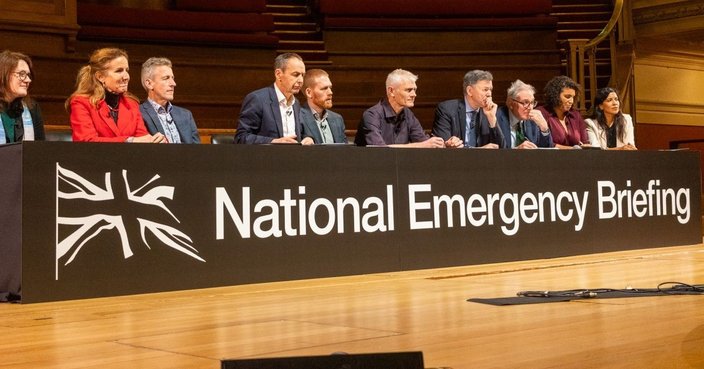
And without urgency, we will never mount the global response such a crisis demands. And while Asia drowned, something else happened in London This same week, the UK hosted the first-ever National Emergency Briefing at Westminster Central Hall — gathering more than a thousand politicians, business leaders, media figures, faith and community voices, all briefed by a panel of top scientists, health-, food- and security-experts.

The message delivered behind closed doors was unambiguous: the climate and nature crisis is already a national security threat. The same forces tearing apart lives in Southeast Asia — extreme rainfall, destabilized weather patterns, overwhelmed infrastructure — can strike any country.

What climate-driven disasters trigger there, they can trigger here. The flooding in Asia is not a distant regional catastrophe. It is a front-line preview of what could happen anywhere including countries in the Global North. This is not a regional crisis. This is a national emergency everywhere. The floods decimating lives across Southeast Asia are not “somebody else’s problem.” They are a warning — raw, unfiltered, urgent. If we cannot look at the suffering of 4 million people today.If we cannot grant their lives the dignity of our attention.

Then how will we protect our own tomorrow?
Because geography will not protect us from climate collapse. Borders will not stop rising waters. Storms will not ask permission. The question is not if it will happen here — But when. If we stay asleep, the water will open our eyes but that will be too late. One powerful way to wake up the people in charge is to do what a group of courageous scientists and civil-society leaders just did in the UK: host a National Emergency Briefing and put political leaders directly in front of the facts. Bringing politicians into the same room as independent experts without spin, without filters, without delay, is one of the most effective tools we have to cut through denial and inertia. We Don’t Have Time is proud to be the official media partner for this groundbreaking initiative. On this page, you can rewatch the full briefing, hear from the scientists themselves, and learn how the model works:


terça-feira, 18 de novembro de 2025

A Colômbia proíbe todos os novos projetos de petróleo e mineração no seu território


Colombia will no longer approve new oil or large-scale mining projects in its Amazon biome, which covers 42% of the nation’s territory, according to a Nov. 13 statement by its environment ministry.

Acting Environment Minister Irene Vélez Torres said the entire Colombian Amazon will be made a reserve for renewable natural resources. She made the announcement at a meeting of ministers with the Amazon Cooperation Treaty Organization, during COP30, the U.N. climate summit taking place in Belém, Brazil.

“This declaration is an ethical and scientific commitment. It seeks to prevent forest degradation, river contamination and biodiversity loss that threatens the continent’s climate balance,” Vélez said.

She also called on other Amazonian nations to adopt similar protections, highlighting that Colombia controls just 7% of the Amazon biome. Across the Amazon, 871 oil and gas blocks cover an area roughly twice the size of France; 68% of the blocks are still in the study or bidding phases.

“We do this not only as an act of environmental sovereignty, but as a fraternal call to the other countries that share the Amazon biome, because the Amazon does not know borders and its care requires us to move forward together,” Vélez added.

Brazil, which controls nearly 60% of the Amazon, has moved in the opposite direction over the past year, despite successfully cracking down on deforestation. The nation auctioned off several oil blocks near Indigenous lands and approved drilling for an offshore site at the mouth of the Amazon River.

Peru is courting foreign oil companies to restart production at Lot 192, a huge Amazonian crude oil site in in the north of the country. The Ecuadorian government is planning to auction off 49 oil and gas projects worth more than $47 billion, despite protests.

In Colombia, 43 oil blocks and 286 mining requests haven’t yet broken ground. The new measure, the ministry says, will prevent these projects from going forward. “Their activation could put the climate balance of the continent at risk,” the environment ministry wrote in a statement.

At another COP30 event, Vélez criticized a mechanism that allows corporations to sue governments for losses caused by environmental policies, saying it infringes on state sovereignty. Such a system, she noted, makes it difficult for a nation to outlaw existing extractive industries without facing significant penalties.

“Future generations must be able to find nature in a healthy state, the way we have known it,” María Soledad Hernández, coordinator of the sustainability program with the Colombia-based Amazonian Institute for Scientific Research, said in a video statement.

“Talking about conservation does not mean talking about not making use of it. Talking about conservation means being sustainable, being responsible and having activities that are balanced and in harmony with nature,” she added.

A 2023 U.N. report called “Paying polluters” found that the ISDS, referred to as a “secretive international arbitration process,” had awarded more than $100 billion to fossil fuel and mining industries.

The report highlighted a case of three Australian mining corporations seeking $37 billion from the Republic of Congo for revoking their iron ore mining permits, citing project delays. The amount claimed is more than twice the nation’s annual GDP.

quarta-feira, 27 de dezembro de 2023

Transformando Tradições em Novos Ciclos


Hoje lembrei-me de África. Um super-continente riquíssimo de recursos naturais, mas politicamente cheio de regimes ditatoriais, milícias, refugiados, exploração e escravidão. Incontáveis os maus momentos, mesmo desumanos.
Quem vai a África fica marcado. Há uma sensação em nós que foi ali a diáspora do Homo Sapiens.
Os céus de dia são de um azul cobalto. Os céus de noite amplos e luminosos. Milhões de estrelas e galáxias.
O calor e o sorriso das gentes de várias tribos. Imensas lições de bondade e família quando regressamos.
O exotismo da fauna e flora também incluídos.
Os dias parecem demorar mais que 24 horas.
Porém as mudanças por uma democracia e autodeterminação dessas gentes são muito lentas e bem merecidas. Muito culpa nossa, o Norte Global e a China.

quinta-feira, 23 de março de 2023

Enrico Berlinguer & the NIEO in the Global North


“Comrade Berlinguer do not forget that we even get our aspirin from the USSR”. It was with these words that, in October 1981, a long discussion between Fidel Castro and the Secretary of the Italian Communist Party (PCI) came to an end.

Enrico Berlinguer had traveled to Cuba for a trip that would take him to various places throughout Latin America, from López Portillo’s Mexico to Sandinista Nicaragua. In Cuba, Berlinguer debated Castro on a range of topics both theoretical and practical in nature, from the relationship between socialism and democracy to the role of the USSR in the international communist movement. But the New International Economic Order constituted a privileged meeting-point: as President of the Non-Aligned Movement, Castro was curious to hear the perspective of the Secretary of the PCI, a party that had placed North-South relations at the core of its international strategy. Their conversation, and the broader commitment of the PCI to the project of the NIEO, fills a gap in the dominant historical account of this period by pointing to the role of Northern countries — Western Europe’s left parties in particular — as allies and strategic actors in the rise and demise of the NIEO.

The original purpose of Berlinguer’s trip was to promote the Charter for Peace and Development1, a document drafted by Italian Communists with the aim of defining a program for global development. In the footprints of the 1980 Brandt Report2, the Charter was inspired by a new idea of equal cooperation between global North and South. The “new internationalism” of the largest Western Communist Party seemed an important partner for the policies of the Non-Aligned, particularly given the upcoming North-South Summit, which was to be held a few days later in Cancun. Fidel Castro, who had been excluded from the meeting by the Reagan administration, was interested in the Italian perspectives on the NIEO.

“That argument we had with Castro” — this is how Antonio Rubbi, then-head of the PCI Foreign Relations and a member of the delegation that accompanied Berlinguer on his trip to Latin America, described the encounter in a recent interview, before quickly retracting the phrase, and hastening to recall the exceptional affinity felt by Italian Communists for the Cuban leader3. Charged, among others, with drafting the final joint communiqué of the meeting, Rubbi described the subjects of the discussion that took place between Castro and the PCI: the democratic path to socialism, democratic pluralism, and the USSR. Castro’s comment on the subject was incisive in unraveling the different perspectives between a small, embargoed island threatened by neighbouring US, on the one side, and 1970s Italy, on the other: “we are a small country, besieged by the US; here multipartyism was a very bad experience, before the revolution”.

Often blurred and shrouded in the myth of an extraordinary harmony between two differently charismatic personalities, “one imposing and fiery in the olive-green uniform, the other slender and shy”, the anecdotal aestheticization of the protagonists’ recollections fails to completely hide the unsolved crux of the discussions, made between swimming and fishing trips4. The underlying misunderstanding between the two would never be resolved, but the episode remains of interest for us today, for its insight into the debates on the NIEO, and how different ambitions and perspectives were projected onto it.

While a single episode can’t solely represent the reasons behind the fate of the NIEO, assessing these moments of missed opportunities and alliances in the networks built around the NIEO in the 1970s can perhaps help us reflect on important questions about the future before us, and help us in looking at the new balances of a conflict that, albeit in different ways and forms, undoubtedly still runs through the world today. What did the NIEO mean for a “Northern” country like Italy? How many and what different strategies did it conceal under the image of a universal egalitarian banner for the Global South and the Western left?

Recent historiographical interest in the NIEO has provided various insights into the question: “What, exactly, was the New International Economic Order?”. Opening the Special Issue of Humanity in spring 2015 with this question, Nils Gilman describes the NIEO as “like an apparition, an improbable political creature”, appearing “as the figment of a now all but lost political imaginary, sprang forth during a narrow and specific window of geopolitical opportunity”. A “moment of disjunction and openness, when wildly divergent political possibilities suddenly appeared plausible”, something “dramatically alternative”5, radically other than what would soon emerge as “the real new international economic order”6— that is, the neoliberal order. But, as many interpretations have suggested, the NIEO was multiple things at the same time: a project of “worldmaking”, an initiative to reform transnational governance or to radically change international law, the completing/the high point of the process of decolonization and its economic cultures,7 a global Keynesianism or even a global socialism, “the most serious challenge to US global leadership since the end of the Second World War”, and, in the end, a possible alternative globalization8.

This ambitious project of redefining global relations was a ground on which, on the part of both the “South” and the “North”, different visions and hopes were projected, not immediately coinciding, sometimes even opposing each other. In the latter half of the 1970s, the NIEO represented an alternative project of international economic relations – but also of state-market relations – that was a critical part of the competition between different models of global integration. Through this prism, it is possible to look at individual national debates in terms of how they moved within this competition. To shed light on this double level — between an “institutional” level and the broader internal political confrontation — allows us to gain a better understanding of the intertwining of different ambitions and expectations that lay behind this global issue.

The Italian debate on the NIEO was shaped by domestic needs and issues, exemplifying how the challenges of the new global economic interdependencies constituted a ground for competition among different political cultures. The political discussion on the NIEO emerged in the wake of the far-reaching cultural impact provoked by the vast cycle of conflict which began in 1968-1969. In Italy, it developed during a period of great social change that worked as a new driving force for the Italian elites to rethink their responses to the outcomes of modernization processes and deal with domestic social demands for democratization. A first element thus emerges in considering this period as a crucial transition in bringing about a critical rethinking within the major political cultures in response to the overall crisis of legitimacy of the Italian institutional and party system.

Although in different ways – and with different inclinations and purposes – the main Italian parties identified new international strategies as the preferred terrain of this effort. They framed new global issues as part of a broader interpretation of the crisis, linking global and domestic egalitarian claims. This trend was backed by two main influences or traditions: both the reflection on post-colonial experiences fostered by the Communist leadership – inherently related to its “internationalist” identity – as well as the emerging of an ethical-humanitarian interest in the Global South among Catholics following the Second Vatican Council. As early as November 1967, Communist member Renato Sandri had already brought attention to the “presence of great forces that referred to internationalism and ecumenism” to encourage the start of a new Italian focus on the post-colonial world, that should have been based on the values of universalism and global solidarity shared by all major Italian political cultures9. Behind this was the intertwining and competition between two universalist visions, each of which had given rise to its own internationalist networks, especially the Communist one that had always supported the decolonization processes. At the turn of the decade, the Christian Democrats and the Communist leadership began to work out new agendas to bring about – as they said – “the pressing need of new times”10. According to the Christian Democrats Aldo Moro and Luigi Granelli – who would lead the Italian Foreign Ministry almost continuously from 1969 to 1974 – the “moral awakening of the new generations” gave rise to the overcoming of anachronistic divisions, moving towards a “new and different international order”.

This effort resulted first and foremost in Italy’s growing commitment to the European project. Author Giuliano Garavini showed how the EC’s new relationship with developing countries and support for the New International Economic Order were part of a broader discussion among European elites on the consequences of the oil crisis and the reconsideration of the Community’s new role in a global context11. The vision of the Italian Foreign Ministry (expressed in these years by the Christian Democrats’ left wing) reflected those European approaches aimed at maximizing the potential of the EC’s enlargement to achieve a “qualitative leap”12 that could meet the expectations of both European public opinion and those of the developing world. Within this framework, it was the issue of political and economic relations with the Global South – as well as several specific debates on the NIEO – that represented a crucial first experience of political dialogue, as demonstrated by the birth of the Institute for relations between Italy and the countries of Africa, Latin America, and the Middle East in 1972, on the initiative of the Christian Democrats’ left wing, the Socialists and the Communists.

The economic challenges facing Italy, driven in part by the oil crisis, had the effect of sharpening the debate on the relationship between Southern development and Western standards of living. Thus, for example, in February 1974, Ugo La Malfa, the Republican Party Minister of the Treasury, committed to passing his austerity policy by highlighting how “the transfer of resources from developed to oil-producing countries, as a result of the change in the terms of trade” would necessarily lead to “a restriction of domestic consumption in the industrialized countries”. To such statements, Communist Senator Napoleone Colajanni replied that his party rejected “precisely this conception of Third World development as necessarily linked to a halt and a compression of the standard of living of the working masses of the industrialized countries”, considering it “not necessary in absolute terms” but rather “intrinsically linked to the workings of the capitalist system”13.

To Aldo Moro, the transition “from the rhetorical to the political phase” of relations with the developing world needed a “slowing of growth” necessary to “allow the progress of others”14. At the same time, the PCI’s international policy stimulated an in-depth analysis linking North-South relations with the rethinking of Western societies’ economic structures. These theories, processed in tune with the political lines of the European social democracies within the framework of “Eurocommunism”, demanded a new conception of development, based on the global redistribution in terms of a “qualitative” rather than exclusively quantitative growth15. Indeed, the fundamental premise of Berlinguer’s well-known “austerity policy” was the re-elaboration of the Western model of production and consumption, in close connection with the development of the Global South16. This proposal was highly compatible with that of the promoters of the NIEO and the categories of its fundamental theoretical framework – the ambitious vision of global redistribution and the centrality of the notion of sovereignty. Between 1973 and 1976, the Communists would develop, in parallel, the idea of “introducing elements of socialism17 into Italian society and the need to move towards a “new international division of labor” within an overall analysis that looked at the current economic crisis as a systemic crisis of capitalism, affecting the entire structure of global value chains. This would have required the “theoretical and practical initiative of the working-class vanguard and democratic forces of Western Europe” which would have had to match the thrust of the developing countries in a common struggle. As Renato Sandri pointed out in June 1974, the need for such an initiative would require a new vision of interdependence, “so that the approaching crossroads would not result in a further polarization of imperialist domination but in an international division in which interdependence would no longer be that fable of the wolf and the lamb”18.


As political confrontation expanded, ironically the potential Italian role on the international scene was further reduced. Italian economic crisis and social conflict became a source of special attention within the multilateral Euro-Atlantic framework, constraining Italian policy, especially in the monetary field, which would later take the form of financial aid packages placed under political conditions. Italy would become the object of close monitoring as part of a change of pace in the instruments of U.S. foreign policy, defined by some authors as a shift from the “rigid containment” to a phase of “concerted stabilization19. This trend was also solicited by certain domestic concerns: “What is at stake”, La Malfa complained in February, “is the issue of who is running the country, the unions or the government”20. The position taken by the Italian government at the UN Sixth Special Session was within this framework, as was the one taken at the vote on the Charter of Economic Rights and Duties of States21 in late 1974, in which Italy eventually abstained along with some of the leading European countries, after long and arduous negotiations with the United States. As U.S. ambassador John Anthony Volpe concluded about the vote on the Charter, Italy was “perfectly willing to take the heat from LDCs [Least Developed Countries] on this issue, but not at the cost of being isolated within European Community”22.

As the European Community set out to negotiate the Lomé Convention23, different international fora were being arranged outside the equal and global framework of the United Nations. The launch of exclusive meetings between Western technocratic elite would become increasingly influential in the years that followed, affecting the fates of both the NIEO project and the difficult Italian political balance24. Some authors have effectively shown the close link and parallel proceeding between stabilization projects, towards the containment of both Western leftists and the demands of the Global South, also pointing out how parties such as the PCI ended up being tied down by their own internal legitimation strategies and — willingly or unwillingly — going along with these outcomes25.

The debate between political visions coexisted with a profound divide within the institutional system, leading to an era in which international policies swung between innovative impulses and stark re-stabilization. The NIEO debate was part of such a competition and clash between different visions and formulas for exiting the crisis, demonstrating how domestic designs were also based on and legitimized by reference to external models of global integration. Such a twofold trend characterized the ways in which Italian political elites faced the major global transformations that occurred at the turn of the 1970s, showing the multilevel relationship Italy established with such processes. On the one hand, Italy was particularly exposed to the new global economic interdependences, suffering first the immediate economic implications, then consequent political constraints; on the other hand, international issues, including the NIEO, became a ground on which different efforts to shift the domestic political balance were exercised.

While the NIEO may appear today retrospectively as an announced failure, these histories serve as reminder that the NIEO seemed to be surprisingly credible in its most successful moment26, a hope or a threat to the global order, arousing even disproportionate irritation in its contemporary critics, if not even the redefinition of their own international strategies27. As Quinn Slobodian pointed out, “understanding the irritation means recognizing that the NIEO was not acting alone” but it found influential allies in the North, from “global reformists”, economists and social democrats to European leftists28. In this regard, it seems useful today to ask whether, in addition to a new South-South cooperation, it is possible to rethink a North-South cooperation, starting precisely from those missed opportunities or alliances past left unresolved.

Historians often rush to warn against hurried comparisons, analogies, or parallels between ages and times. However, the importance, not just nominal but political, of the recent revival of an idea of South-South cooperation, whose call for alternative models of solidarity-based and non-hierarchical global integration is explicit, should not escape us. Recognizing the political relevance of such a reference is not to fail to see the differences between one period and another, or the contradictions that lie beneath the homogenizing banner of “Global South” — the “Global South” after all has never been homogenous, it was not in the 1970s and it is not today. But the viewpoint of the researcher and historian, accurate to specificities and differences, can (and must) sometimes give way to the no less necessary political outlook.

And it is thus precisely in a political perspective that we should start again from where the meetings, connections and networks built around the NIEO in the 1970s had failed. Silvio Pons has effectively explained how Berlinguer's trip to Latin America had been a disappointment for the PCI, particularly with respect to the party's ambitions to relaunch its traditional vocation as transnational mediator and its role as a “bridge between different worlds”, within a project of “interaction and interpenetration between European reformist communism and anti-imperialist traditions outside Europe”. According to Pons, after Tito's death, the Non-Aligned Movement under the Cuban presidency had represented a “radicalisation that denied the reformist assumptions of a rebalance between North and South and reflected the growing fragmentation of political subjects in the global South”. The PCI therefore intended to act as a key interlocutor partner to restore convergence of networks and relations around the NIEO project29.

From this point of view, two different political strategies clashed in the meeting between Castro and Berlinguer, both very much informed by the respective position that Cuba and the PCI thought they should hold within the international communist movement at the time, and the resulting new tactics as sources of identity and legitimacy. In turn, these assessments were profoundly related to the context in which they developed and acted as political actors, and thus to the specific positioning of the two countries in the balances of the global economy. Corresponding to these two strategies were two different visions and interpretations of the NIEO as a political project, beneath which lay distinct ideas of the relationship between anti-imperialist struggle, democracy and development.

As we saw above, Berlinguer's “austerity” political project was also based on the assumption of a convergence and shared interests between the popular classes of the West and the collective struggle of the developing countries. But that vision failed, just as the meeting between Castro and Berlinguer revealed the limitations of an authentic political understanding.

The defeat of the NIEO and the emerging of the neo-liberal model represented both the revival of class struggle from above and the return of hierarchical conceptions of global integration. We all lost from this. At the same time, however, the winners in this story were not only in the North. Today, globalization processes have in many ways redefined the core-periphery balances and structures of the world30. The terrain of struggle remains one not exclusively of “the West and the rest” but also between global rich and poor. It is a matter of understanding on what to base this convergence and working on the deconstruction and demystification of false differences and identities. Above all, it is about being able to find a way to imagine — and, possibly, achieve — a world in which real differences and identities are integrated into a collective and cooperative vision, instead of being declined into domination hierarchies or conflicting strategies. But this first requires asking whether the structural and systemic conditions for this convergence exist today. Are they better than they were in the 1970s? What are the interests that Western leftists want to represent? Are they compatible and convergent with a new collective struggle of the Global South? These are the real challenges of this fundamentally emancipatory, progressive, and timely struggle, and which can perhaps provide some elements to reconstruct a dialogue between different points of view left unresolved in the meeting between Castro and Berlinguer.

Martina Marchesi is a PhD candidate at the Scuola Normale Superiore.


References
01 “Il contributo del PCI per una Carta della pace e dello sviluppo”, l’Unità, 8 novembre 1981, p. 8. See also “La più ampia iniziativa contro il riarmo per la pace e lo sviluppo. Il dibattito sulla relazione di Ledda”, l’Unità, 7 ottobre 1981, pp. 1, 8-9.Fonte↗
02 North-South: A Program for Survival, The Indipendent Commission on International Development Issues, MIT Press, Cambridge, 1980.Fonte↗
03 Author's interview with Antonio Rubbi, Rome, 8 October 2022.
04 For several accounts and recollections of the episode see R. Borroni, Renato Sandri. Un italiano comunista, Tre lune, 2010; A. Rubbi, Il mondo di Berlinguer, Napoleone, 1994. See also S. Pons, I comunisti italiani e gli altri. Visioni e legami internazionali nel mondo del Novecento, Einaudi, Torino, 2021, pp. 269-280.
05 N. Gilman, The New International Economic Order: A Reintroduction, “Humanity”, 6, no. 1, 2015, pp. 1-16, p. 1.
06 M. Mazower, Governing the World: The History of an Idea. 1815 to the Present, Penguin Group, London, 2013.
07 G. Garavini, The Rise and Fall of OPEC in the Twentieth Century, Oxford University Press, Oxford, 2019; G. Garavini, Completing Decolonization: The 1973 ‘Oil Shock’ and the Struggle for Economic Rights, “The International History Review”, v. 33, no. 3, September 2011, pp. 473-487; C. R. W. Dietrich, Oil Revolution. Anticolonial Elites, Sovereign Rights, and the Economic Culture of Decolonization, Cambridge University Press, Cambridge, 2017.
08 See the Special Issue “Toward a History of the New International Economic Order”, Humanity: An International Journal of Human Rights, Humanitarianism, and Development”, 6, no.1 (2015); M. Mazower, Governing the World, cit.; A. Getachew, Worldmaking after Empire. The Rise and Fall of Self-determination, Princeton University Press, Princeton-Oxford, 2019.
09 Camera dei deputati, IV Legislatura, Discussioni, 15 November, 1967, p. 40576.Fonte↗
10 ACS, AAM, Scritti e discorsi 1947-1978, anno 1968, 465, Discorso tenuto al Consiglio nazionale Dc (20 Novembre 1968-1 Dicembre 1968). Resource available online on ASS, Fondi federati.Fonte↗
11 G. Garavini, After Empires: European Integration, Decolonization, and the Challenge from the Global South, 1957-1986, Oxford University Press, Oxford, 2012.
12 ACS, AAM, Scritti e discorsi 1947-1978, anno 1972, 559, Preparazione del vertice a Lussemburgo, intervento (26 maggio 1972). ASS, Fondi federati.Fonte↗
13 Comunicazioni del ministro del tesoro On. La Malfa alla Commissione bilancio del Senato, (21 febbraio, Res. Somm.), Ministero Affari Esteri, Servizio storico e documentazione (MAE-SSD), Testi e documenti della politica estera italiana, Roma, 1974, p. 45.
14 ACS, AAM, Scritti e discorsi 1947-1978, anno 1974, 621, Intervento alla Commissione esteri della Camera dei deputati (25 febbraio 1974-28 febbraio 1974). ASS, Fondi federati.Fonte↗
15 E. Berlinguer, La politica internazionale dei comunisti italiani, Rapporto al XIV Congresso del PCI, 18 marzo 1975, Editori Riuniti, Roma, 1976; see also, G. Garavini, After Empires, pp. 219-220.
16 E. Berlinguer, La proposta comunista. Relazione al Comitato centrale e alla Commissione centrale di controllo del Partito comunista italiano in preparazione del XIV Congresso, Einaudi, Torino, 1975; E. Berlinguer, Austerità: occasione per trasformare l’Italia. Le conclusioni al convegno degli intellettuali (Roma, 15-1-1977) e alla assemblea degli operai comunisti (Milano, 30-1-77), Editori Riuniti, Roma, 1977; R. Sandri, La sfida del Terzo Mondo. L’Europa comunitaria e i paesi ex coloniali tra protezionismo, liberalizzazione «selvaggia» e cooperazione, Editori Riuniti, Roma, 1978.
17 A. Tatò, Caro Berlinguer. Note e appunti riservati, Einaudi, Torino, 2003, p. 50.
18 R. Sandri, Tutte le materie prime e non solo il petrolio, “Rinascita”, no. 25, 31, June 21, 1974, p. 14.
19 L. Cominelli, L’Italia sotto tutela. Stati Uniti, Europa e crisi italiana degli anni Settanta, Le Monnier, Milano, 2014.
20 Feb 11, 1974. Telegram from AmEmbassy Rome to SecState: Treasury Minister La Malfa requests US assistance for Italian labor situation, NARA, RG 59, CFPF, El. Tel. 1974.Fonte↗
21 Charter of Economic Rights and Duties of States, UNGA, Res. 3281 (XXIX), UN doc., A/RES/29/3281 (12 December 1974) Free access on UN Digital Library.Fonte↗
22 Oct 31, 1974. Telegram from AmEmbassy Rome to SecState: Charter of Economic Rights and Duties of States, NARA, RG 59, CFPF, El. Tel. 1974.Fonte↗
23 For a detailed account of the negotiations that led to the Lomé Convention see G. Garavini, After Empires, pp. 183-200.
24 See Ivi, pp. 203-215; E. Mourlon-Druol, F. Romero (eds), International Summitry and Global Governance. The Rise of the G7 and the European Council, 1974-1991, Routledge, London-New York, 2014.
25 D. Basosi, G. Bernardini, The Puerto Rico Summit of 1976 and the End of Eurocommunism, in L. Nuti (a cura di), The Crisis of Détente in Europe. From Helsinki to Gorbachev, 1975-1985, Routledge, London, 2009, pp. 257-267.
26 V. McFarland, The International Economic Order, Interdependence and Globalization, “Humanity”, 6, no. 1, 2015, pp. 217-233, p. 217.
27 M. Franczak, Global Inequality and American Foreign Policy in the 1970s, Cornell University Press, Ithaca and London, 2022.
28 Q. Slobodian, Globalists. The End of Empire and the Birth of Neoliberalism, Harvard University Press, Cambridge-London, 2018, p. 221.
29 See S. Pons, I comunisti italiani e gli altri, pp. 271-273.
30 B. Milanovic, Global inequality. A New Approach for the Age of Globalization, Belknap, Harvard University Press, Cambridge, 2016.

quarta-feira, 7 de dezembro de 2022

Megasseca na América do Norte está a afectar a alta atmosfera da Terra

Uma nova pesquisa, baseada em dados de duas décadas, mostra que nos dez anos após seu início em 2000, a megasseca do sudoeste da América do Norte (SWNA) causou uma mudança de 30% na atividade das ondas de gravidade na atmosfera superior da Terra.


Há mais de 30 anos, Chester Gardner, do Departamento de Engenharia Elétrica e de Computação da Universidade de Illinois, e Chiao-Yao She, do Departamento de Física da Universidade Estadual do Colorado (ambas nos EUA), uniram-se para estudar a atmosfera média da Terra. Usando radar de laser de ressonância de sódio (lidar), os dois desenvolveram e demonstraram uma nova técnica importante para medir perfis de temperatura na atmosfera superior da Terra.

Posteriormente, eles conseguiram observar mudanças nas ondas de gravidade da atmosfera superior em dois locais (Albuquerque, no Novo México, e Ft. Collins, no Colorado) durante um período de 20 anos. Seus resultados, descrevendo como as ondas mudaram após o início da seca, foram publicados na revista Geophysical Research Letters.

Em 1994, uma equipa liderada por Gardner instalou um sistema lidar em um grande telescópio no Starfire Optical Range fora de Albuquerque, na Kirtland Air Force Base. O sistema lidar mediu a temperatura e os ventos na atmosfera superior, usando o sódio atómico como espécie-alvo até o final de 2000.

Subproduto de outras pesquisas
Partículas de poeira cósmica que são vaporizadas na atmosfera da Terra são a fonte desse sódio atómico. Usando um feixe de laser, o sódio atómico pode ser excitado, fazendo com que brilhe. Um telescópio no solo coleta a luz retroespalhada da fluorescência de sódio e os computadores processam essa informação para derivar perfis de densidade de sódio, temperatura e velocidade radial do vento. A equipa de She na Universidade Estadual do Colorado fez observações semelhantes em Ft. Collins, acabando por compilar um extenso conjunto de dados que durou 20 anos, de 1990 a 2010.

A descoberta de mudanças na atividade das ondas durante a megasseca foi um feliz subproduto de outras pesquisas. Os pesquisadores estavam estudando como a temperatura e os ventos flutuavam na atmosfera superior por causa das ondas geradas na atmosfera inferior e ficaram surpresos ao encontrar mudanças consideráveis ​​na atividade das ondas gravitacionais após o início da seca.

“Nunca esperávamos fazer observações que pudessem fornecer algumas informações sobre como uma seca poderia afetar a atmosfera superior da Terra”, disse Gardner.

Depois de analisarem os dados de Gardner em Albuquerque e os de She em Ft. Collins, eles descobriram uma redução significativa (de cerca de 30%) na atividade das ondas após o início da seca. As mudanças na atividade das ondas de gravidade podem estar relacionadas à geração reduzida de ondas por tempestades troposféricas durante a megasseca e a uma distribuição geográfica alterada de eventos de precipitação no oeste e meio-oeste dos Estados Unidos. Simplificando, menos precipitação significa menos tempestades, então menos ondas estão sendo geradas pelas tempestades.

O que é uma megasseca?
Uma megasseca é um período prolongado de seca que dura duas décadas ou mais. A megasseca do sudoeste da América do Norte começou em 2000 e ainda persiste 22 anos depois, sem fim à vista.

Gardner e She dizem que a megasseca SWNA é significativa não apenas por causa de sua duração, mas também pelo tamanho da região geográfica impactada, que se estende do norte do México até as fronteiras do norte dos estados do Oregon e de Wyoming, e da costa do Pacífico até às fronteiras orientais de Wyoming, Colorado e Novo México.

Acredita-se que a atual megasseca em particular seja o período de 22 anos mais seco na região desde 800 d.C. Argumenta-se que o aquecimento da atmosfera da Terra induzido pelo homem pode ter contribuído com mais de 40% da gravidade do fenómeno.

Influência na circulação global da atmosfera
As ondas de gravidade – não confundir com ondas gravitacionais associadas a fenómenos cosmológicos como buracos negros – ocorrem na interface entre dois meios quando a gravidade ou a flutuabilidade tentam restaurar o equilíbrio. Segundo Gardner, esse efeito é como deixar cair uma pedra numa lagoa com água. A pedra desloca a superfície da lagoa, empurrando a água para baixo; a flutuabilidade restaura a água, que então oscila, gerando um anel de ondas que se propaga para fora. Essas são as ondas de gravidade.

Uma maneira pela qual as ondas são geradas na baixa atmosfera é por convecção de tempestade, que desencadeia ondas de gravidade causando movimento vertical que resulta em oscilação. As ondas também podem ser geradas pelo ar que flui sobre características topográficas, como montanhas, que deslocam o ar para cima.

Enquanto as ondas numa lagoa se propagam apenas ao longo da interface ar-água, as ondas de gravidade na atmosfera se propagam em todas as direções. Essas ondas impulsionam a circulação global da atmosfera superior e podem afetar o clima espacial e as órbitas dos satélites.

Resultados impactantes
Gardner e She dizem que o recente trabalho é importante porque demonstra que as mudanças regionais na baixa atmosfera também podem afetar a alta atmosfera. Eles acreditam que esta é a primeira vez que um efeito climático regional foi observado na atmosfera superior.

Os resultados podem ser usados ​​para testar e validar a próxima geração de modelos de computador atmosférico regional de alta resolução que podem resolver as ondas de pequena escala observadas pelo lidar.

“Os modelos atmosféricos atuais não podem ver as ondas porque a resolução, mesmo nos modelos de computador mais rápidos, não é suficiente para ver a escala dessas ondas”, explicou Gardner. “Agora, os cientistas estão a desenvolver modelos regionais em resolução muito alta, e assim os modelos podem ver as ondas em grande escala. Nossas observações podem ser usadas para testar a precisão desses modelos e validá-los.”

Relacionados