Mostrar mensagens com a etiqueta 11 de Setembro. Mostrar todas as mensagens

quarta-feira, 25 de junho de 2025

The Pentagon Is Using a Fabricated Chinese Threat to Build Genetically Engineered Soldiers


On April 8, a bipartisan commission chartered by Congress warned that China is rapidly advancing a terrifying new military threat: genetically engineered “super soldiers.”

The report by the National Security Commission on Emerging Biotechnology (NSCEB) urges the U.S. to respond with a sweeping effort to militarize biotechnology. It offers little concrete evidence that such Chinese programs even exist.

In the name of national security, Washington is now pushing for deregulation, massive government investment, and human experimentation. Experts say this effort echoes Cold War-era paranoia and threatens to erode ethical boundaries in science and warfare.

A Congressional Research Service fact sheet on the report claims its contents “describe how biotechnology could potentially revolutionize agricultural production in the U.S., transform U.S. health care, and change the future of computing power.” While that may sound promising, the report’s focus is overwhelmingly on using biotechnology for military purposes, including the creation of “genetically enhanced soldiers.” The report also states that “biotechnology’s impact on surveillance could be … transformative.”

The report argues that biology could revolutionize warfare just as airpower did in the 20th century, promising new advantages in stealth, logistics, and real-time physiological monitoring of soldiers. It calls for “a fundamental rethinking” of how the U.S. uses biotech in combat.

Biotechnology also promises new advantages in stealth and mobility. Dynamic biological camouflage, for instance, could shield warfighters from thermal detection, while wearable biosensors could adjust mission parameters based on real-time physiological data. Taken together, these advances demand a fundamental rethinking of how biology supports sustained, agile military operations, revolutionizing what it means to defend the U.S., including building for, nourishing, and healing forces in the field.”

The report argues that “winning” the global biotech race will “require de-risking the domestic production of defense-related biotechnology products” and changing “military specifications” to enable biotechnology companies to sell their products to the Pentagon more easily. Repeated references are also made to the need to “reduce or remove regulatory hurdles for familiar products.” Although the report never defines “familiar products,” the term may refer to controversial and experimental technologies such as CRISPR gene editing and mRNA therapeutics.

NSCEB also calls for large-scale “biological databases” to be treated as a “strategic resource.” It urges Congress to direct the Pentagon to build commercial facilities across the country to biomanufacture products deemed “critical for DOD needs.” The U.S. government “will need to shoulder some of the risk of early-stage financing for biotechnology and encourage private investment,” such as “[streamlining] regulatory processes to alleviate unnecessary burdens and accelerate the commercialization.”

The report’s tone is urgent, and lawmakers appear eager to act. One day after the report’s publication, NSCEB Chair Todd Young and Commissioners Alex Padilla, Stephanie Bice and Ro Khanna jointly introduced the National Biotechnology Initiative Act in both the House and Senate to “set in motion a whole-of-government approach to advancing biotechnology for U.S. national security, economic productivity, and competitiveness.”

Commissioners are urging “swift action” on militarizing biotech, “to protect U.S. national security.” In an accompanying press release, Vice Chair Michelle Rozo implored lawmakers to take action on the NSCEB report, stating, “Technology is not inherently good or bad, but who uses it matters.”

Independent researcher Jeff Kaye agrees with her statement. The U.S., which recently conducted extensive airstrikes in Yemen and continues to support Israel’s military campaign in Gaza, is, according to Kaye, a dangerous actor.

Independent journalist Peter Byrne tells MintPress News that the report reflects “the rationally untethered paranoid politics driving the ongoing weaponization and monetization of AI” in the U.S.

Byrne says that NSCEB’s speculative and scientifically questionable report “focuses on using so-called artificial intelligence to enhance the biologically violent capacities of government-backed and corporate-supported military forces—so-called “warfighters” who are increasingly being cyberized and treated, alongside targeted civilian masses, as expendable biologically augmented actors within what the report describes as an ‘Internet of Military Things.’

A Biotech Arms Race Built on Fear
The NSCEB’s composition raises additional concerns. The presence of both Democrats and Republicans on the Commission allows it to present itself as a bipartisan body. However, this obscures the fact that most commissioners aren’t neutral experts, but have deep ties to the Pentagon and U.S. intelligence community.

For example, Michelle Rozo serves as vice president of technology at In-Q-Tel, the CIA’s venture capital firm. The firm has invested heavily in biotechnology, almost since its inception.

According to her official NSCEB biography, Commissioner Dawn Meyerriecks “led the iconic CIA Directorate of Science and Technology…defining and delivering global capabilities beyond state-of-the-art.”

She also served on the NSA’s corporate board for over a decade. In that role, she helped the agency transition to the cloud and “[revamped] their approach to encryption.”

It is unclear if she crossed paths in that role with fellow board member Eric Schmidt, founder of Google, whose early development was supported by funding from intelligence agencies, including the CIA and NSA.

Google was a primary beneficiary of the post-9/11 U.S. national security state. A September 2021 report found that 77% of all government contracts awarded to the firm were related to the War on Terror.

This included developing the Maven program, which used AI to improve drone targeting, and counter-terrorism tools that disproportionately targeted Muslims on social media. Income from this program was key to supporting Google’s rise to global dominance.

Another notable member of the Commission is Dov Zakheim. A Pentagon journeyman who, during the Reagan administration, strived to ensure Israel was equipped with U.S.-made weapons and fighter jets at bargain rates, he was also a key member of the Project for the New American Century. In September 2000, the neoconservative think tank published “Rebuilding America’s Defenses.” The report promoted “the belief that America should seek to preserve and extend its position of global leadership by maintaining the preeminence of U.S. military forces.”

The document controversially suggested that ethnic bioweapons could “transform biological warfare from the realm of terror to a politically useful tool.” Zakheim was among its authors, along with fellow PNAC members Jeb Bush, Dick Cheney, Richard Perle, Donald Rumsfeld and Paul Wolfowitz. They later served as key advisers to President George W. Bush during the War on Terror.

“The marriage of biotechnology and U.S. national defense – war – policy harkens back to the U.S. crash program to create a usable germ warfare arsenal during the Korean War,” Jeff Kaye tells MintPress News. “Now the U.S. government wants to whip up a false fear about ‘genetically enhanced PLA super-soldiers’ in order to fund their own unprecedented attempt to create such soldiers themselves.” In the end, Kaye says, such programs primarily benefit military and technology contractors and raise serious ethical and strategic concerns.

The Myth of China’s Super Soldiers
In December 2020, then-U.S. Director of National Intelligence John Ratcliffe directly accused the Chinese government of “[conducting] human testing on members of the People’s Liberation Army in the hope of developing soldiers with biologically enhanced capabilities.” Despite providing no evidence, and the question of whether this is even scientifically possible being an obvious and open one, his comments triggered widespread media coverage, often uncritical, that persists to this day. Multiple outlets have published speculative accounts of Chinese advancements in gene-edited or technologically enhanced “super soldiers.”

Perhaps unsurprisingly, the NSCEB report repeatedly justifies the urgent need for U.S. investment in biotechnology with claims that Beijing is close to outpacing Washington in every aspect of the field. “China’s recent success across core biotechnology capabilities, including AI-driven drug discovery platforms and biomanufacturing, signals that they may soon eclipse us,” the report ominously cautions, “and if that happens, the U.S. may permanently lose its competitive edge. But the biggest threat, naturally, lies in the military sphere.

Nonetheless, the Commission appears uncertain on whether China has already made concrete moves in the direction of biotech weaponization, intends to, or is merely exploring the concept. For example, one passage states “our adversaries could [emphasis added] engineer ‘super soldiers’ with genetically enhanced physical capabilities.” Another speculates, “paired with new technologies like implanted brain-computer interfaces that tap directly into a soldier’s brain chemistry…‘super soldiers’ could [emphasis added] attack our military – before our leaders can even act.”

Elsewhere, though, the Commission firmly declares it has “every reason to believe that the CCP [sic] will weaponize biotechnology,” including the creation of “biotechnology-powered troops,” citing a highly questionable October 2024 State Department report drawn up by arch anti-China hawks as proof. The report speculates that traditional technologies like drone warfare could pale in comparison to “genetically enhanced PLA super-soldiers with fused human and artificial intelligence.”

While super soldiers may sound like science fiction today, in reality the CCP [sic] has long called for ‘population improvement’, and has backed research into topics like the genetic basis of intelligence.”

The conclusion is highly debatable and lacks substantiating evidence.

In March 2003 a then-senior member of the National Committee of the Chinese People’s Political Consultative Conference (CPPCC), a purely advisory body without any legislative power, called for “better protection of the health of baby girls,” and “the need of start [sic] a project to cure deformed baby girls or girls born with slight defects.” Then, the Commission points to a 2022 report from Berlin’s Max Planck Society for the Advancement of Science.

The report notes that while China is a pioneer in the emerging field of Germline Genome Editing, its experiments have exclusively focused on eradicating genetic diseases and hereditary disabilities. These experiments involve changes to DNA in egg, sperm or embryo cells—a still-controversial area of research.

Moreover, the report stresses that other countries – including Britain and the U.S. – have undertaken comparable experiments, and Beijing adheres to a rigorous regulatory framework in all its GGE testing.

The Society notes that in November 2018, a Chinese scientist and two collaborators independently created genetically edited babies without government approval or oversight. As a result, they were jailed for “illegal medical practices” and violating national regulations on biomedical research and medical ethics. The report contains no indication that this research is intended for military use, begging the question of how the Commission concluded from its findings that “super soldiers” are an intended result of China’s GGE experiments.

Human Enhancement and Military Obedience
Although the NSCEB report includes a recommendation for ethical oversight, a leading recommendation in the NSCEB report is for the Pentagon “to consult with stakeholders to define principles for ethical use of biotechnology for the U.S. military.” However, the accompanying text runs to just over 250 words and offers no explanation or definition of ethics in this context, let alone examples or concrete proposals for countering them. It simply states the investment must reflect the U.S. military’s “commitment to American values,” without defining what those values are or how they should be measured in practice.

Nonetheless, the Pentagon is encouraged to consider “Biotechnologies for warfighter performance optimization.” These include performance-enhancing technologies, policies for informed consent, and discussion of potentially heritable genetic treatments.

This raises only a fraction of the broader ethical questions surrounding the militarization of biotechnology.

As Peter Byrne tells MintPress, “the professional China-demonizing ‘authorities’ are calling for diverting the USA’s increasingly diminishing funds for projects aimed at benefiting society at large, for weaponizing disease and genetics with the sole goal of killing millions of people for profit by the very few. There is no ‘ethical’ stance to take in undertaking a fundamentally murderous and technologically stupid project, which is bound to backfire, except to recoil from it as a hot iron.”

The report does urge the Pentagon to ensure soldiers give informed consent to any genetic enhancements. The “reversibility” of ‘enhancements’ to which they are subjected suggests that the NSCEB’s program will – at least publicly – adhere to basic medical standards. Yet, a deeply disturbing May 2021 Britain’s Ministry of Defence report on “human augmentation” raises grave concerns about “consent” in military contexts:

Consent in the military is necessarily different to consent in wider society due to the unique relationship between subordinates and their superiors. It could be difficult for military personnel to give sufficiently voluntary and informed consent due to a tendency to follow orders over individual interest. Would a Service person who refused to be augmented be guilty of disobeying a lawful command?”

The report stressed that “establishing advantage” in human augmentation was urgent. It claimed the role of people in war was “being challenged in three key areas: data, complexity and speed.” Human augmentation, it added, was “the missing part of this puzzle.”

It went on to advocate wearable technologies, psychedelic drugs, gene editing, exoskeletons, sensory augmentation devices, and invasive implants such as “brain interfaces” be considered for administration to soldiers by the British military post-haste. “Adversaries” supposedly outpacing London in the field was a core justification.

That the British M.O.D. published almost identical findings to NSCEB four years ago amply demonstrates how Western governments and military thinkers have been obsessed with weaponizing the human body and mind for some time. Their public pronouncements and formally published, open-source plans offer far more concrete, chilling indications of developments in this field than have ever emerged from China. For example, NATO’s ‘Innovation Hub’ during 2020/21 published a number of bizarre papers and convened several conferences on the subject of “cognitive warfare.”

The Hub’s purpose was to explore “militarisation of brain science” and answers to the burning question of how to overcome perceived biological limits to human performance.

Most of the associated paper trail has suspiciously been removed from the web. However, documents it published outlined numerous ways in which the “human domain” could be added to established spheres of conflict, such as “air, land, sea, space and cyber.”

It resolved for NATO to aim for “cognitive warfare” dominance globally by 2040.

In a surreal twist, the Hub consulted several “futurists” to sketch fictional scenarios, whereby this objective could be achieved. One paper outlined a fictional scenario in which, by 2039, autopsies conducted on Chinese soldiers killed in skirmishes with U.S. and Australian troops over a Silk Road initiative in Zambia would find the corpses were “supra-human,” or genetically augmented beyond typical human capacity, the product of gene-editing in a lab that would give them enhanced muscle capacity, night vision, and “resistance to sleep deprivation, thirst, extreme heat and humidity.”

The incident, the author forecast, would trigger a “cognitive war” under NATO’s Article 5. It was not long after this highly speculative and implausible fiction was published that Ratcliffe made his claims about China developing “super soldiers,” suggesting that Ratcliffe’s remarks may have drawn inspiration from speculative NATO material.

If NSCEB’s report is fully adopted, many of the Innovation Hub’s most alarming proposals could edge closer to reality.

Aaron Good, founder of American Exception, argues the implications of the report are dire and reflect deeper dysfunction in U.S. governance.

This enterprise is so sinister and horrifying, it is not something that should be considered in an advanced civilization. But since we live under a lawless and exploitative oligarchic regime whose only real imperatives are to perpetuate itself and to aggrandize the wealth and power of its oligarch owners, this is what we get.”

“We must hope some constellation of internationalist powers can transcend the regime of the West,” Good says, concluding that the U.S.-led global order is unlikely to yield power without resistance.

As during the Cold War—when exaggerated claims of Soviet nuclear superiority and Chinese brainwashing triggered decades of arms races and human experimentation—U.S. policymakers are again invoking the specter of enemy-state superpowers to justify ethically murky and potentially illegal programs. Echoes of past atrocities like MKULTRA are unmistakable, raising the question of whether some biotech enhancement experiments may already be underway in secret.

quinta-feira, 9 de maio de 2024

Música do BioTerra: Death In Rome - Destroy She Said (Circ - Cover)

"Alexander Nevsky" Film by Sergei Eisenstein, 1938 - The Battle of Lake Peipus

Like towers falling down
Like a bomb blast in your town
Like a hostage tied in chains
I could not forget your name

[Refrão]
Destroy, she said
My love again
The end will come quickly
Don't try again
To make amends
You'll just end up sinking
If you explode in aftermath
Don't think you've been dreaming
Destroy, she said
My love again
When it's not worth keeping

Like a helicopter crash
Like a ghetto that's been smashed
Like bodies on a battlefield
I can't live with how you feel

[Refrão]

Not along and not apart
You finished what you could not start
In the corners of the day
You catch my eye and then looked away
What a generous remark you made
When you blew it all away

[Refrão] [2X]

Saber mais:


Original by Circ 

"So actually I wrote these lyrics in 2000 or so, before the WTC attack. I was however at that time living on the corner of Church & Reade street in TriBeCa, actually with a view of the World Trade Center. So the "like towers falling down" thing was either a premonition or an unlikely coincidence."- Alexander Perls

Tudo sobre Bin Laden

sexta-feira, 22 de março de 2024

A Revolution in American Foreign Policy


A sad fact about the politics of Washington is that some of the most important issues facing the United States and the world are rarely debated in a serious manner. Nowhere is that more true than in the area of foreign policy. For many decades, there has been a “bipartisan consensus” on foreign affairs. Tragically, that consensus has almost always been wrong. Whether it has been the wars in Vietnam, Afghanistan, and Iraq, the overthrow of democratic governments throughout the world, or disastrous moves on trade, such as entering the North American Free Trade Agreement and establishing permanent normal trade relations with China, the results have often damaged the United States’ standing in the world, undermined the country’s professed values, and been disastrous for the American working class.

This pattern continues today. After spending billions of dollars to support the Israeli military, the United States, virtually alone in the world, is defending Prime Minister Benjamin Netanyahu’s right-wing extremist government, which is waging a campaign of total war and destruction against the Palestinian people, resulting in the deaths of tens of thousands—including thousands of children—and the starvation of hundreds of thousands more in the Gaza Strip. Meanwhile, in fear-mongering around the threat posed by China and in the continued growth of the military industrial complex, it’s easy to see that the rhetoric and decisions of leaders in both major parties are frequently guided not by respect for democracy or human rights but militarism, groupthink, and the greed and power of corporate interests. As a result, the United States is increasingly isolated not just from poorer countries in the developing world but from many of its long-standing allies in the industrialized world, as well.

Given these failures, it is long past time to fundamentally reorient American foreign policy. Doing so starts with acknowledging the failures of the post–World War II bipartisan consensus and charting a new vision that centers human rights, multilateralism, and global solidarity.

A shameful track record 
Dating back to the Cold War, politicians in both major parties have used fear and outright lies to entangle the United States in disastrous and unwinnable foreign military conflicts. Presidents Johnson and Nixon sent nearly three million Americans to Vietnam to prop up an anticommunist dictator in a Vietnamese civil war under the so-called domino theory—the idea that if one country fell to communism the surrounding countries would fall as well. The theory was wrong, and the war was an abject failure. Up to three million Vietnamese were killed, as were 58,000 American troops.

The destruction of Vietnam was not quite enough for Nixon and his Secretary of State Henry Kissinger. They expanded the war into Cambodia with an immense bombing campaign that killed hundreds of thousands more people and fueled the rise of the dictator Pol Pot, whose subsequent genocide killed up to two million Cambodians. In the end, despite suffering enormous casualties and spending huge amounts of money, the United States lost a war that never should have been fought. In the process, the country severely damaged its credibility abroad and at home.

Washington’s record in the rest of the world was not much better during this era. In the name of combating communism and the Soviet Union, the U.S. government supported military coups in Iran, Guatemala, the Democratic Republic of Congo, the Dominican Republic, Brazil, Chile, and other countries. These interventions were often in support of authoritarian regimes that brutally repressed their own people and exacerbated corruption, violence, and poverty. Washington is still dealing with the fallout from such meddling today, confronting deep suspicion and hostility in many of these countries, which complicates U.S. foreign policy and undermines American interests.

A generation later, after the 9/11 terrorist attacks in 2001, Washington repeated many of these same mistakes. President George W. Bush committed nearly two million U.S. troops and over $8 trillion to a “global war on terror” and catastrophic wars in Afghanistan and Iraq. The Iraq war, much like Vietnam, was built on an outright lie. “We cannot wait for the final proof—the smoking gun that could come in the form of a mushroom cloud,” Bush infamously warned. But there was no mushroom cloud and there was no smoking gun, because the Iraqi dictator Saddam Hussein didn’t have any weapons of mass destruction. The war was opposed by many U.S. allies, and the Bush administration’s unilateral, go-it-alone approach in the run-up to the war severely undermined American credibility and eroded trust in Washington around the world. Despite this, supermajorities in both chambers of Congress voted to authorize the 2003 invasion.

The Iraq war was not an aberration. In the name of the global war on terror, the United States carried out torture, illegal detention, and “extraordinary renditions,” snatching suspects around the world and holding them for long periods at the Guantánamo Bay prison in Cuba and CIA “black sites” around the world. The U.S. government implemented the Patriot Act, which resulted in mass surveillance domestically and internationally. The two decades of fighting in Afghanistan left thousands of U.S. troops dead or wounded and caused many hundreds of thousands of Afghan civilian casualties. Today, despite all that suffering and expenditure, the Taliban is back in power.

sexta-feira, 14 de outubro de 2022

Negacionista Alex Jones vai ter de pagar 965 milhões de dólares por conspirar

A extrema-direita é perniciosa, céptica e armada.

O animador de rádio de extrema-direita Alex Jones vai pagar 965 milhões de dólares de indemnizações às vítimas do maior massacre escolar dos Estados Unidos, que alegou ser uma farsa, determinou esta quarta-feira um júri de Connecticut.

O veredicto é o segundo grande julgamento a responsabilizar financeiramente o apresentador do Infowars, por alegar que o tiroteio na Escola Primária Sandy Hook, em 2012, no Connecticut, não passou de uma encenação e que as famílias enlutadas vistas nos media eram atores contratados como parte de um plano para tirar as armas das pessoas.

A ação foi movida pelos familiares de cinco crianças e três educadores mortos no massacre, além de um agente do FBI, que estava entre os primeiros a responderem ao incidente.

Segundo os pais, a mentira aumentou as suas audiências, o que lhe permitiu arrecadar milhões de dólares, enquanto eles se tornaram alvo de campanhas de perseguição.

Em agosto, um júri do Texas tinha determinado quase 50 milhões de dólares de indemnização aos pais de outra criança assassinada. Alguns dos queixosos abraçaram-se no tribunal, depois do veredicto ter sido lido, num sessão onde não esteve presente Alex Jones, embora o direto tenha sido transmitido no seu programa Infowars. 

Durante o julgamento, Jones reconheceu que estava errado sobre a Escola Primária Sandy Hook e que o massacre foi real. Mas quer no tribunal, quer no seu programa, o negacionista foi sempre desafiador sobre o processo, o juiz e a defesa dos queixosos, classificando o caso como uma afronta aos direitos de liberdade de expressão.

Alegou também que esta foi uma conspiração dos democratas e dos media para silenciá-lo e colocá-lo fora de cena. Vinte crianças e seis adultos morreram no tiroteio em 14 de dezembro de 2012.
Jones enfrentará ainda um terceiro julgamento no Texas, previsto para o final do ano, numa outra ação movida pelos pais de outra criança morta no tiroteio.


Saber mais
Eua. Twitter apaga a conta do rei das conspirações Alex Jones

Eua. Apple apaga podcasts do rei das conspirações norte-americano

terça-feira, 8 de março de 2022

What Putin Fears Most


Forget his excuses. Russia’s autocrat doesn’t worry about NATO. What terrifies him is the prospect of a flourishing Ukrainian democracy.

22 February 2022

By Robert Person (1) and Michael McFaul (2)

Russia’s invasion of Ukraine has begun. Russian president Vladimir Putin wants you to believe that it’s NATO’s fault. He frequently has claimed (including again in an address to the nation as this invasion commenced) that NATO expansion—not 190,000 Russian soldiers and sailors mobilized on Ukraine’s borders—is the central driver of this crisis. Following John Mearsheimer’s provocative 2014 Foreign Affairs article arguing that “the Ukraine crisis is the West’s fault,” the narrative of Russian backlash against NATO expansion has become a dominant framework for explaining—if not justifying—Moscow’s ongoing war against Ukraine. This notion has been repeated by politicians, analysts, and writers in the United States, Europe, and elsewhere. Multiple rounds of enlargement, they argue, exacerbated Russia’s sense of insecurity as NATO forces crept closer to Russia’s borders, finally provoking Putin to lash out violently, first by invading Georgia in 2008, then Ukraine in 2014, and now a second, likely far larger, invasion of Ukraine today. By this telling, the specter of Ukraine’s NATO membership points both to the cause of the conflict and its solution: take membership off the table for Ukraine, so the argument goes, and war will be prevented.

This argument has two flaws, one about history and one about Putin’s thinking. First, NATO expansion has not been a constant source of tension between Russia and the West, but a variable. Over the last thirty years, the salience of the issue has risen and fallen not primarily because of the waves of NATO expansion, but due instead to waves of democratic expansion in Eurasia. In a very clear pattern, Moscow’s complaints about NATO spike after democratic breakthroughs. While the tragic invasions and occupations of Georgia and Ukraine have secured Putin a de facto veto over their NATO aspirations, since the alliance would never admit a country under partial occupation by Russian forces, this fact undermines Putin’s claim that the current invasion is aimed at NATO membership. He has already blocked NATO expansion for all intents and purposes, thereby revealing that he wants something far more significant in Ukraine today: the end of democracy and the return of subjugation.

This reality highlights the second flaw: Because the primary threat to Putin and his autocratic regime is democracy, not NATO, that perceived threat would not magically disappear with a moratorium on NATO expansion. Putin would not stop seeking to undermine democracy and sovereignty in Ukraine, Georgia, or the region as whole if NATO stopped expanding. As long as citizens in free countries exercise their democratic rights to elect their own leaders and set their own course in domestic and foreign politics, Putin will keep them in his crosshairs.

How We Got Here
To be sure, NATO and NATO expansion have always been sources of tension in U.S.-Soviet and U.S.-Russian relations. Two decades ago, one of us coauthored (with James Goldgeier) a book on U.S-Russia relations, Power and Purpose, that includes a chapter called “NATO is a Four-Letter Word.” To varying degrees, Kremlin leaders Mikhail Gorbachev, Boris Yeltsin, Putin, and Dmitri Medvedev have expressed concerns about the expansion of the alliance.

Since its founding in 1949, NATO has kept its door open to new members who meet the criteria for admission. After the collapse of the USSR in 1991, no one should be surprised that countries formerly annexed, subjugated, and invaded by the Soviet Union might seek closer security ties to the West. The United States and other NATO allies have worked hard not to deny the aspirations of those newly free societies while also partnering with Russia on European and other security issues. They sometimes had success; sometimes not.

Many of those who blame the current Ukraine conflict on NATO overlook the fact that in the thirty years that have elapsed since the end of the Cold War, Moscow’s rejection of NATO expansion has veered in different directions at different times.

When President Boris Yeltsin agreed to sign the Russia-NATO Founding Act in 1997, Russia and the alliance codified into this agreement a comprehensive agenda of cooperation. At the signing ceremony Yeltsin declared, “What is also very important is that we are creating the mechanisms for consultations and cooperation between Russia and the Alliance. And this will enable us—on a fair, egalitarian basis—to discuss, and when need be, pass joint decisions on major issues relating to security and stabilities, those issues and those areas which touch upon our interests.”

In 2000 while visiting London, Putin, then serving as acting Russian president, even suggested that Russia could join NATO someday: “Why not? Why not … I do not rule out such a possibility… in the case that Russia’s interests will be reckoned with, if it will be an equal partner. Russia is a part of European culture, and I do not consider my own country in isolation from Europe … Therefore, it is with difficulty that I imagine NATO as an enemy.” Why would Putin want to join an alliance allegedly threatening Russia?

After September 11, 2001, Presidents Bush and Putin forged a close, cooperative relationship to fight a common enemy, terrorism. At the time, Putin was focused on cooperation with NATO, not confrontation. The only time the alliance has ever invoked Article 5 on collective defense was to support a NATO intervention in Afghanistan, an action that Putin supported at the UN Security Council. He then followed up this diplomatic support with concrete military assistance for the alliance.

During his November 2001 visit to the United States, Putin struck a realistic but cooperative note: “we differ in the ways and means we perceive that are suitable for reaching the same objective… [But] one can rest assured that whatever final solution is found, it will not threaten … the interests of both our countries and of the world.” In an interview that month, Putin declared, “Russia acknowledges the role of NATO in the world of today, Russia is prepared to expand its cooperation with this organization. And if we change the quality of the relationship, if we change the format of the relationship between Russia and NATO, then I think NATO enlargement will cease to be an issue—will no longer be a relevant issue.”

When NATO announced in 2002 its plan for a major wave of expansion that would include three former Soviet republics—Estonia, Latvia, and Lithuania—Putin barely reacted. He certainly did not threaten to invade any of the countries to keep them out of NATO. Asked specifically in late 2001 whether he opposed the Baltic states’ membership in NATO, he stated, “We of course are not in a position to tell people what to do. We cannot forbid people to make certain choices if they want to increase the security of their nations in a particular way.”

Putin even maintained the same attitude when it was a question of Ukraine someday entering the Atlantic Alliance. In May 2002, when asked for his views on the future of Ukraine’s relations with NATO, Putin dispassionately replied, “I am absolutely convinced that Ukraine will not shy away from the processes of expanding interaction with NATO and the Western allies as a whole. Ukraine has its own relations with NATO; there is the Ukraine-NATO Council. At the end of the day, the decision is to be taken by NATO and Ukraine. It is a matter for those two partners.”

A decade later, under President Medvedev, Russia and NATO were cooperating once again. At the 2010 NATO summit in Lisbon, Medvedev declared, the “period of distance in our relations and claims against each other is over now. We view the future with optimism and will work on developing relations between Russia and NATO in all areas … [as they progress toward] a full-fledged partnership.” At that summit, he even floated the possibility of Russia-NATO cooperation on missile defense. Complaints about NATO expansion never arose.

From the end of the Cold War until Putin’s invasion of Ukraine in 2014, NATO in Europe was drawing down resources and forces, not building up. Even while expanding membership, NATO’s military capacity in Europe was much greater in the 1990s than in the 2000s. During this same period, Putin was spending significant resources to modernize and expand Russia’s conventional forces deployed in Europe. The balance of power between NATO and Russia was shifting in favor of Moscow.

These episodes of substantive Russia-NATO cooperation undermine the argument that NATO expansion has always and continuously been the driver of Russia’s confrontation with the West over the last thirty years. The historical record simply does not support the thesis that an expanding NATO bears sole blame for Russian antagonism with the West and Moscow’s aggression against Ukraine since 2014. Rather, we must look elsewhere to understand the genuine source of Putin’s hostility to Ukraine and its Western partners.

Putin’s True Fear
The more serious cause of tensions has been a series of democratic breakthroughs and popular protests for freedom throughout the 2000s, what many refer to as the “Color Revolutions.” Putin believes that Russian national interests have been threatened by what he portrays as U.S.-supported coups. After each of them—Serbia in 2000, Georgia in 2003, Ukraine in 2004, the Arab Spring in 2011, Russia in 2011–12, and Ukraine in 2013–14—Putin has pivoted to more hostile policies toward the United States, and then invoked the NATO threat as justification for doing so.

Boris Yeltsin never supported NATO expansion but acquiesced to the first round of expansion in 1997 because he believed his close ties to President Bill Clinton and the United States were not worth sacrificing over this comparatively smaller matter. Through Partnership for Peace and especially the NATO-Russia Founding Act, Clinton and his team made a considerable effort to keep US-Russian relations positive while at the same time managing NATO expansion. The 1999 NATO bombing of Serbia to stop ethnic cleaning in Kosovo severely tested that strategy but survived in part because Clinton gave Yeltsin and Russia a role in the negotiated solution. When the first post-communist color revolution overthrew Slobodan Milosevic a year later, Russia’s new president, Putin, deplored the act but did not overreact. At that time, he still entertained the possibility of cooperation with the West, including NATO.

However, the next round of democratic expansion in the post-Soviet world, the 2003 Rose Revolution in Georgia, escalated U.S.-Russian tensions significantly. Putin blamed the United States directly for assisting in this democratic breakthrough and helping to install what he saw as a pro-American puppet, President Mikheil Saakashvili. Immediately after the Rose Revolution, Putin sought to undermine Georgian democracy, ultimately invading in 2008 and recognizing two Georgian regions—Abkhazia and South Ossetia—as independent states. U.S.-Russian relations reached a new low point in 2008.

A year after the Rose Revolution, the most consequential democratic expansion in the post-Soviet world erupted in Ukraine in 2004, the Orange Revolution. In the years prior to that momentous event, Ukraine’s foreign-policy orientation under President Leonid Kuchma was relatively balanced between east and west, but with gradually improving ties between Kyiv and Moscow. That changed when a falsified presidential election in late 2004 brought hundreds of thousands of Ukrainians into the streets, eventually sweeping away Kuchma’s—and Putin’s—handpicked successor, Viktor Yanukovych. Instead, the prodemocratic and pro-western Orange Coalition led by President Viktor Yushchenko and Prime Minister Yuliya Tymoshenko took power.

Compared to Serbia in 2000 or Georgia in 2003, the Orange Revolution in Ukraine in 2004 was a much larger threat to Putin. First, the Orange Revolution occurred suddenly and in a much bigger and more strategic country on Russia’s border. The abrupt pivot to the West by Yushchenko and his allies left Putin facing the prospect that he had “lost” a country on which he placed tremendous symbolic and strategic importance.

To Putin, the Orange Revolution undermined a core objective of his grand strategy: to establish a privileged and exclusive sphere of influence across the territory that once comprised the Soviet Union. Putin believes in spheres of influence; that as a great power, Russia has a right to veto the sovereign political decisions of its neighbors. Putin also demands exclusivity in his neighborhood: Russia can be the only great power to exercise such privilege (or even develop close ties) with these countries. This position has hardened significantly since Putin’s conciliatory position of 2002 as Russia’s influence in Ukraine has waned and Ukraine’s citizens have repeatedly signaled their desire to escape from Moscow’s grasp. Subservience was now required. As Putin explained in a recent historical article, in his view Ukrainians and Russians “were one people” whom he is seeking to reunite, even if through coercion. For Putin, therefore, the loss of Ukraine in 2004 to the West marked a major negative turning point in U.S.-Russian relations that was far more salient than the second wave of NATO expansion that was completed the same year.

Second, those Ukrainians who rose up in defense of their freedom were, in Putin’s own assessment, Slavic brethren with close historical, religious, and cultural ties to Russia. If it could happen in Kyiv, why not in Moscow? Several years later, it almost did happen in Russia when a series of mass protests erupted in Moscow, St. Petersburg, and other cities in the wake of fraudulent parliamentary elections in December 2011. They were the largest protests in Russia since 1991, the year the Soviet Union collapsed. For the first time in his decade-plus in power, ordinary Russians showed themselves to have both the will and the capability to threaten Putin’s grip on power. That popular uprising in Russia, occurring the same year as the Arab Spring, and then followed with Putin’s return to the Kremlin as president for a third term in 2012, marked another major negative turn in U.S.-Russian relations, ending the reset launched by Presidents Obama and Medvedev in 2009. Democratic mobilization, first the Middle East and then Russia—not NATO expansion—ended this last chapter of U.S.-Russian cooperation. There have been no new chapters of cooperation since.

But U.S.-Russian relations deteriorated ever further in 2014, again because of new democratic expansion. The next democratic mobilization to threaten Putin happened a second time in Ukraine in 2013–14. After the Orange Revolution in 2004, Putin did not invade Ukraine, but wielded other instruments of influence to help his protégé, Viktor Yanukovych, narrowly win the Ukrainian presidency six years later. Yanukovych, however, turned out not to be a loyal Kremlin servant, but tried to cultivate ties with both Russia and the West. Putin finally compelled Yanukovych to make a choice, and the Ukrainian president chose Russia in the fall of 2013 when he reneged on signing an EU association agreement in favor of membership in Russia’s Eurasian Economic Union.

To the surprise of everyone in Moscow, Kyiv, Brussels, and Washington, Yanukovych’s decision to scuttle this agreement with the EU triggered mass demonstrations in Ukraine again, bringing hundreds of thousands of Ukrainians into the streets in what would become known as the Euromaidan or “Revolution of Dignity” to protest Yanukovych’s turn away from the democratic West. The street protests lasted several weeks, punctuated by the killing of dozens of peaceful protestors by Yanukovych’s government, the eventual collapse of that government and Yanukovych’s flight to Russia in February 2014, and a new pro-Western government taking power in Kyiv. Putin had “lost” Ukraine for the second time in a decade.

This time, Putin struck back with military force to punish the alleged American-backed, neo-Nazi usurpers in Kyiv. Russian armed forces seized Crimea; Moscow later annexed the Ukrainian peninsula. Putin also provided money, equipment, and soldiers to back separatists in eastern Ukraine, fueling a simmering war in Donbas for eight years, in which approximately 14,000 people have been killed. After invading, not before, Putin amped up his criticisms of NATO expansion as justification for his belligerent actions.

In response to this second Ukrainian democratic revolution, Putin concluded that cooption through elections and other nonmilitary means had to be augmented with greater coercive pressure, including military intervention. Since the Revolution of Dignity, Putin has waged an unprecedented war against Ukraine using a full spectrum of military, political, informational, social, and economic weapons in an attempt to destabilize and eventually topple Ukraine’s democratically elected government. Ukraine’s relationship with NATO and the United States is just a symptom of what Putin believes is the underlying disease: a sovereign, democratic Ukraine.
Documentários relacionados:

Putin’s Real Casus Belli: Ukrainian Democracy

Amazingly, eight years of unrelenting Russian pressure did not break Ukraine’s democracy. Just the opposite. After Putin’s annexation and ongoing support for the war in Donbas, Ukrainians are now more united across ethnic, linguistic, and regional divides than at any other point in Ukrainian history. In 2019, President Volodymyr Zelensky won in a landslide, winning popular support in every region of Ukraine. Not surprisingly, Putin’s war also has fueled greater popular support among Ukrainians for joining NATO.

So now, Putin has decided on a new strategy for ending Ukrainian democracy: massive military intervention. Putin claims that his purpose is to stop NATO expansion. But that’s a fiction. Nothing in the past year in Ukraine-NATO relations has changed. It is true Ukraine aspires to join NATO someday. (The goal is even embedded in the Ukrainian constitution.) But while NATO leaders have remained committed to the principle of an open-door policy, they have also clearly stated that Ukraine today is not qualified to join. Putin’s casus belli is his own invention.

Putin has fabricated this crisis about NATO expansion to undermine Ukrainian democracy even more directly. Already, the Russian military mobilization on Ukraine’s borders has triggered significant damage to the Ukrainian economy and fueled new divisions among Ukraine’s political parties over how Zelensky has handled the crisis. Some argue that Zelensky should have created a new grand coalition or unity government; others lament his alleged inadequate preparations for war. And some contend that Zelensky showed his diplomatic inexperience by arguing with U.S. president Joe Biden about the probability of a Russian invasion at a time when unity with the West is most needed. In other words, Putin’s military mobilization already achieved some early successes in his war against Ukrainian democracy.

Paradoxically, Putin’s use of force may have strengthened Ukrainian democracy in the short term. His decision to invade Ukraine by sending Russian forces into the Donetsk and Luhansk regions (still recognized as sovereign Ukrainian territory under international law) has united Ukrainians and strengthened Zelensky’s popularity and image as a leader of the nation. But the long-term survival of Ukraine’s democracy hangs in the balance, and Putin’s bellicose rhetoric suggests that Moscow’s assault is just beginning. A blitzkrieg invasion and rapid encirclement of Kyiv could result in Zelensky’s forcible removal from power. New elections held at gunpoint could deliver the desired government, just as they did in post–World War II Eastern Europe in the shadow of Soviet tanks. It is too early to predict the outcome. But Putin’s objective is clear.

Putin may dislike NATO expansion, but he is not genuinely frightened by it. Russia has the largest army in Europe, now much more capable after two decades of lavish spending. NATO is a defensive alliance. It has never attacked the Soviet Union or Russia, and it never will. Putin knows that. But Putin is threatened by a successful democracy in Ukraine. He cannot tolerate a successful, flourishing, and democratic Ukraine on his borders, especially if the Ukrainian people also begin to prosper economically. That undermines the Kremlin’s own regime stability and proposed rationale for autocratic state leadership. Just as Putin cannot allow the will of the Russian people to guide Russia’s future, he cannot allow the people of Ukraine, who have a shared culture and history, to choose the prosperous, independent, and free future that they have voted for and fought for.

Though the chance of deescalation is remote, further negotiations and the threat of sanctions could still—in theory—prevent a Russian invasion beyond Ukraine’s Donbas region in the coming days or weeks. But regardless of where Putin finally orders his troops to halt—be it Luhansk and Donetsk or Kharkiv, Odessa, Kyiv, or Lviv—the Kremlin will remain committed to undermining Ukrainian (and Georgian, Moldovan, Armenian, etc.) democracy and sovereignty for as long as Putin remains in power and maybe longer if Russian autocracy continues. Tragically, George Kennan’s warning in his 1947 Foreign Affairs article on “The Sources of Soviet Conduct” still holds true today:

“[The] Kremlin is under no ideological compulsion to accomplish its purposes in a hurry … Here caution, circumspection, flexibility and deception are the valuable qualities … And being under the compulsion of no timetable, it does not get panicky under the necessity for such retreat. Its political action is a fluid stream which moves constantly, wherever it is permitted to move, toward a given goal.”

There should be no illusions about Putin’s long-term strategic goal of stopping democratic expansion, in Ukraine and the rest of the region.

(1) Robert Person is an associate professor of international relations at the United States Military Academy and director of West Point’s International Affairs curriculum. He is a term member at the Council on Foreign Relations and a faculty affiliate at West Point’s Modern War Institute. His next book, “Russia’s Grand Strategy in the 21st Century is forthcoming from the Brookings Press (2023).

(2) Michael McFaul, former U.S. ambassador to Russia, is professor of political science at Stanford University, director of the Freeman Spogli Institute for International Studies, and Peter and Helen Bing Senior Fellow at the Hoover Institution. His most recent book is "From Cold War to Hot Peace: An American Ambassador in Putin’s Russia" (2018).

See Documentaries:


Others

segunda-feira, 14 de fevereiro de 2022

Documentário da Semana: Citizenfour (legendado em Português)


Citizenfour é um documentário norte-americano de 2014 dirigido por Laura Poitras.

Trata do escândalo de espionagem pela NSA e como se deram os encontros com Edward Snowden antes e depois de sua identidade ser revelada ao público.

Na abertura, em texto, a diretora Laura Poitras informa que foi incluída em 2006 numa lista secreta após dirigir um filme sobre a Guerra do Iraque. Nos anos seguintes foi detida e interrogada diversas vezes nas fronteiras dos Estados Unidos. Seu filme seguinte foi sobre a Prisão de Guantánamo e guerra ao terrorismo. 

Este filme é a terceira parte da trilogia sobre os Estados Unidos após os ataques de 11 de setembro de 2001.

sábado, 11 de setembro de 2021

Como está o Mundo depois do 11 de Setembro?

O maior atentado terrorista da História mudou muito mais do que a paisagem de Nova Iorque. Mudou o Mundo. Mudou as pessoas. Mudou as políticas. Quais as principais consequências dos ataques ao coração da América e como está hoje o Mundo? As reflexões são do comentador da SIC, Nuno Rogeiro, do economista João Duque, do diretor executivo da Amnistia Internacional, Pedro A. Neto, e do jornalista Ricardo Costa.
                                    

Os atentados mais mortais da História

11 de setembro de 2001. O dia em que os EUA foram alvo de um ataque terrorista que atingiu vários símbolos do poder económico e militar do país. O Mundo assistiu em direto pelas televisões à destruição das Torres Gémeas do World Trade Center, em Nova Iorque, num atentado que também atingiu o Pentágono, perto de Washington.

O ataque mais mortal da História foi executado por 19 elementos da Al-Qaeda, que sequestraram e pilotaram quatro aviões com destino à Califórnia. Dois atingiram as Torres Gémeas, que colapsaram em menos de duas horas, e um terceiro fez explodir parte do Pentágono.

Um quarto avião, que presumivelmente tinha como alvo o Capitólio ou a Casa Branca, despenhou-se em Shanksville, na Pensilvânia, depois dos passageiros e a tripulação terem lutado com os sequestradores.

Não houve sobreviventes em qualquer dos voos. Morreram quase três mil pessoas.

Duas décadas depois, há imagens que não se esquecem e muitas foram as marcas que ficaram. O medo e a desconfiança tomaram conta do Mundo. Os Estados apostaram como nunca em políticas de segurança. Somos cada vez mais vigiados. Por isso, um ataque desta dimensão hoje é muito menos provável.
Uma ameaça que não se sabe qual era

Para Nuno Rogeiro, o 11 de setembro mudou claramente a segurança no Mundo. “A segurança física: passámos a ter mais polícia nas ruas, a segurança eletrónica, a segurança biométrica, as entradas e saídas nos aeroportos, as entradas e saídas nos aviões, a proteção das próprias tripulações dos aviões, e depois a criação de novos serviços" (muitas vezes exagerados), disse em declarações à SIC Notícias.

Para o comentador da SIC, “as sociedades foram treinadas para estarem mais vigilantes contra uma ameaça que não se sabe muito bem qual era.”

Em nome dessa ameaça, diz Ricardo Costa, “passou a ser normal o controlo das viagens e das telecomunicações” e “as sociedades deram tudo aos Estados de um dia para o outro”.

Pedro A. Neto, da Amnistia Internacional, concorda que o 11 de setembro fez crescer a vigilância, mas também o despertar para direitos de privacidade para os quais não tínhamos consciência. “Os governos estavam a fazer uma intromissão na nossa vida privada às custas do argumento securitário”.

“Passámos a perceber o outro como um potencial inimigo”

Além disso, acrescenta ainda que, depois dos atentados, o mundo fechou-se. “Passámos a perceber o outro, não como um ser humano, mas, muitas vezes, como um potencial inimigo”.

Uma ideia partilhada por Ricardo Costa. “Nós passámos a olhar com mais medo, receio e desconfiança para o outro, para o imigrante, para as pessoas que têm uma cultura diferente, sobretudo para as pessoas da religião islâmica. Há uma grande confusão entre o que é o Islão e o Islão radical. O Islão radical é uma pequena percentagem ínfima do Islão.”

Nuno Rogeiro não tem dúvida que as principais vítimas do 11 de setembro foram as pessoas, em especial as que fazem parte da “geração que cresceu sem parte da família”, devido aos atentados.
Quem é que vai voltar a andar de avião?

A imagem que se tem do 11 de setembro é de um ataque ao coração do capitalismo da América. Naquele dia o Mundo acorda sob o impacto dos aviões nos prédios e a bolsa treme. O mundo também treme "porque percebe que é frágil face a atentados terroristas”, explica João Duque. As pessoas tinham medo e perguntavam, por exemplo, "quem é que vai voltar a andar de avião?"

Vários setores da sociedade foram afetados. O da aviação foi o primeiro. Mas outros se seguiram. “A aviação, o turismo, que depende da mobilidade das pessoas, o setor dos seguros e até o setor financeiro, que financiava todas estas atividades", exemplifica.

Já o mercado de ações, recuperou rapidamente. “No final do ano já estava praticamente ao nível do pré-11 de setembro”.

As consequências financeiras do 11 de setembro

A recuperação foi lenta, mas aconteceu, as pessoas continuaram a andar de avião e o controlo dos movimentos financeiros passou a ser muito mais rigoroso. Por exemplo, “toda a lógica atual do controlo financeiro tem a ver com o 11 de setembro”, diz Ricardo Costa.
"O Daesh é um filho do 11 de setembro"

O Mundo continua, no entanto, a viver com fragilidades que derivam do 11 de setembro. "Essas fragilidades viram-se agora no Afeganistão, de uma forma mais atroz e grave. Voltou tudo ao ponto em que estava antes", afirma o diretor executivo da AI.

Nuno Rogeiro também considera que o Afeganistão pode vir a ser uma ameaça à segurança mundial. "O Daesh é um filho do 11 de setembro e da Al-Qaeda, que acha que o pai foi demasiado fraco". Por isso, "a nova geração quer um 11 de setembro ainda maior. A grande questão é saber se as sociedades estão preparadas para resistir".

Para o economista João Duque, "por muita segurança que se tenha, haverá sempre um dia que a firewall há-de deixar passar alguma coisa e nesse dia haverá estragos. O que se espera é que não se provoquem tantos estragos como anteriormente".

Fonte e mais imagens aqui

Saber mais
9 séries, documentários e filmes nos vinte anos do 11 de Setembro

terça-feira, 27 de outubro de 2020

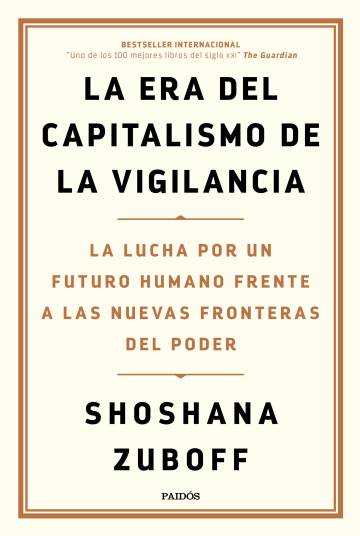
El dinero te vigila

Cada vez que usamos Internet cedemos inconscientemente parte de nuestra soberanía personal a un poder opaco, sin límites ni fronteras. La socióloga Shoshana Zuboff ha puesto nombre a ese fenómeno en un libro llamado a marcar época: 'La era del capitalismo de la vigilancia'


Facebook llegará a conocer todos los libros, todas las películas, todas las canciones que usted, lector de estas líneas, haya consumido en su vida, larga o corta. La información de la que dispone la empresa informática servirá para deducir a qué bar irá usted cuando llegue a una ciudad extraña, un bar en el que el camarero ya tendrá preparada su bebida favorita. Ello lo pronostica el creador y director ejecutivo de Facebook, Mark Zuckerberg, una de las personas más ricas del mundo, que la fundó en 2004. El presidente ejecutivo de Google, Eric Schmidt, no se queda atrás: “Si nos dais más información de vosotros mismos, de vuestros amigos, podemos mejorar la calidad de nuestras búsquedas. No nos hace falta que tecleéis nada. Sabemos dónde estáis, sabemos dónde habéis estado. Podemos saber más o menos qué estáis pensando”.

Ha nacido el capitalismo de la vigilancia. El 1984 de Orwell se queda antiguo.

Es como si un tiburón hubiera estado nadando silenciosamente en círculos bajo el agua del mar, justo debajo de la superficie en la que se estaba desarrollando la aburrida vida cotidiana, y hubiese saltado de repente con su piel reluciente, por fin a la vista de todos, para hacerse con un buen bocado de carne fresca. Con el tiempo ese tiburón ha revelado ser una nueva variante del capitalismo, desconocida hasta hace muy poco, una variante que se multiplica con extraordinaria rapidez y que se ha fijado el dominio como meta, la hegemonía respecto a otros capitalismos (comercial, industrial, financiero…), a través del conocimiento y monetización de nuestra pequeña existencia. Una forma de capitalismo sin precedentes se ha abierto paso a codazos, casi sin previo aviso, para entrar en la historia.
El dinero te vigila


El capitalismo de la vigilancia es, según lo define Shoshana Zuboff, profesora emérita de la Harvard Business School y autora del monumental libro La era del capitalismo de la vigilancia, la reivindicación unilateral, por parte de un selecto grupo de empresas provenientes de Silicon Valley, de la experiencia humana privada como materia prima para su traducción en datos. Estos datos son computados y empaquetados (del mismo modo que las célebres hipotecas subprime, origen de la Gran Recesión del año 2008) como productos de predicción y vendidos en los mercados de futuros de los comportamientos de la gente. Los servicios online gratuitos, las app que no cuestan nada, solo son un cebo, no un regalo que hacen media docena de empresas magnánimas creadas por jóvenes emprendedores, casi todos estadounidenses, divertidos y simpáticos, en nada parecidos a los grandes magnates encorbatados del pasado que posaban fumando un habano.


MÁS INFORMACIÓN


Lee un fragmento de 'La era del capitalismo de la vigilancia'

Capitalismo de plataformas: tres libros y un documental

A través de estos servicios digitales básicos comienza la extracción de datos de la vida de cada uno de los ciudadanos que utilizan Internet, la acumulación de sus comportamientos (cómo se visten, qué películas ven, qué comida engullen, los libros que leen, el deporte que practican, si son activos o jubilados…), que serán horneados para poner en bandeja un festín de predicciones listas para ser transformadas en dólares. Muchos de esos ciudadanos, desconocedores de esta realidad escondida, felices con la innovación tecnológica que hace sus vidas más cómodas, han abierto sin darse cuenta las puertas de sus casas y sus refugios más íntimos a estos monopolios que succionan nuestra información y con ella moldean nuestro futuro. El filósofo alemán de origen coreano Byung-Chul Han lo resume en esta certera frase: “Pienso que estoy leyendo un ebook, pero en realidad es el ebook el que me lee a mí”.

¿Le dice usted a su cónyuge que hoy le apetece comer paquetitos de pato crujiente con salsa hoisin y poco después, casi instantáneamente, aparecen en su teléfono móvil diversos mensajes de restaurantes chinos que se los pueden proporcionar?, ¿organiza el viaje familiar anual a San Petersburgo y Moscú, y le llueven las ofertas sobre el viaje, alojamiento y compras que puede hacer?, ¿mira en el ordenador, en la tableta o en el móvil un anuncio de camisas vaqueras que le gustan y la publicidad de las páginas web que visita habitualmente se llena de pantalones, parkas, gorras, zapatillas del mismo estilo? Este es el resultado del capitalismo de la vigilancia. Evgeny Morozov, un ensayista bielorruso experto en tecnología, que ha escrito una larguísima (y a veces despiadada) crítica al libro de Zuboff que a su vez es casi otro libro (Los nuevos ropajes del capitalismo), dice en ella: se nos está engañando por partida doble; en primer lugar, cuando hacemos entrega de nuestros datos a cambio de unos servicios relativamente triviales y, en segundo lugar, cuando esos datos después son utilizados para personalizar y estructurar nuestro mundo de una manera que no es transparente ni deseable. Se pierde cualquier atisbo de soberanía personal.

La nueva tiranía no necesita golpes de Estado. Se basa en nuestra gran dependencia de la tecnología

La experiencia humana como materia prima gratuita para una serie de prácticas comerciales la mayoría de las veces ocultas de extracción, predicción y ventas. Este es el nuevo y creciente capitalismo de la vigilancia, que plantea enormes contradicciones a la “democracia de mercado” en la que estábamos instalados. ¿Qué supondrá este cambio fundamental para nosotros, para nuestros descendientes, para nuestras imperfectas democracias, para “la posibilidad misma de que exista un futuro humano en un mundo digital”? (Zuboff). Para desarrollar esas antinomias, la autora se apoya en el concepto de “tiranía” utilizado por Hannah Arendt; la tiranía como perversión del igualitarismo, porque trata a todos los demás como seres igualmente insignificantes: “El tirano manda según su voluntad e interés propio (…) como uno contra todos, y los todos a los que oprime son todos iguales, es decir, carecen de poder”. La tiranía del capitalismo de la vigilancia no requiere de golpes de Estado clásicos, ni del látigo del déspota, ni de los campos de exterminio nazis, ni de los desaparecidos, ni de los gulags del totalitarismo. Es una especie de golpe incruento, aparentemente indoloro y parasitario, pero que llega al fondo de lo que pretende, la dependencia masiva de las obsesiones que nos inyecta.

Este es un libro importante. La era del capitalismo de la vigilancia es un texto multifacético. Es de economía conductista, pero también de psicología, de tecnología o —esencialmente— de pensamiento político. Tiene que encontrar sus lectores en los intersticios de esas profesiones y no ser marginado por los científicos sociales acostumbrados a las disciplinas unipolares. Es una intensa llamada de atención a la posibilidad de un golpe de Estado desde arriba y permanente, no como un derrocamiento puntual del Estado, sino más bien como un sumidero de la soberanía personal (y por acumulación, del conjunto de la ciudadanía) y como una fuerza muy poderosa en la peligrosa deriva hacia la “desconsolidación” y la falta de calidad de la democracia, que actualmente amenaza a los sistemas políticos liberales. Sus actividades representan un desafío al elemental derecho al tiempo que tenemos por delante, que comprende la capacidad del ciudadano de imaginar, pretender, prometer y construir un futuro.

La era del capitalismo de la vigilancia. Shoshana Zuboff. Traducción de Albino Santos. Paidós, 2020. 910 páginas. 38 euros. Se publica el 29 de septiembre.

sábado, 18 de fevereiro de 2017

Documentário - O que está errado com o Mundo? por John Perkins


Confesso que há muito tempo um livro não me perturbava tanto. Acho que o último que me deixou desorientado desta forma foi o “Sem Vestígios”, que tratava das confissões de um torturador do aparato de repressão brasileiro. Falo de “Confissões de um Assassino Económico”, de John Perkins.

A história do livro é a seguinte: um economista é recrutado para servir como “Assassino Económico” – ou simplesmente “AE” – durante a década de 70. Depois se torna presidente de uma empresa de energia alternativa até que se arrepende e resolve contar a sua história.

E o que seria um “AE” ? São técnicos – basicamente economistas – que têm a missão de gerar números fictícios a fim de respaldar enormes empréstimos de órgãos como Banco Mundial e o BID (Banco Interamericano de Desenvolvimento), empréstimos impagáveis, e assim estabelecer uma relação praticamente colonial entre o país e os EUA.

Tais empréstimos eram utilizados em grandes obras de infra-estrutura, tocadas por empresas americanas necessariamente, que beneficiavam elites corruptas destes países. O preço a ser pago era a incapacidade de pagamento destes empréstimos e a consequente dependência total, com subserviência e facilidades de exploração de recursos naturais pelas empresas americanas.

O livro também relata que, quando os AEs, ou seja, a dominação económica, falhava, eram enviados os chacais, que removiam do poder via assassinato os presidentes que se opunham aos EUA . Cita explicitamente o caso dos Presidentes Omar Torrijos, do Panamá – que renegociou o Tratado do canal de mesmo nome – e Jaime Roldós, do Equador, que tentou expulsar as petrolíferas americanas de seu país.

Se nada desse certo, invasão pura e simples pelo Exército – i.e., Panamá e Iraque.

O esquema dos AEs é tão engenhoso que estes eram pagos por grandes empresas de consultoria, para que não aparecesse vínculo direto com o governo norte-americano ou suas agências de inteligência.

John Perkins trabalhou como um AE de 1971 a 1980. Esteve na Indonésia, Panamá, Equador, Irão, Arábia Saudita, Colômbia, entre outros. Saiu em 1980, fundou uma empresa de energia alternativa – onde teve o silêncio comprado através de diversas formas, vendeu a empresa, se tornou especialista em cultura indígena; até que o 11 de Setembro o fez finalmente escrever o livro.

Nos capítulos finais, analisa a questão da Venezuela – e a sorte de Chavez – e a do Iraque. Também disseca a sede dos EUA por petróleo e a miséria que no fim, toda esta dominação e o consumismo desenfreado causam.

Cunha o termo “corporatocracia”, para determinar as relações entre o governo e as grandes empresas, com pessoas indo de um lado para outro – no livro que li sobre a Monsanto este fenómeno é chamado de “portas giratórias”. Também determina a forma de imperialismo imposta ao restante do mundo.

O livro me deixou muito perturbado. Primeiro por mostrar quão sórdidas podem ser as pessoas quando buscam as suas realizações pessoais – mesmo que seu trabalho gere fome, destruição ecológica e de populações inteiras. Segundo, e isso já era tocado de leve no excelente livro do economista Joseph Stieglitz sobre globalização, por explicitar os métodos de dominação que representam instituições como Banco Mundial, BID e FMI. Terceiro por mostrar a influência que hábitos nossos do dia a dia exercem sobre populações inteiras. Quarto, pela influência do petróleo na história toda.

Indispensável.
Confesso que irei pensar duas vezes, a partir de agora, antes de por exemplo comprar um tênis Nike ou abrir uma Coca Cola – se bem que quase não bebo refrigerante. Pelo menos estou trocando meu carro por um mais económico.

Quando pensei este blog, a ideia era de lidar com alguns “fantasmas” que estavam em minha mente, bem como formatar opiniões e literatura e refletir um pouco sobre a correria atomata do dia a dia.

Vejo, felizmente, que além disso ele pode – e deve – engajar-se em causas justas. E este livro nos leva a pensar sobre um monte de coisa.

Saber mais:
Entrevista John Perkins