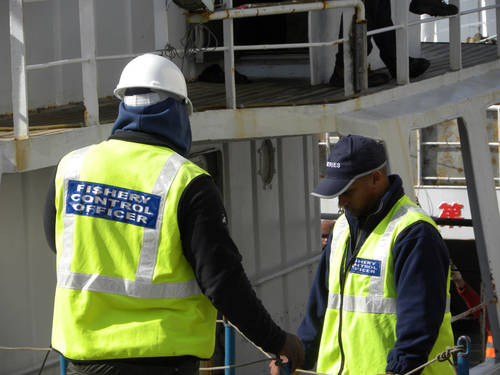
Mais de 3.000 espécies de peixes são apanhadas na pesca de arrasto de fundo, um tipo de captura que arrasta redes pelo leito marinho e apanha tudo à sua passagem. Esta é apenas uma estimativa e o número real pode mesmo ser o dobro.
A conclusão é de uma investigação da Universidade da Columbia Britânica, no Canadá, publicada na revista ‘Reviews in Fish Biology and Fisheries’. O trabalho é descrito pelos autores como o primeiro inventário global das espécies de peixes cuja captura é reportada no âmbito da pesca de arrasto de fundo, e teve por base mais de 9.000 registos de todo o mundo de 1895 a 2021.
“Esta é a imagem mais clara que temos da amplitude da pesca de arrasto de fundo”, diz Sarah Foster, primeira autora do estudo. “Revela quantas espécies estão a ser capturadas e o quanto nos tem escapado”, acrescenta.
De acordo com a equipa, uma em cada sete espécies de peixes registadas, e que tenham um estatuto de conservação conhecido na Lista Vermelha da União Internacional para a Conservação da Natureza, está ameaçada ou quase ameaçada de extinção.
Por outro lado, uma em cada quatro ou sobre ela não há dados suficientes para fazer uma avaliação adequada quanto à sua conservação, ou não foi ainda avaliada, o que, para estes investigadores, significa que uma grande porção da pesca de arrasto de fundo estão a acontecer no meio de um “vácuo de informação”.
Entre as espécies apanhadas nessas pesadas redes que devastam os fundos marinhos contam-se a criticamente ameaçada raia Glaucostegus typus, o ameaçado tubarão-zebra (Stegostoma tigrinum) e pelo menos três espécies vulneráveis de cavalos-marinhos. Além disso, os cientistas descobriram que num terço das 323 famílias de peixes registadas pelo menos metade de todas as espécies eram apanhadas nas redes de arrasto de fundo.
“A pesca de arrasto de fundo arrasta ramos inteiros da árvore da vida marinha. Não faz distinção entre espécies comuns e aquelas que está já à beira da extinção”, afirma Syd Ascione, coautora do artigo, acrescentando que essa prática está a pôr pressão sobre “espécies únicas em termos evolutivos, incluindo muitas sobre as quais sabemos demasiado pouco”.
Os números revelam ainda que cerca de 95% das espécies apanhadas na pesca de arrasto de fundo não eram o alvo, mas, mesmo assim, 64% foram capturadas e não foram devolvidas ao mar. Os investigadores dizem que, por tudo isso, as estimativas que apresentam são altamente conservadoras, e que os números reais podem ser muito maiores.
Apontando que cerca de 99% da pesca de arrasto de fundo acontece em águas sob a jurisdição de Estados, “é importante que os governos adotem abordagens precaucionárias e que proíbam a pesca de arrasto de fundo em vastas áreas do oceano”, especialmente em áreas marinhas protegidas, defende Amanda Vincent, que também assina este trabalho.
Overfishing is wiping out commercial fisheries, and climate change is making certain fish species smaller. But Daniel Pauly says the world can still save endangered fisheries. Pauly is called “the ocean’s whistleblower” in a new biography, for good reason. The French-born marine biologist, who teaches at the University of British Columbia, spent much of the past quarter-century documenting the swift decline of fish within the seas. Now he says that warming waters are depleting the oceans of oxygen that fish need to grow to their full stature.
In an interview with Scientific American, Pauly addresses whether fisheries are doomed or if there is still hope for sustaining them. He speaks about how his early experiences working in Southeast Asia convinced him that fisheries sciencehad become a captive of the fishing industry, promoting industrial methods such as bottom trawling that devastated underwater ecosystems and threatened the livelihoods of small-scale artisanal fishers.
Pauly is credited with helping to develop a new kind of science, one that pays more attention to the ocean’s ecology and what fish need to thrive. He coined the term “shifting baseline syndrome” to describe how scientists and others forget the biological abundance of earlier times—thinking that today’s meager fisheries are somehow the norm. This “collective amnesia,” as he describes it, has led researchers and regulators to routinely misjudge the magnitude of the ecological disaster taking place in the seas.
In his most influential research project, Pauly assembled hundreds of scientists to create a global database to document the impact of fisheries on marine ecosystems. The team found that governments had routinely underestimated their catch and that fisheries everywhere are close to collapse. If current trends continue, Pauly warns, the world’s oceans will end up as marine junkyards dominated by jellyfish and plankton.
Nevertheless, the outspoken fisheries scientist says that solutions are readily available. If nations close the high seas to fishing and end wasteful government subsidies, fish populations would rebound, he claims. And of course, the world also ultimately needs to get climate change under control. Pauly is currently researching how global warming drives fish stocks toward the poles and makes fish smaller. The new biography of him is The Ocean’s Whistleblower: The Remarkable Life and Work of Daniel Pauly, by David Grémillet (Greystone Books). It was released on September 21.
[An edited transcript of the interview follows.]
You were born in Paris, the son of a Black American GI and a white Frenchwoman, and grew up in Switzerland, far from the ocean. Through some twists and turns, you became an employee of the German government in Indonesia in the 1970s, where you worked on a research trawler as part of a project to introduce industrial fishing to the country.
Yes, I regret that now. Trawlers in Southeast Asia devastated reefy habitat—giant sponges and soft coral that structured the habitat. [Trawling] transformed a productive, diverse ecosystem into a muddy mess. We simply didn’t know what we were doing. We didn’t even have the words to describe this kind of ecological destruction at the time. Trawlers [also] encouraged an immense waste of fish for export. There was little left over for local fishers. In Indonesia, I encountered such poverty among the fishers. They were going out with three or four men and coming back with one kilogram of fish. Introducing industrial trawling into such an environment was madness.
Trawling allowed the fishing industry to exploit places that had earlier been unreachable.
That’s right. This expansion of fisheries has eliminated all the protection that fish had naturally from us. Depth was a protection, cold was a protection, ice was a protection, rocky grounds were a protection. With successive technological developments, we can now go everywhere where the fish were protected before.
After working in Southeast Asia, you moved on to West Africa and Peru. Offshore fleets were putting small-scale fishers out of business. You’ve written that this is not just an economic problem, it is a health problem.
Up to 50 percent or more of the protein consumed in many poor regions comes from fish. In these countries, most of the calories come from carbs, from corn, cassava and rice. The only way these carbs are nutritionally efficient is by adding a little fish. Also, the micronutrients, the vitamins, the various minerals and metals such as zinc—all of this comes from fish.
Your work with a team of researchers in a group that you founded, the Sea Around Us, was critical in establishing the fact that industrial fishing was rapidly wiping out local fish stocks all over the globe. You basically created a massive data set that proved that we were fishing unsustainably. How did you pull that off?
Reconstructing the catch of every country from 1950 to 2018 was an immense job that involved about 300 researchers. We came up with a much higher catch than was being reported officially. Many countries had a completely distorted view of their own fisheries: recreational fisheries were not included in the catch totals; illegal fisheries, local artisanal fisheries were not included. We found that catches have been sharply declining globally since 1996.
Some scientists initially argued that fishing was not to blame but rather natural fluctuations in fish populations. It reminds me of the argument that climate change is a natural phenomenon, so we don’t need to worry about it.
I was about to say that!
Nations also denied that they were engaged in overfishing.
I remember talking to the minister of fisheries in Australia. She said fish in Australia are being exploited sustainably. But you look at the statistics, and the catch there is going down, down, down. So what can she possibly mean? In Canada, the fishery of cod has collapsed to 1 percent or 2 percent of its value in the 1950s. If a country can somehow maintain such a meager catch, they call it “sustainable exploitation,” but the bar is set so low that it is meaningless.
You’ve said that if human destruction of the seas continues unchecked, they will end up as marine junkyards dominated by jellyfish and plankton.
It’s already happening. Dead zones without oxygen are spreading; fish are getting smaller and smaller both because of being caught and also because of global warming.
Not only is this an ecological disaster, but in the long run, it is not in the interest of the fishing industry either.
I have described the form of fishing where you devastate one area, then move on to another, as a Ponzi scheme. As long as you find new suckers, you can go on. Bernie Madoff [a New York City–based financier who was convicted of running the largest Ponzi scheme in history] got money from investors and then paid them back with the money he got from new investors. That works so long as you find new investors, right? But ultimately you run out of investors—you run out of new areas to fish—and the whole thing collapses.
Your latest research has focused on the impact of climate change on fish size. Can you talk about that?
Our big problem for us mammals is getting enough food to maintain our temperature. Fish don’t need to maintain their own temperature, so basically they eat much less. Their problem is getting enough oxygen rather than eating enough food. Fish breathe through gills. As the fish grows, its volume grows faster than the surface of the gills. Also, as waters grow warmer, they contain less oxygen, and the fish themselves get warmer. And as fish get warmer, they need more oxygen. So you have a perfect storm—the fish are squeezed. The result is that they are getting smaller and smaller.
Fish are also moving to cooler waters.
Fish have to stay at the same temperature that they are adapted to because their enzyme system functions at a certain temperature. So as the seas warm, it means that South Carolina and North Carolina will be in conflict because the South Carolina stocks have moved to North Carolina. These migrations are occurring on a grand scale. In the tropics, the fish that leave are not replaced by anything else.
You say that we should stop fishing on the high seas to help fish stocks recover.
Fishing in the so-called high seas generates only about 5 percent or 6 percent of global catches, mostly tuna. The central part of the oceans are actually a desert. The tuna are like camels in the Sahara. They swim from one oasis to another. Tuna is not a fish that poor people in the developing world eat anyway, so limiting their catch would have no impact on food security.
If the high seas account for such a small percentage of the catch, how will closing them to fishing save fish populations?
Fisheries existed intact for hundreds of years because we couldn’t go after the last fish. But now we can. And you not only catch the fish you want but kill everything else in the process—there is a huge bycatch. If you close the high seas to fishing, you give fish a sanctuary where they can replenish themselves. Research shows that no-fishing sanctuaries help to rebuild stock, some of which then moves into coastal waters where it can be caught.
International negotiations are currently underway at the World Trade Organization about getting rid of subsidies given by most rich countries to their industrial fishing fleets. Are you hopeful?
I’m somewhat hopeful. I have researched subsidies myself. Many fishers nowadays don’t fish for fish. They fish for subsidies. They couldn’t operate without massive subsidies. So, yes, eliminating them would greatly reduce overfishing. Actually, fisheries issues are not difficult or intractable problems. We need to fish less and to create sanctuaries where fish populations can revive.
Throughout your career, you’ve done science that aims to help people. What is your advice to young scientists?
My advice is to choose problems that are global and not local. We need to attack problems that feed into policy. And we need solutions that can work throughout the world.
You have a reputation as a workaholic, as someone who has tackled ambitious scientific problems. Was there extra pressure on you to prove yourself in a way that a white scientist would not have to?
Yes. But the way that I experienced that is somewhat different. What motivated me is that I was living a privileged life and was working with colleagues in the developing world who were as smart and well educated as I was but were paid one tenth of what I was getting. I felt a responsibility to the people I was working with and the countries I was working in.
Some universities are trying to increase participation in the sciences among students from minority groups. Are they doing enough?
The problem is these kids don’t trust themselves to be scientists. The vision for minority students from poor backgrounds is to become a doctor or lawyer but not a scientist, because frankly, scientists don’t make money. What you understand when you are actually in science is that most people in the profession love what they do. They can’t believe that they are being paid to do it. Science, in its own way, is as creative as the arts. Impoverished young people don’t know that. They don’t know that science is fun and that you don’t have to be a robot or a nerd to do it.
After the award-winning 2014 Cowspiracy documentary funded by Leonardo di Caprio and the 2017 What The Health film, now we have from the same people Seaspiracy – out on Netflix since 24 March 2021. Cowspiracy argued that animal farming is the primary source of environmental destruction, What The Health advocated for a plant-based diet. Seaspiracy, directed by Ali Tabrizi, a British film-maker using the same narrative framework as Cowspiracy, aims a powerful “J’accuse!” to the sustainable seafood movement and suggests that the Dolphin Safe and Marine Stewardship Council labels probably do not give the assurances consumers expect.
George Monbiot, the noted environmentalist and Guardian columnist who was given a prominent role in the documentary as a commentator, described it on Twitter as “a brilliant exposé of the greatest threat to marine life: fishing”.
Should we believe everything this sleuth-like, conspiratorial documentary says and stop eating seafood? The title – a playful pun on conspiracy and piracy – certainly suggests we’re in for a ride.
The public instantly fell in love with the film, it’s been praised by celebrities including “Rock legend” Bryan Adams, the vegan Canadian musician who urged his 655,600 Twitter followers to watch it and stop eating fish. The fishing industry reacted even before the documentary came out, seeing it as an “unacceptable and dishonest attack”, in short, “vegan propaganda”. It was also bashed by the New York Times: The reviewer did not like the documentary’s format because “its rhetorical methods distract from its revelations.”
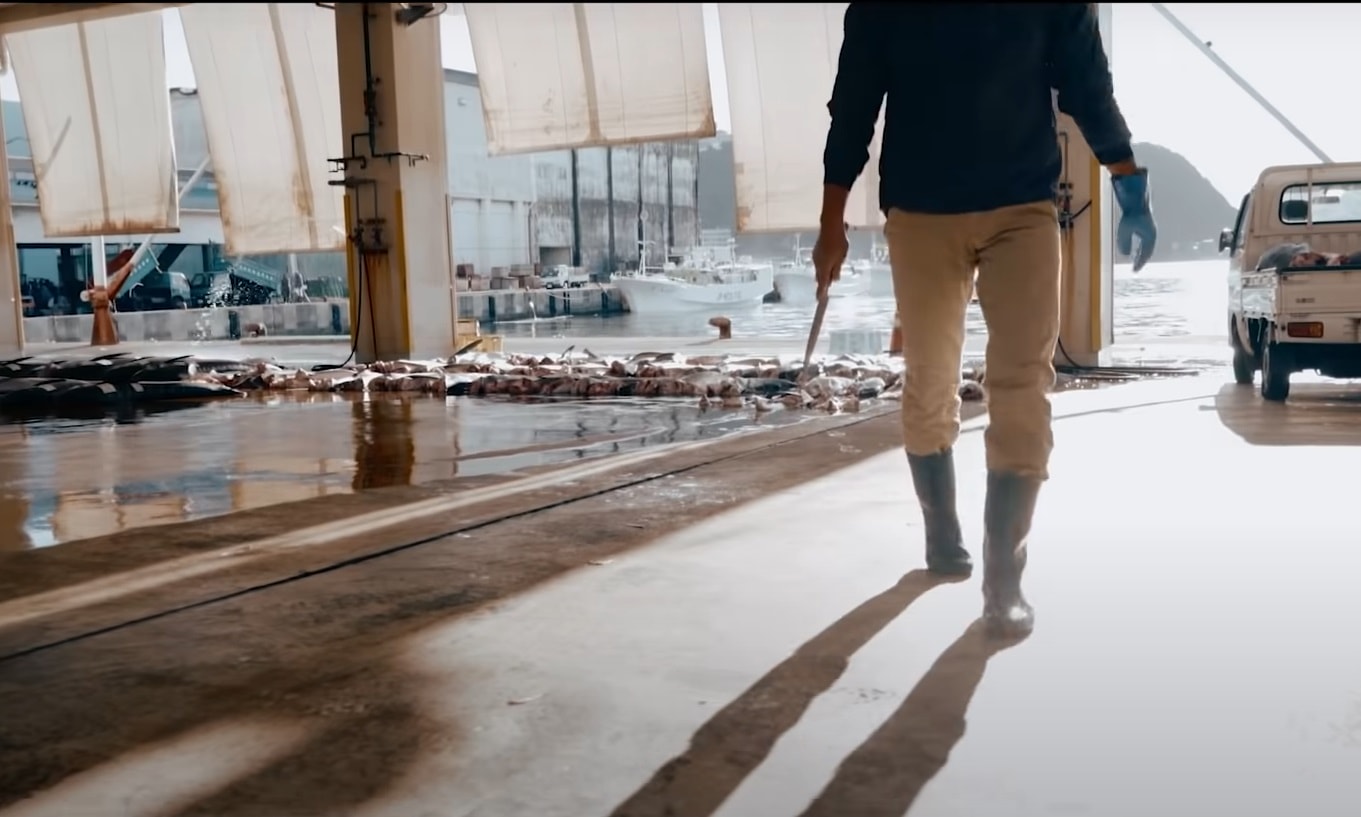
The New York Times reviewer is right, the Seaspiracy message tends to get “lost in a sea of murky conspiratorial thinking”. We get told about having to use spy cameras in China, about threats to the filmmaker’s life, about having to evade pursuit from Japanese police and Yakuza types, accompanied by the sound of wailing sirens and flashing lights in the night. We see whales killed in a sea that turns deep red with blood, bycatch dropped into the sea like so much garbage and shark fins slashed with razor-sharp knives.
But the “conspiratorial thinking” is not the only problem. It looks now like the Seaspiracy film will go the way What The Health did, accused by experts and investigative journalists of confusing causation with correlation, cherry-picking science studies, using biased sources, distorting study findings, and relying on “weak-to-non-existent data”.
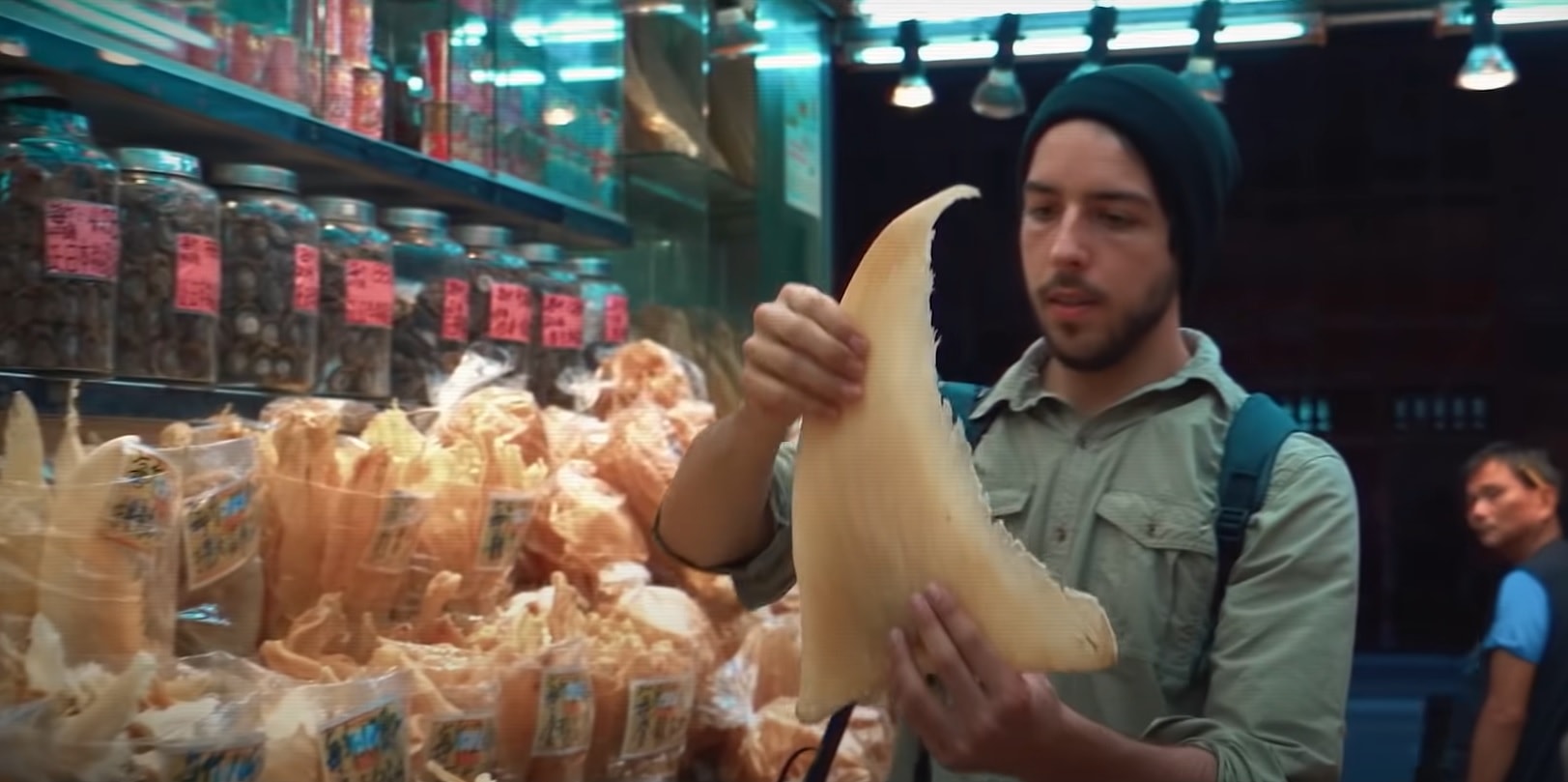
Filmmaker Ali Tabrizi handles a shark fin in one of the scenes of the film (screenshot)
Seaspiracy is Going Viral on Social Media
The theatricality doesn’t help the argument. But it helps to get the public’s attention.
In just one week since its release, Seaspiracy is already among Netflix’s top 10 most popular films and TV shows in several countries worldwide. Loved by Rotten Tomatoes’ audience with a 92 percent score, it is doing equally well on the online platform IMDb, achieving an 8.6 rating.
Everywhere on Social Media, it’s a roaring success. The film’s account on Instagram has already over 300,000 followers (with only 31 posts). On Twitter, the #seaspiracy hashtag grows by the hour with comments like “horrible”, and “I shall never eat fish again”. But also benefits from additional evidence, like this one from The Economist:
And the film necessarily gives a boost to vegans:
Not a Success with Film Participants or the Fish Industry or Fisheries Experts
Seaspiracy is obviously not a success with the people featured in the film, as the U.K. Guardian reports. And surely not a success with Japan, singled out as the country most responsible for overfishing, environmental destruction of the ocean floor caused by trawling, and near collapse of bluefin tuna stocks, not to mention the massacre of dolphins and sharks. They all complained that they have been misrepresented with distorted interviews and that the reported statistics are “erroneous”.
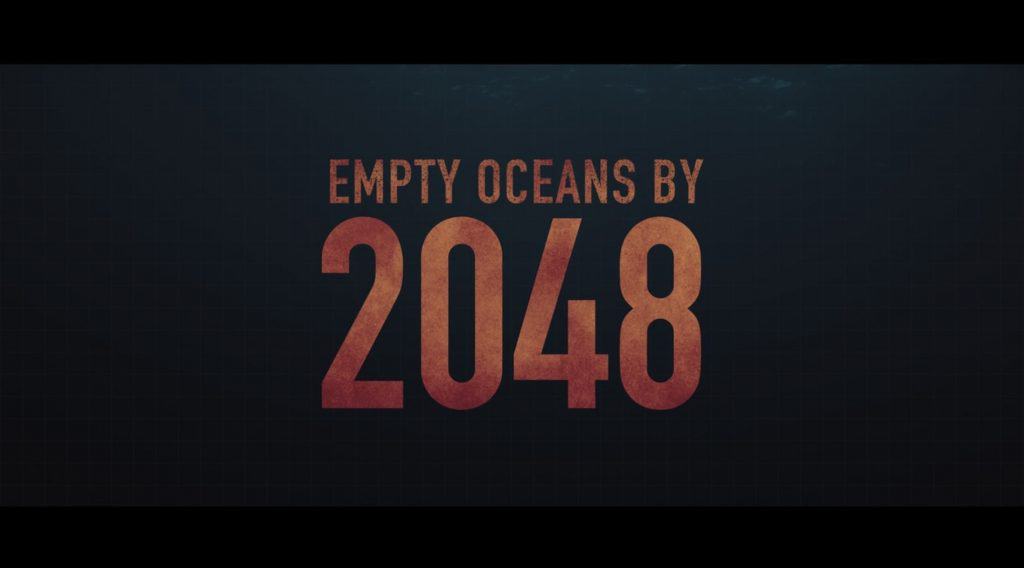
There is a lot to be said about the use of wrong data. Most notably, the prediction that the oceans will be emptied of life by 2048: Coming from a 2006 study, it has been contradicted by the forecast’s author as long ago as 2009. As environmental statistics go, that’s pretty old stuff.
More importantly, the film makes the claim that sustainable fishing is impossible. This is patently wrong, we do have examples of fisheries recovering from depletion, as for example, the Patagonian toothfish in the Southern Oceans. Predictably, a spokesperson for the Marine Stewardship Council slammed the film because of its many “misleading claims”, in particular, that there is no such thing as “sustainable fishing” and that MSC certification was “not credible”:
“Some of the known problems that the film highlights – bycatch, overfishing and destruction of marine ecosystems – are precisely the issues the MSC certification process is designed to address. The positive impact of our programme has been recognised by the United Nations, as being important in helping to support ocean biodiversity. Fisheries that ask to go through an MSC assessment work hard to reach the verifiable and science-based standards we set, ensuring that fish stocks are conserved for future generations.” (highlight added)
Yet the situation is far from rosy. Cases of successful sustainable fisheries are unfortunately extremely rare due to wrong-headed political choices (more about that later). Look at the finding of the FAO, one of the United Nations major technical agencies whose Fisheries Department monitors 600 marine fish stocks: only 3% were found to be underexploited and 20% moderately exploited. More worryingly, 52% are fully exploited, 17% are overexploited, 7% are already depleted. Just 1% of fish stocks are recovering from depletion. That is regrettably very little, but it does show that it can be done.
Unsurprisingly, the filmmaker defended himself from resorting to wrong data, pointing out instead to the overall trend, which is indeed towards fisheries destruction, something that nobody denies. “We are not scientists,” he said, “nor did we claim to be. Despite there being some confusion about this particular projection [that the oceans will be depleted by 2048], the overall state of fisheries is in severe decline.”
Perhaps they are not scientists, but it behooves documentary filmmakers to go to the best, most reliable sources of information in order not to mislead his audience – and that clearly was not done. Remarkably, they never contacted the FAO Fisheries Department, even though it is the recognized world fisheries data center.
When it comes to the interviews, misleading presentations abound. For example, the scene in Seaspiracy with Mark Palmer, the associate US director of the International Marine Mammal Project (IMMP – operated by the Earth Island Institute). When asked whether his group could guarantee that no dolphins were ever killed by any tuna fishery around the world, he said (rightlyupset):
“The film took my statement out of context to suggest that there is no oversight and we don’t know whether dolphins are being killed. That is not true. […] I answered there are no guarantees in life but that drastically reducing the number of vessels intentionally chasing and netting dolphins as well as [putting] other regulations in place, that the number of dolphins that are killed is very low”
“The Dolphin Safe tuna programme is responsible for the largest decline in dolphin deaths by tuna fishing vessels in history. Dolphin-kill levels have been reduced by more than 95%, preventing the indiscriminate slaughter of more than 100,000 dolphins every year.” (highlight added)
As might be expected, the filmmaker denied Palmer’s allegations:
“We asked if they could guarantee ‘Dolphin Safe’ tuna is in fact dolphin-safe, to which Mark Palmer replied that they could not guarantee it and that their observers, who oversee these fishing vessels some of the time, can be bribed. The label does not say 95% dolphin-safe. It claims to be dolphin-safe. In the words of Mark Palmer himself, ‘one dolphin and you’re out’. This wasn’t taken out of context.”
What is obvious to me is that the interview derailed: Mark Palmer didn’t realize he was talking to someone trying to set up a trap to shock viewers. See it for yourself and you’ll realize that Palmer thought he was expressing himself as one always does in private, acknowledging that nothing in the world is perfect. And of course, nothing ever is.
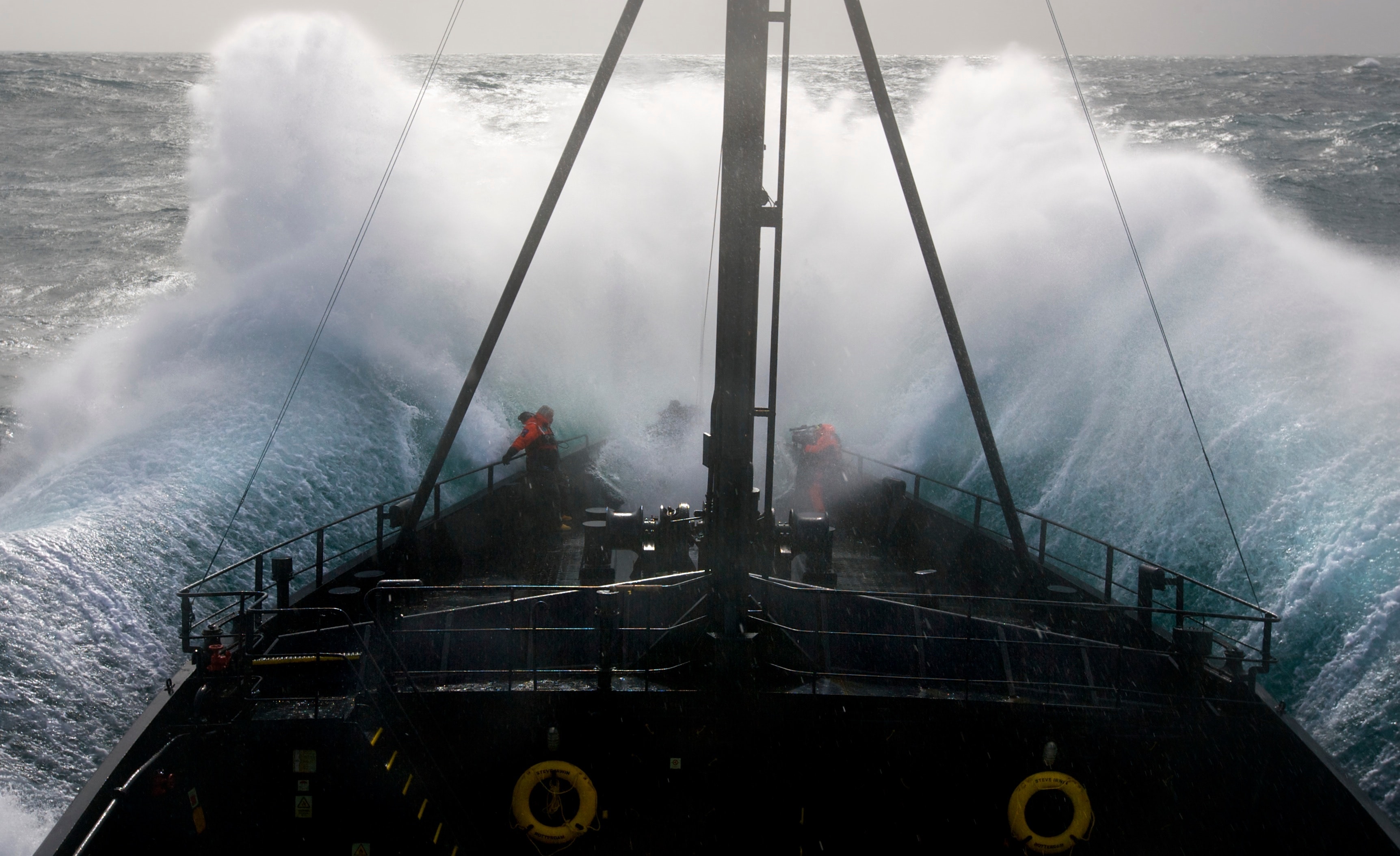
Because to stop that kind of deadly “by-catch”, you’d need 24/24 hour military oversight. Not yet feasible in the high seas, no government will commit to that kind of military marine operations. Theoretically, it’s not impossible, as the hunting with the Sea Shepard and others organized by Captain Paul Watson and his Sea Shepherd Conservation Society demonstrate. The film appropriately catches Captain Watson’s crew in some highly charged night scenes of stopping with rifles a Chinese vessel engaged in illegal fishing off the coast of West Africa. But the numbers of illegal vessels caught this way are woefully small.
Captain Paul Watson, photographer Eric Cheng, and cameraman John Mans brace themselves on the bow of the MY Steve Irwin as it plunges into the trough of a massive wave in rough seas in the Southern Ocean on Jan. 9, 2009. (Photo by Adam Lau/Sea Shepherd Conservation Society)
A Systematic Lack of Sound Information
Incredibly, instead of going to the one source of information everyone who is serious about fisheries turns to, i.e. the FAO Fisheries Department, the filmmaker went to a European Commission manager. Unsurprisingly, the interviewee was a bureaucrat and not an expert. Nothing was learned.
Seaspiracy reports not only on the fisheries’ destruction of the environment but also covers aquaculture which now provides nearly half the seafood the world consumes. Both salmon and shrimp farming get their fair share of accusations, ranging from organic pollution, sea lice and diseases caused by overcrowding the fish in cages to mangrove destruction caused by setting up shrimp farms on the coasts.
Cherry on the cake: fish farmers have the unfortunate habit of sourcing their feeds without checking provenance, and the cheapest source comes from the “ghost ships” associated with human rights abuses in Southeast Asia. On those ships, poor migrants work as modern-day slaves, unpaid and captive for up to 8-10 years, unable to go back home and many meeting an untimely death
Again, Seaspiracy’s coverage is scanty and incomplete. Yet there’s plenty of information available. Even though the film presents it as something it “discovered”, slavery on the high seas has been around a long time – we reported it here on Impakter in 2015. The issue is in fact well known to the international community, particularly in FAO that has repeatedly called the world’s attention to it.
Here as elsewhere, the filmmakers didn’t dig into the issue or find the right sources of information. They merely reproduced a heartbreaking interview with a victim whose face, for obvious safety reasons, was kept in the dark. But such a scene of course has a far greater shock value for viewers than would a serious interview with an expert engaged in fighting slavery on the high seas or trying to save mangroves.
Seaspiracy simply ignores (or won’t report) the efforts of groups such as the Seafood Task Force, which aims to ensure that shrimp producers stop sourcing their feeds from the infamous slave “ghost ships”. The Task Force started working in the Thailand shrimp sector and plans to expand to India, Indonesia and Vietnam; it brings together a coalition of agents across the supply chain – from fisheries companies to shrimp feed manufacturers and retailers – to jumpstart “pre-competitive collaboration” to address the abuses.
All these are serious people dedicated to fighting for a more sustainable world, but none got a chance for an interview. If you really want to know about high seas modern-day slavery, this short 2019 video (6 minutes) from German DW tells you far more about it than does Seaspiracy:
So is Seaspiracy really an “anti-fishing”, anti-sustainability and anti-UN documentary?
It pretends to be much more. What it is saying is that industrial fisheries are killing life in the oceans and that with dead oceans that no longer act as carbon sinks, every species, humans included, will face extinction.
This is unquestionably the strongest claim made by the film. And this focus on the pivotal role of the oceans is in line with what The Economist reminds us in the above-mentioned Tweet: one hectare of seagrass is 15 times more effective in removing carbon dioxide from the atmosphere than one hectare of rainforest.So why should we worry so much about the Amazon and forget about the oceans?
To get the answer, look no further than what commercial fisheries are doing, with Japan and China leading the pack. With modern means and scandalous labor practices, they have destroyed artisanal fishing that traditionally provided a decent livelihood to coastal communities everywhere. And with a devastating trawling technology, they have laid waste to the oceans’ floor, caused systematic overfishing and depleted fish stocks.
Industrial fisheries have been running loose and must be stopped. Yet that is not what Seaspiracy tells you.
Seaspiracy Ends on The Wrong Message
The film’s call is simplistic: Don’t eat fish, go vegan because sustainable fishing is impossible. This is not the solution: (1) people like to eat fish, it’s good for them and they won’t stop; (2) numerous fishing communities depend on fishing for their survival; (3) who says sustainable fishing is impossible?
Sustainability makes sense and can be actuated, successful examples of fisheries recovering from depletion exist – too few, certainly, but the science is there. The problem is a lack of political will, something the United Nations has grappled with over the last 40 years. Because this whole issue – despite what the documentary says – is nothing new.
For example, back in 2016, on World Fisheries Day, FAO and ILO together with the Vatican in a meeting in Rome condemned illegal fishing and forced labour on the high seas, “urging collective action” and announcing that enough countries had ratified Convention 188 so that it would enter into force in November 2017. The Convention ensures that workers in the fishing sector benefit from safety and health care, written work agreements, and social security protections.
In addition, another important tool, the FAO Port State Measures Agreement (PSMA) was activated to put an end to the problem of illegal, unreported and unregulated fishing (IUU). Vessels involved in illegal fishing are frequently the same ones where human rights abuses run rampant. The PSMA — the first-ever binding international treaty targeting IUU — is intended to trigger more port inspections of fishing vessels, allowing for better controls to ensure that the human rights of crews are not violated.
When announcing the news, FAO wrote:
“Both ILO Convention 188 and the PSMA — combined with increased international awareness on labour and social issues — provide FAO, ILO and partners in industry, labour and fisherfolk communities and consumers associations with a new momentum to end instances of labour abuses in the entire value chain.”
Why such a modest claim, why should these regulations only provide “a new momentum”? Simply because if FAO and ILO member countries (all members of the United Nations) do not apply the regulations, then the regulations are a dead letter. And the FAO and ILO secretariat staff that has been battling for decades for a more just and sustainable world (since the 1980s to be precise) knows well how partner countries pretend to apply regulations and then don’t.
It’s a huge political issue: Threats to the environment, like the one from the commercial fisheries to the survival of the oceans, need a strong international response. And that response is not coming simply because UN regulations have no teeth. What is required is to give the UN regulatory power – the power to carry out inspections, report on results and act on them via the application of fines and other internationally agreed-to punitive means to force straying member countries to hold the line.
The argument that the high seas cannot be logistically regulated, that it is out of reach of military marines, does not hold water. Think of it, fish catches must always reach their market and that’s where the FAO/ILO regulations are applied: They catch the illegal fishing not at sea but when the fish is brought to land, in the ports.
FAO works with countries to help enhance their capacity to conduct efficient monitoring, control, surveillance and enforcement for port inspections. The full list of States and regional economic integration organizations are currently Parties to the Agreement: Australia, Barbados, Chile, Costa Rica, Cuba, Dominica, the European Union (on behalf of its 28 Member States), Gabon, Guinea, Guyana, Iceland, Mauritius, Mozambique, Myanmar, New Zealand, Norway, Oman, Palau, Republic of Korea, Saint Kitts and Nevis, Seychelles, Somalia, South Africa, Sri Lanka, Sudan, Thailand, Tonga, United States of America, Uruguay and Vanuatu.
The main point is this: We have now in hand the necessary regulations and the methods, in short, we know how to deal with the problem and make all fisheries – and the oceans – sustainable. All that remains to do is to force rogue governments to apply them. And that means voting in the right politicians, those with a mandate for sustainability. And give the UN real legal binding powers – not just nice pieces of paper, as is the case now.
Likewise, sustainability in aquaculture can easily be achieved if the existing fish health regulations are enforced (including over the feed – again FAO is the source of information here). All that is needed is strict oversight to ensure the fish remains healthy and good for human consumption.
In short, politics are stopping us from dealing with the problem. Vested interests of the fishing industry, corruption of governments and bureaucracies, consumer ignorance and citizen indifference to environmental and human rights issues: They all have a role to play. And to stop eating seafood as Seaspiracy suggests won’t cut it.
It’s in fact irrelevant, powder in the eyes of the beholder. What Seaspiracy should have done was go to the original source of information, FAO. And it should have taken time to explain to the viewers the complexity of the problem, the real political barriers we are facing. So if there’s a political will to do it, it can be done.
Bottom line, it all comes down to politics and that is the message Seaspiracy should have made and failed to make.