Mostrar mensagens com a etiqueta Michael Roberts. Mostrar todas as mensagens

sábado, 11 de março de 2023

SVB: do vale para o abismo


Na sexta-feira, o banco californiano Silicon Valley Bank (SVB) tornou-se o maior banco a falir desde a crise financeira de 2008. Num súbito colapso que chocou os mercados financeiros, deixou encalhados milhares de milhões de dólares pertencentes a empresas e investidores.

O SVB recebeu depósitos e fez empréstimos a empresas no coração do sector tecnológico da América. A US Federal Deposit Insurance Corporation (FDIC) está agora a atuar como consignatário. O FDIC é uma agência governamental independente que assegura os depósitos bancários e supervisiona as instituições financeiras, o que significa que liquidará os ativos do banco para reembolsar os seus clientes, incluindo depositantes e credores.

O que aconteceu ao SVB? E será isto um acontecimento isolado ou um sinal de que há mais desabamentos financeiros para vir? O desenvolvimento imediato foi o anúncio pelo SVB de que havia vendido com prejuízo um monte de títulos em que investira e que teria de vender US$2,25 mil milhões em novas ações para tentar reforçar o seu balanço. Isto disparou o pânico entre as principais empresas tecnológicas da Califórnia que mantinham o seu cash no SVB. Houve uma corrida clássica ao banco. Com uma velocidade relâmpago, o banco teve de impedir os depositantes de retirarem dinheiro. O preço das ações da empresa entrou em colapso, arrastando outros bancos para baixo com ele. A negociação de ações do SVB foi interrompida e a seguir o SVB abandonou esforços para angariar capital ou encontrar um comprador, o que levou o FDIC a assumir o controlo.

Apesar de pouco conhecido fora do Vale do Silício, o SVB estava entre os 20 maiores bancos comerciais americanos (o 16º maior), com 209 mil milhões de dólares em ativos totais no final do ano passado, de acordo com o FDIC. É o maior credor a falhar desde que o Washington Mutual entrou em colapso em 2008 durante o crash financeiro global. Assim, ao contrário de alguns relatos, o SVB não é um peixinho. Ele oferecia serviços a quase metade de todas as empresas de tecnologia e cuidados de saúde apoiadas por capital de risco nos EUA. O SVB detinha dinheiro para estes "capitalistas de risco" (aqueles que investem em novas empresas "em fase de arranque").

Mas também fez investimentos com os depósitos em dinheiro que obteve, concedendo por vezes empréstimos de risco pessoais a criadores de tecnologia, bem como às suas empresas. Mas os seus investimentos começaram a dar origem a perdas. A SVB apostara na compra de títulos do governo americano aparentemente seguros. Contudo, quando a Reserva Federal iniciou o seu ciclo de subida das taxas de juro para "controlar a inflação", o valor destes títulos do governo caiu drasticamente e o balanço do SVB começou a tomar água. Quando informou o mundo financeiro que estava a vender estes títulos com prejuízo para fazer face a retiradas de dinheiro por parte de clientes, a corrida ao banco ganhou proporções de inundação. Ao não conseguir obter financiamento adicional através da venda de ações, o SVB teve de declarar bancarrota e entrar em processo de concordata (receivership) junto ao FDIC.

Há quem tente afastar a ideia de que o colapso do SVB é um sinal do que está para vir. "O SVB era pequeno, com uma base de depósitos muito concentrada", disse o responsável da investigação europeia sobre ações da Amundi, Ciaran Callaghan. Não estava "preparado para saídas de depósitos, não tinha a liquidez disponível para cobrir resgates de depósitos e, consequentemente, foi um vendedor forçado de obrigações que impulsionava um aumento de capital e criou o contágio. Este é um caso muito isolado e idiossincrático".

Portanto, é um caso isolado. Mas será? O colapso da SVB deve-se a um acontecimento mais amplo, nomeadamente a subida agressiva das taxas de juro da Reserva Federal ao longo do ano passado. Quando as taxas de juro estavam perto de zero, bancos como o SVB carregaram-se com títulos do Tesouro a longo prazo, aparentemente de baixo risco. Mas como a Reserva Federal elevava as taxas de juro para "combater a inflação", o valor desses ativos caiu, deixando muitos bancos sentados sobre perdas não realizadas.

As taxas mais elevadas também atingiram o sector tecnológico de forma especialmente dura, subcotando o valor das ações tecnológicas e tornando difícil a angariação de fundos. Assim, empresas de tecnologia começaram a levantar os seus depósitos em dinheiro no SVB para satisfazerem as suas contas. Ed Moya, analista de mercado sénior da Oanda, comentou: "Toda a gente na Wall Street sabia que a campanha do Fed para a cobrança de taxas acabaria por quebrar algo e neste momento isso está a derrubar os bancos pequenos". O outro racha na parede bancária está nas criptodivisas. O cripto banco prestamista Silvergate também foi forçado a liquidar após o colapso do bitcoin e de preços de outras criptodivisas.

"Os desafios institucionais do SVB refletem uma questão sistémica maior e mais generalizada: a indústria bancária está sentada sobre uma tonelada de ativos de baixo rendimento que, graças a aumentos de taxas do ano passado, estão agora muito debaixo de água – e a afundarem", disse Konrad Alt, co-fundador do Grupo Klaros. Alt estimou que os aumentos das taxas "eliminaram efetivamente cerca de 28% de todo o capital da indústria bancária a partir do final de 2022".

O fracasso do SVB pode ser pontual, mas os crashes financeiros começam sempre com os mais fracos ou os mais imprudentes. Este é um banco que estava a ser esmagado pelas tesouras de uma queda iminente: queda dos lucros no sector tecnológico e queda dos preços dos ativos causada pela subida das taxas de juro. O SVB havia crescido para cerca de US$209 mil milhões em ativos com uma base de clientes concentrada entre empresas tecnológicas em fase de arranque, pelo que se revelou particularmente vulnerável ao impacto do rápido aumento das taxas de juro. Mas as perdas do SVB na venda de obrigações estão a repetir-se entre muitos outros bancos. O FDIC informou recentemente que os bancos norte-americanos estão sentados sobre US$620 mil milhões de perdas combinadas não realizadas nas suas carteiras de títulos.

Entretanto, após os últimos números relativos ao emprego terem continuado a mostrar um mercado de trabalho "apertado", a Reserva Federal parece estar determinada a continuar a aumentar as taxas de juro ainda mais depressa e mais alto do que os investidores financeiros esperavam. Dando testemunho ao Congresso dos EUA na semana passada, o presidente da Reserva Federal, Jay Powell, deixou claro que: "O emprego, os gastos dos consumidores, a produção manufatureira e a inflação inverteram parcialmente as tendências de abrandamento que tínhamos visto nos dados há apenas um mês atrás". E como Larry Summers, o guru keynesiano e ex-Secretário do Tesouro, afirmou: "Temos de estar preparados para continuar a fazer o que é necessário para conter a inflação". Possivelmente ao ponto de deitar abaixo partes do sector bancário e corporativo.

11/Março/2023

Ver também:

segunda-feira, 5 de setembro de 2022

Livro - Economia de Missão, de Mariana Mazzucato


Mariana Mazzucato, autora multipremiada e economista influente no panorama internacional, faz uma crítica implacável e muito necessária ao capitalismo atual, na qual defende que, para solucionar as crises maciças que nos ameaçam, precisamos de ser inovadores, de fazer uso de um pensamento colaborativo, com espírito de missão, ao mesmo tempo que é necessário redefinirmos a relação entre os sectores público e privado, para que não se resuma à partilha dos riscos, mas seja também a partilha dos lucros.

A economista ítalo-americana Mariana Mazzucato, que trabalha e reside em Londres, tornou-se um nome muito conhecido no que se pode chamar de “centro-esquerda” ou, mais amplamente, nos principais círculos económicos e políticos. Ela lançou um novo livro Mission Economy: a moon shot guide to change capitalism [Missão Económica: um guia de lançamento para mudar o capitalismo].

Mazzucato foi conselheira de Economia do Partido Trabalhista do Reino Unido, sob Corbyn e McDonnell, por um breve período; ela é aparentemente ouvida pela representante de esquerda do Congresso dos EUA, Alexandria Ocásio-Cortez; ademais, ela aconselhou a candidata presidencial democrata, a senadora Elizabeth Warren e também o líder nacionalista escocês Nicola Sturgeon. Recebeu até o título de “A economista mais assustadora do mundo” porque suas ideias estavam aparentemente abalando as crenças de pessoas importantes. Segundo o jornal London Times, ela é “admirada por Bill Gates, consultada por governos; na verdade, Mariana Mazzucato é aquela especialista com quem os outros discutem por sua conta e risco”.

No entanto, apesar ter começado como conselheira à esquerda do espectro político, mais recentemente, ela se tornou disponível para todo ele. Assim, abandonou rapidamente o seu papel de conselheira de Corbyn. De acordo com um crítico de seu novo livro, “Mazzucato rapidamente reconheceu que não havia um papel real para ela como conselheira Corbyn e, por isso, renunciou após dois meses”.

Na ocasião, falou ao Daily Mail: “as pessoas que mexiam os pauzinhos lá eram Seumas Milne e a sua equipa. Eu não me senti bem e lhes disse: se vocês quiserem fazer o que estão planejando, façam, mas não façam em meu nome”. O Mail comentou em sequência: “Após um breve flerte com o tipo errado de político, ela faz questão de salientar que trabalhou em estreita colaboração com os conservadores, aconselhando Greg Clark, entre outros, sobre estratégia industrial quando ele ocupou o papel em constante mudança de secretário de negócios”.

Mazzucato agora assessora governos e instituições do mundo em geral; ademais, tem comparecido em vários fóruns internacionais. Foi nomeada, pela Organização Mundial da Saúde, como chefe do Conselho de Economia da Saúde para Todos, em 2020. Também se sabe, por outro lado, que ela elogiou recentemente a nomeação do ex-chefe do BCE e banqueiro central (não eleito), Mario Draghi, como primeiro-ministro da Itália. Presumivelmente, considerou que ele vai salvar a economia da Itália. Em consequência disso tudo, ela não parece tão assustadora assim.

Eu revi os livros anteriores (muito mais importantes) de Mazzucato, O Estado empreendedor e O valor de tudo, em outros artigos. Neste último livro, ela continua seu principal argumento que desenvolvera nos livros anteriores: eis que o setor público deve liderar o caminho nas economias modernas. “Em vez de agirem como investidores de primeira instância, muitos governos se tornaram credores passivos de última instância, abordando os problemas apenas depois que eles aparecem. Mas, como deveríamos ter aprendido durante a Grande Recessão pós-2008, custa muito mais socorrer as economias nacionais durante uma crise do que manter uma atitude proativa na questão do investimento público”.

Ela aponta corretamente um erro que está sendo largamente praticado: “quanto mais subscrevermos o mito da superioridade do setor privado, pior estaremos em face das crises futuras”. O papel da inovação financiada pelo setor público, assim como da pesquisa e desenvolvimento tecnológico pelo Estado, foi deliberadamente minimizado pela política dominante. E, no entanto, foi uma pesquisa com financiamento público que levou ao rápido lançamento de vacinas para a pandemia COVID. Ademais, foram os serviços de saúde públicos e administrados pelo governo que forneceram a melhor resposta na redução de mortes causadas pela pandemia.

Mazzucato deseja, com certa razão, restaurar e proclamar a “narrativa do governo como fonte de criação de valor [de uso]”. Embora, como argumento em minha resenha de seu penúltimo livro, o governo não cria valor (ou seja, lucro para o capital), mas usa valores (supostamente em benefício da sociedade). Ora, esta é uma distinção que Mazzucato não reconhece, mas que os capitalistas certamente sempre fazem. Ela observa, por exemplo, que um empréstimo da administração Obama foi crucial para o sucesso da Tesla e que um programa de alfabetização por meio computadores da BBC, feito nos anos 1980, levou à fundação de uma empresa líder de desenvolvimento de software, assim como à criação de um computador de baixo custo usado em salas de aula ao redor o mundo.

Saber mais: 

quinta-feira, 21 de abril de 2022

Michael Roberts – Climate change and wars

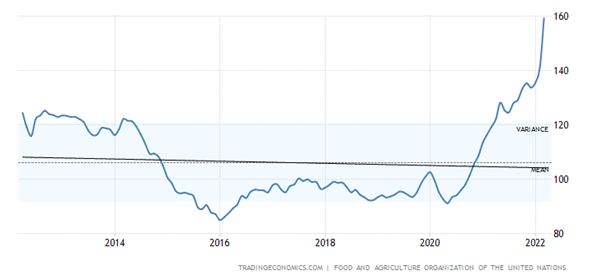
As the ugly war in Ukraine drags on, with more lives lost and atrocities (apparently) committed, energy and food prices hit yet more highs. The Food and Agricultural Organisation (FAO) of the UN publishes a monthly global price index. The FAO Food Price Index reached yet another record high of 159.3 points in March, up 12.6% from February.
FAO Food price index

Oil and gas prices are also near all-time high levels. In Europe, gas prices hit a record €335 per megawatt hours, and at that level, it is now cheaper for some power stations to burn coal rather than gas even when the cost of carbon permits is taken into consideration. Europe wants to follow NATO’s bidding and cut back on Russian energy imports. The irony is that some countries, like Italy, say that will need to burn more coal, in order to burn less Russian gas. The International Energy Agency (IEA) posed the dilemma in relation to global warming and energy needs, given the Ukraine war and the sanctions against Russia. “The faster EU policy makers seek to move away from Russian gas supplies, the greater the potential implication, in terms of economic costs and near-term emissions,” the IEA said, in a report.

Can the circle be squared: ie getting more energy supply to reduce prices, while still trying to reduce fossil fuel production to lower greenhouse gas emissions? “We are determined to limit [Vladimir] Putin’s capacity to finance his atrocious war,” Ursula von der Leyen, president of the European Commission, wrote on Twitter. And then went on to say: “The EU must get rid of its dependency on fossil fuels”. At first sight, these two aims might be compatible. Cutting back on fossil fuel energy from Russia will reduce energy use and lower carbon emissions, no? After all, clean energy, says Christian Lindner, finance minister of Germany, should be considered the “energy of freedom”. So the German government plans to cut its dependence on Russian energy imports by accelerating renewables and reaching 100% ‘clean power’ by 2035. But in the same breath German Chancellor Olaf Scholz accepted that, in the short term, it has little choice but to continue buying gas and oil from Russia!

COP26 in Glasgow contained an agreement to draw down fossil fuel production, even though there was a fierce argument that broke out over whether coal should be “phased down” or “phased out”. COP26 president Alok Sharma. “Countries are turning their back on coal,” he said. “The end of coal is in sight.” And yet, even before the Russian invasion of Ukraine , far from declining, coal use globally surged to record levels this last winter, causing emissions to rise, while clean energy installations fell below the levels needed to reach climate targets. In the US, coal-fired power generation was higher in 2021 under President Joe Biden than it was in 2019 under then president Donald Trump, who had positioned himself as the would-be saviour of America’s coal industry. In Europe, coal power rose 18 per cent in 2021, its first increase in almost a decade. Economist Dieter Helm, professor of energy policy at Oxford university, says the shift away from fossil fuels has rarely looked more complicated. “The energy transition was already in trouble — 80 per cent of the world’s energy is still from fossil fuels,” he said. “I expect that in the short term, the US will increase oil and gas output and EU coal consumption could increase”.

This conflict of aims by ‘the West’ comes at a time when global warming and climate change are reaching a ‘now or never’ tipping point, where the Paris target to limit the global temperature increase to 1.5C cannot be met. In presenting the latest IPCC report on climate change (which supposedly outlines ‘solutions’ to mitigate global warming and meet targets), UN secretary-general Antonio Guterres commented: “The facts are undeniable. This abdication of leadership (by governments) is criminal.” By this he meant that the 198 countries which had gathered in Glasgow for the COP26 Climate Change Conference last November were failing to hit any of their (already inadequate) targets for emission reductions. So global temperatures look set to barrel past 1.5ºC degrees limit above 1850 industrial levels. Instead, the world faces a 2.7C temperature rise on current climate plans, the UN warned. Current pledges would reduce carbon emissions by only about 7.5% by 2030, far less than the 45% cut that scientists say is needed to limit global temperature rises to 1.5C.

And it’s not just reducing current emissions that is necessary, but also cutting back on the already accrued levels of carbon in the atmosphere. It’s a stock problem because many gases are long-lived. Nitrous oxide can stay in the atmosphere for 121 years, methane for 12 years. Carbon dioxide’s lifetime cannot be represented with a single value because the gas is not destroyed over time, but cycles through the ocean–atmosphere–land system. Some carbon dioxide will remain in the atmosphere for thousands of years and the melting of the glaciers could release into the atmosphere previously trapped carbon.

Hoesung Lee, chair of the IPCC, bluntly explained that: “human-induced climate change, including more frequent and intense extreme events, has caused widespread adverse impacts and related losses and damages to nature and people, beyond natural climate variability.” While “some development and adaptation efforts have reduced vulnerability,” he continued, “the rise in weather and climate extremes has led to some irreversible impacts as natural and human systems are pushed beyond their ability to adapt.” Co-chair of the IPCC working group, Hans-Otto Portner, spelt it out: “The scientific evidence is unequivocal: climate change is a threat to human well being and the health of the planet. Any further delay in concerted global action will miss a brief and rapidly closing window to secure a liveable future.”

Lee made it clear what he thought should be done immediately. “The time to stop the exploration of fossil fuels, which are destroying our planet, is now. Half measures are no longer an option,” But just stopping fossil fuel exploration is precisely that – a half measure. That’s because to meet the Paris agreement, the world would have to eliminate 53.5 billion metric tonnes of carbon dioxide each year for the next 30 years.

The problem is that it is ‘the West’: the mature capitalist economies, that have built up the stock of dangerous carbon and other gases in the atmosphere over the last 100 years which are doing the least to solve the climate crisis. About one-third of the current stock of greenhouse gases has been created by Europe and one-quarter by the US. Yes, China and India are the first- and third-largest emitters today. But measured in terms of emissions per head of population, they are around 40th and 140th, and measured in terms of their stock per capita, they are one-tenth of the level of Europe. And ironically, the main contributors to carbon emissions stock benefit from global warming as these mature capitalist (imperialist) economies are mainly in cold climates.

The countries of the ‘global North’ (Europe, the United States, Canada, Australia, New Zealand, Israel and Japan) are responsible for 92% of total emissions that are causing climate breakdown. Meanwhile, the Global South – the entire continents of Asia, Africa and Latin America – are responsible for only 8% of ‘excess emissions’. And the majority of these countries are still well within their fair shares of the emissions boundary, including India, Indonesia and Nigeria. To make matters worse, the impacts of climate breakdown fall disproportionately on the countries of the global South, which suffer the vast majority of climate change-induced damages and mortality within their borders.
Lancet report


But a recent research paper in the journal Nature found that G20 countries spent$14tn on economic stimulus measures during 2020 and 2021 — but only 6 per cent of this was allocated to areas that would cut emissions. Investment bank Morgan Stanley reckons to achieve sufficient emissions reduction would cost about $50trn. About $20 trillion of cumulative investments will be required to switch out of fossil fuels. Solar, wind,and hydro will require $14 trillion of investment to deliver 80% of global power by 2050 and electric vehicle take-up will require $11 trillion to build the factories and infrastructure and develop battery technology. Biofuels, like ethanol, could be important for future global transportation alongside hydrogen and could eventually spread to aircraft, but to develop this would require a further $2.7trillion of investment. Carbon capture and storage could play a critical part in the energy transition but a further $2.5 trillion is needed for development. Compare the $50 trillion price tag to the barely $100 billion that it has taken six years for countries to scrounge together.

Yes, greenhouse gas emissions have been reduced in some countries and there are technical solutions available. Alternative renewable energy costs have come down 85% over the last ten years. But coal production must be cut by 76% by 2030. And oil/gas infrastructure projects must be stopped. The current flow of finance is dramatically insufficient to boost renewables and manage fossil fuel reduction. Funding for all this change is miniscule compared to the task.

And a switch to ‘clean energy’ won’t be enough, especially as mining and refining alternative fuels and systems also require more fossil fuel energy. All the batteries, solar panels and windmills in the world won’t lower fossil fuel demand in the near term. Internal combustion vehicles – commercial and passenger – use plenty of steel, but electric vehicles use a wider variety of more expensive metals. For example, the average internal combustion passenger vehicle uses less than 50 pounds of copper, whereas a Tesla uses about 180 pounds of copper wound up in its electric motors. Additionally, the batteries essential to electric vehicles rely on materials like lithium and nickel, which require intense electric and chemical outlays to process. All this means more fossil fuel production to mine more metals.

I have discussed before why market solutions like carbon pricing and carbon taxes will not deliver the required reductions in emissions. Market solutions will not work because it is just not profitable for capital to invest in climate change mitigation: “Private investment in productive capital and infrastructure faces high upfront costs and significant uncertainties that cannot always be priced. Investments for the transition to a low-carbon economy are additionally exposed to important political risks, illiquidity and uncertain returns, depending on policy approaches to mitigation as well as unpredictable technological advances.” (IMF). To save the planet and all species who live on it cannot be achieved through market pricing mechanisms or even more clever technology. Remember clever science gave us vaccines and medicines to save lives in the COVID pandemic, but it was capitalism and pro-capitalist governments that still allowed the pandemic to happen and were unable to stop around 20m ‘excess deaths’ globally.

To stop global warming, we don’t need just clever new technology, we need to phase out old fossil fuel technology. And we need a global plan to steer investments into things society does need, like renewable energy, organic farming, public transportation, public water systems, ecological remediation, public health, quality schools and other currently unmet needs. Such a plan could also equalize development the world over by shifting resources out of useless and harmful production in the North and into developing the South, building basic infrastructure, sanitation systems, public schools, health care. At the same time, a global plan could aim to provide equivalent jobs for workers displaced by the retrenchment or closure of unnecessary or harmful industries. But such a plan requires public ownership and control of fossil fuel companies and other key energy and food sectors. Without that, there can be no plan.

As the war in Ukraine rages on, we should be reminded that the biggest emitters of greenhouse gases are the military. The US military is world’s single largest consumer of oil, and as a result, one of the world’s top greenhouse gas emitters. The Pentagon’s greenhouse gas emissions annually total over 59 million metric tons of carbon dioxide equivalent. If it were a nation state, the US military would be the 47th largest emitter in the world., with emissions larger than Portugal, Sweden or Denmark.

And the US military is expanding all the time to protect US interests in oil and fossil fuel resources around the world. The Cost of Wars Project found the total emissions from war-related activity in Iraq, Afghanistan, Pakistan and Syria to be estimated at more than 400 million metric tonnes of carbon dioxide alone. Thus global warming and fossil fuel exploration, production and refining are inextricably linked by military spending. Wars and increased spending on arms are not just killing people and destroying lives and homes, but also adding to the climate disaster that is engulfing humanity globally. World peace would not only save lives and livelihoods, but also contribute to saving the planet and nature.

segunda-feira, 1 de novembro de 2021

The Climate Conference in Glasgow Is Just COP-out 26

The climate crisis demands urgent changes to the world economy. This would require bringing the fossil fuel companies into public ownership and rapidly expanding renewable energy. Yet none of this is on the agenda at COP26.


This weekend, COP26 meets in Glasgow, Scotland. Every country in the world is supposed to be represented in meetings designed to achieve agreement on limiting and reducing greenhouse gas emissions so that the planet does not overheat and cause widespread damage to the environment, species and human livelihoods across the planet.

We are currently on track for at least a 2.7C hotter world by the end of the century – and that’s only if countries meet all the pledges that they have made. Currently they are nowhere near doing that. Governments are “seemingly light years away from reaching our climate action targets”, to quote UN chief Guterres.

Global energy-related carbon dioxide emissions are on course to surge by 1.5 billion tonnes in 2021 – the second-largest increase in history – reversing most of last year’s decline caused by the Covid-19 pandemic. Global emissions are expected to increase by 16%, not fall, by 2030 compared with 2010 levels.

COP stands for the Conference of the Parties to the 1992 United Nations Framework Convention on Climate Change, which set the stage for all international cooperation on climate. According to the UN, the top three priorities of the Glasgow COP26 are to: 1) keep the global temperature rise to no more than 1.5 degrees celsius through “rapid, bold emissions cuts” and net-zero commitments; 2) increase international finance for adaptation to at least half the total spent on climate action; 3) meet the existing commitment to provide $100 billion in international climate finance each year so that developing countries can invest in green technologies, and protect lives and livelihoods against worsening climate impacts. The reality is that even these modest priority targets are not going to be agreed in Glasgow and certainly not met in application, given the current make-up of governments and the plans of industry and finance around the world.

There is no longer any plausible scientific argument against the view that human activities are having a profound effect on the climate. The dwindling band of ‘climate sceptics’ have been silenced (at least in the mainstream media) by the overwhelming and increasing evidence that fossil-fuel based industrial and energy production and transport is causing rising carbon and other greenhouse gas emissions and this is the the cause of global warming. Moreover, global warming since the industrial revolutions of the 19th century has now risen to the point where it is destroying the planet.

But what is not so understood is that this impending (and already beginning) disaster could still be averted and reversed and without a significant cost to governments. Indeed, the latest report from the International Energy Agency’s World Energy Outlook 2021 shows that we know what to do about it, in substantial detail and at an affordable cost. But there is no political will to do so by governments, beholden are they to the fossil-fuel industry, to aviation and transport sectors and to the demands of finance and industrial capitalists as a whole to preserve profits at the expense of social need.

Already there is a yawning gap between government commitments to reduce emissions to be offered at COP26 and what is necessary. The Intergovernmental Panel on Climate Change (IPCC) estimates that limiting global average temperature increases to 1.5C requires a reduction of CO2 emissions of 45% by 2030 or a 25% reduction by 2030 to limit warming to 2C. 113 governments have offered National Determined Contributions (NDCs), which will reduce greenhouse gas emissions by only 12% in 2030 compared to 2010.


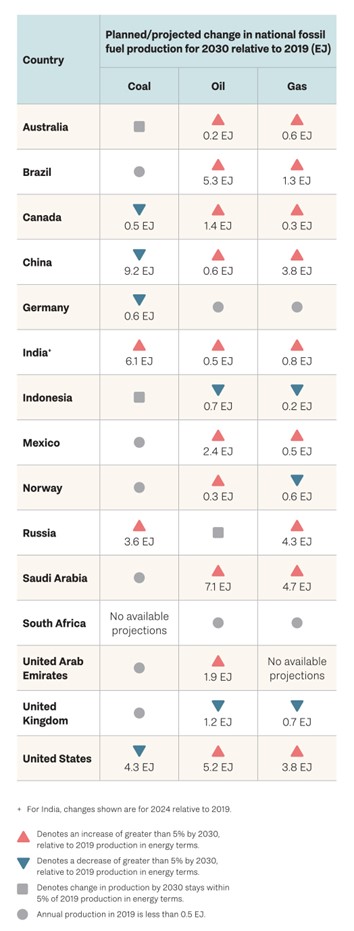
The world’s governments plan to produce more than twice the amount of fossil fuels in 2030 than would be consistent with limiting warming to 1.5°C. Governments are collectively projecting an increase in global oil and gas production, and only a modest decrease in coal production, over the next two decades. This leads to future production levels far above those consistent with limiting warming to 1.5°C or 2°C. In 2030, governments’ production plans and projections would lead to around 240% more coal, 57% more oil, and 71% more gas than would be consistent with limiting global warming to 1.5°C.

Indeed, G20 countries have directed around USD 300 billion in new funds towards fossil fuel activities since the beginning of the COVID-19 pandemic — more than they have toward clean energy. According to the International Energy Agency, only 2% of governments’ “build back better” recovery spending has been invested in clean energy, while at same time the production and burning of coal, oil and gas was subsidised by $5.9tn in 2020 alone.


Which countries are to blame for this failure to do anything remotely close to avoiding the environmental disaster.  China is usually picked out as the main culprit.  It is currently by far the world’s biggest emitter of CO2 and is planning to build 43 new coal power plants on top of the 1,000 plants already in operation.  But China has some excuses.  It has the largest population in world and so its per capita emissions are much lower than most other major economies (although it’s the mass that counts).  Second, it is the manufacturing centre of the world providing goods for all the rich countries of the Global North.  As a result, its emissions are going to be huge because of the consumer demand for its products globally. 

Moreover, historically, cumulative emissions built up in the atmosphere in the last 100 years come from the rich previously industrialised and now energy consuming North.  There is a direct, linear relationship between the total amount of CO2 released by human activity and the level of warming at the Earth’s surface. Moreover, the timing of a tonne of CO2 being emitted has only a limited impact on the amount of warming it will ultimately cause. This means CO2 emissions from hundreds years ago continue to contribute to the heating of the planet – and current warming is determined by the cumulative total of CO2 emissions over time.


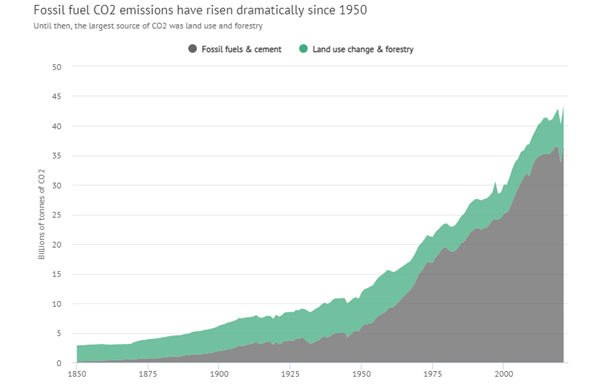
In total, humans have pumped around 2,500bn tonnes of CO2 (GtCO2) into the atmosphere since 1850, leaving less than 500GtCO2 of remaining carbon budget to stay below 1.5C of warming.  This means that, as the Glasgow COP26 takes place, the world will collectively have burned through 86% of the carbon budget for a 50-50 probability of staying below 1.5C, or 89% of the budget for a two-thirds likelihood.  More than half of all CO2 emissions since 1751 were emitted in the last 30 years.


In first place on the historical rankings is the US, which has released more than 509GtCO2 since 1850 and is responsible for the largest share of historical emissions with some 20% of the global total. China is a relatively distant second, with 11%, followed by Russia (7%), Brazil (5%) and Indonesia (4%). The latter pair are among the top 10 largest historical emitters, due to CO2 from their land.

The biggest emitters or consumers of carbon apart from the fossil fuel industry are the richest wealth and income earners in the Global North who have excessive consumption and fly everywhere. It is the military (the biggest sector of carbon consumption).  Then there is waste of capitalist production and consumption in autos, aircraft and airlines, shipping, chemicals, bottled water, processed foods, unnecessary pharmaceuticals and so on is directly linked to carbon emissions.  Harmful industrial processes like industrial agriculture, industrial fishing, logging, mining and so on are also major global heaters, while the banking industry operates to underwrite and promote all this carbon emission. 

And the US is really doing little to control or reduce the fossil fuel industry.  On the contrary, crude oil and gas production is rising fast and exploration is being expanded.  The Biden administration recently announced plans to open millions of acres for oil and gas that could ultimately result in production of up to 1.1bn barrels of crude oil and 4.4tn cubic feet of fossil gas. Being by far the biggest emitter in history, as well as the world’s number one oil producer, doesn’t seem to embarrass the US while it claims to be a climate leader.

Indeed, most major oil and gas producers are planning on increasing production out to 2030 or beyond, while several major coal producers are planning on continuing or increasing production.

No wonder the governments of the fossil fuel producers and consumers, like Saudi Arabia, Japan and Australia are among those countries asking the UN in Glasgow to play down the need to move rapidly away from fossil fuels; or for paying more to poorer states to move to greener technologies.  China may be the world’s largest polluter but it is pledging to bring its emissions to a peak before 2030, and to make the country carbon neutral by 2060.  And it is already a renewable energy leader, accounting for about 50% of the world’s growth in renewable energy capacity in 2020. The world’s most populous nation is also out in front on key green technologies such as electric vehicles, batteries and solar power.

Across 40 different areas spanning the power sector, heavy industry, agriculture, transportation, finance and technology, not one is changing quickly enough to avoid 1.5C in global heating beyond pre-industrial times, according to a report by the World Resources Institute.

And yet the cost of phasing out fossil fuel production and expanding renewables is not large.  Decarbonizing the world economy is technically and financially feasible.  It would require committing approximately 2.5 percent of global GDP per year to investment spending in areas designed to improve energy efficiency standards across the board (buildings, automobiles, transportation systems, industrial production processes) and to massively expand the availability of clean energy sources for zero emissions to be realized by 2050. The IEA reckons the annual cost has now risen to $4trn a year because of the failure to invest since the Paris COP five years ago. But even that cost is nothing compared to the loss of incomes, employment, lives and living conditions for millions ahead.

But it won’t happen because, to be really effective, the fossil fuel industry would have to be phased out and replaced by clean energy sources.  Workers relying for their livelihoods on fossil fuel activity would have to be retrained and diverted into environmentally friendly industries and services.  That requires significant public investment and planning on a global scale. 

A global plan could steer investments into things society does need, like renewable energy, organic farming, public transportation, public water systems, ecological remediation, public health, quality schools and other currently unmet needs.  And it could equalize development the world over by shifting resources out of useless and harmful production in the North and into developing the South, building basic infrastructure, sanitation systems, public schools, health care.  At the same time, a global plan could aim to provide equivalent jobs for workers displaced by the retrenchment or closure of unnecessary or harmful industries.  

All this would depend first on bringing the fossil fuel companies into public ownership and under democratic control of the people wherever there is fossil fuel production.  The energy industry needs to be integrated into a global plan to reduce emissions and expand superior renewable energy technology.  This means building renewable energy capacity of 10x the current utility base.  That is only possible through planned public investment that transfers the jobs in fossil fuel companies to green technology and environmental companies.

None of this is on the agenda at COP26.

quinta-feira, 17 de junho de 2010

Documentário: Oil, Smoke & Mirrors


Um dos vídeos mais imprescindíveis sobre dois dos eventos mais determinantes do Séc XXI: a verdade por detrás do 11 de Setembro e o Pico da Produção de Petróleo.

Muito poucos têm consciência da gravidade das repercussões que esse acontecimento terá no nosso dia-a-dia e todas as previsões parecem quase sempre como perspectivas demasiado pessimistas ou catastróficas ... mas será que é possível uma dependência quase insana de uma recurso findável e limitado não ter consequências brutais quando se tornar óbvia que essa dependência é impossível de manter?

E o que acontecerá a todo um sistema económico e produtivo sem qualquer preparação para uma realidade pós carbono?
A não perder para quem quiser reflectir um pouco sobre o assunto e se assim o entender pensar em formas de estar dentro do possível preparado para um dos acontecimentos que parece mais inevitável e mesmo certo estar para acontecer, ou estar já a acontecer...


The DVD, with 60 mins of additional interview material, can be purchased here

Peritos convidados: Richard Heinberg, Colin Campbell, Michael Meacher MP, Julian Darley, Chris Sanders, Nafeez Mosaddeq Ahmed, Philip J.Berg, Webster G. Tarpley, Andreas Von Beulow, David Shayler, Christopher Bollyn, Paul Roberts. 
"Oil Smoke and Mirrors" offers us a sobering critique of our perceived recent history, of our present global circumstances, and of our shared future in light of imminent, under-reported and mis-represented energy production constraints. Through a series of impressively candid, informed and articulate interviews, this film argues that the bizzare events surrounding the 9/11 attacks, and the equally bizzare prosecution of the so-called "war on terror", can be more credibly understood in the wider context of an imminent and critical divergence between available global oil supply and increasing global oil demand. The picture "Oil, Smoke & Mirrors" paints is one of a tragically hyper-mediated global-political culture, which, for whatever reason, demonstrably disassociates itself from the values it claims to represent. While the ideas presented in this film can at first seem daunting, it's ultimate assertion is that these challenges can indeed be met and perhaps surpassed if, but only if, we can find first the courage to perceive them.