
Mostrar mensagens com a etiqueta Machosfera. Mostrar todas as mensagens
Mostrar mensagens com a etiqueta Machosfera. Mostrar todas as mensagens
domingo, 11 de outubro de 2026
O desafio da Educação Ambiental na era digital: como desconstruir a bolha virtual e os seus epifenómenos

quarta-feira, 12 de agosto de 2026
Existe uma relação direta entre ecossistemas da machosfera e o movimento antivacina

Existe uma relação direta e documentada entre os ecossistemas da machosfera e o movimento antivacinas, uma convergência que é ilustrada na perfeição pelo conteúdo da imagem associado a Andrew Tate. Esta ligação assenta sobretudo na partilha de uma visão do mundo profundamente cética em relação às instituições estabelecidas e numa narrativa de resistência individual.
O principal ponto de contacto entre estas duas subculturas é a rejeição do que apelidam de "sistema" ou a Matrix. Tanto os grupos da machosfera como os ativistas antivacinas partilham a premissa de que os governos, os meios de comunicação social e a comunidade científica manipulam a população para manter o controlo. A metáfora da red pill - a ideia de tomar a pílula vermelha para "despertar" para a verdade oculta - é amplamente utilizada em ambos os universos, criando um terreno fértil para que teorias da conspiração sobre a saúde pública encontrem adesão junto de audiências que já desconfiam das narrativas oficiais.
Além disso, a cultura do fitness, da masculinidade dita "Alfa" e do biohacking, muito presente na machosfera, promove uma obsessão pela pureza biológica e pela autonomia física. Neste contexto, as vacinas são frequentemente retratadas como intervenções externas desnecessárias ou até prejudiciais à virilidade, à fertilidade e aos níveis naturais de testosterona. O cumprimento de orientações sanitárias ou a aceitação de vacinas é por vezes associado a traços de passividade, fraqueza ou submissão, enquanto a recusa é vendida como um ato de força, independência e rebeldia masculina.
Por fim, os próprios algoritmos das plataformas digitais facilitam esta sobreposição. Um utilizador que consome conteúdos sobre masculinidade tradicional ou conselhos de sedução é frequentemente direcionado para círculos de desinformação médica, teorias conspiratórias e políticas de extrema-direita.
Figuras influentes deste meio aproveitam estes tópicos fraturantes para gerar controvérsia, aumentar o envolvimento nas redes sociais e reforçar a sua imagem de líderes destemidos que desafiam o consenso geral.
Referências Bibliográficas
- Gartrell, A., Bliuc, A. M., & McGarty, C. (2022). Taking the red pill: Conspiratorial thinking, online misogyny, and the alt-right pipeline. New Media & Society, 24(8), 1823–1842.
- Ging, D. (2019). Alphas, betas, and incels: Theorizing the masculinization of the manosphere. Men and Masculinities, 22(4), 638–657.
- Kelly, B., DiMaggio, C., & Ringer, S. (2021). Men's rights activism, health disinformation, and public health response during global crises. American Journal of Public Health, 111(9), 1645–1653.
- Leidig, E. (2023). The women of the far right: Social media influencers and online radicalization. Columbia University Press.
- Marwick, A., & Lewis, R. (2017). Media manipulation and disinformation online. Data & Society Research Institute.
- Ribeiro, M. H., Ottoni, R., West, R., Almeida, V. A. F., & Meira, W. (2020). Auditing radicalization pathways on YouTube. Em Proceedings of the 2020 Conference on Fairness, Accountability, and Transparency (FAT '20)* (pp. 131–141). Association for Computing Machinery.
- Tuters, M., & Willaert, T. (2022). Deepening the rabbit hole: Conspiratorial tropes, platform mechanics, and the red pill metaphor. Information, Communication & Society, 25(11), 1589–1606.
- Ward, C., & Voas, D. (2011). The emergence of conspirituality. Journal of Contemporary Religion, 26(1), 103–121.
Ler mais:
sábado, 1 de agosto de 2026
Trump Has Revolutionized Executive Power

As we move toward the end of the Trump era, we need to reckon with the changes his administration has wrought in the American system of government. The most significant is the enormous concentration of power, not just in the executive branch as a whole, but in the office of the president. Any successor administration, Republican or Democratic, will inherit these powers, and will have to decide how it wants to define the limits of executive authority in the future.
The U.S. Constitution limits presidential power in a number of ways. Article I says that laws and budgets are made by Congress, and Article II says the president’s chief duty is to see that the laws are “faithfully executed.” He can choose his own cabinet officers, but they must be confirmed by the Senate. The president has more discretionary authority with regard to foreign policy and national security, where he is designated commander-in-chief of the armed forces. Yet even in this sphere, the right to declare war and ratify treaties is given to Congress.
Donald Trump has tried to expand executive authority in any number of ways. From Day One of his second administration, he has issued a blizzard of executive orders that have in effect usurped Congress’s legislative powers. In some cases he has acted under obscure legal powers, many of which were later found by the courts to be inappropriate. In other cases he has simply acted illegally or unconstitutionally. Among the many examples are:
- Ending birthright citizenship;
- His failure to spend money appropriated by Congress;
- The closing of entire departments, such as the U.S. Agency for International Development, that had been established by Congress;
- Attempting to assert federal authority over election administration;
- Using emergency powers to impose tariffs in an arbitrary and discretionary manner;
- Firing federal employees protected by statute;
- Launching a major war without seeking authorization from Congress.
The lower courts have blocked many of these initiatives, and the Supreme Court has reversed both the birthright citizenship order and the tariffs imposed last year under the International Emergency Economic Powers Act (IEEPA).
However, the Supreme Court has not yet ruled on many of the other cases, and in one case clearly ruled in favor of the administration. That was Trump v. Slaughter, decided last month, which overturned an earlier Supreme Court decision called Humphrey’s Executor. That precedent, set in 1935, upheld the right of Congress to impose limits on the president’s power to change the composition of the boards of supposedly “independent” multi-member regulatory agencies like the Federal Communications Commission and the Federal Trade Commission.
The Slaughter decision may seem technical, and has received relatively little public attention. The one multi-member federal agency that the public (and more importantly the markets) care about is the Federal Reserve Board, where Trump had already tried to fire one member, Lisa Cook. The Supreme Court exempted the Fed from its general evisceration of Humphrey’s Executor, arguing somewhat speciously that the Fed has a different historical status from other agencies and therefore its board could remain protected from political interference.
The Slaughter decision, however, has huge implications for the way America will be governed in the future, and it is only the first shoe to drop in a long-term conservative effort to remake the federal executive. Humphrey’s Executor had been the long-term target of conservatives under a doctrine of the “unitary executive.” They argued on originalist grounds that the Constitution gave executive authority to the president alone, who, as a democratically legitimated official, could not be restricted by Congress in his control over the executive branch.
There is a certain logic to this position, one that has been supported not just by conservatives but by certain progressives as well. Most prominent in the latter camp was President Franklin D. Roosevelt, who in the 1930s sought to remove William Humphrey (who was accused of blocking FDR’s legislative agenda) as a commissioner of the Federal Trade Commission. Humphrey’s removal was overturned by a conservative Supreme Court.
To this one could add the following argument. No one questions the right of the president to appoint, with the Senate’s approval, Cabinet secretaries and other senior officials, or to unilaterally remove them. The president’s right to appoint or remove the heads of agencies led by a single individual, like the CDC or NASA, is not contested. So why should those with multi-member boards be treated differently?
The argument I would make against the theory of the unitary executive is not based on any originalist reading of the Constitution. It is rather based on a pragmatic observation. Today’s executive branch is so large, sprawling, and powerful that there needs to be a separation of powers within the executive, and not simply between the executive and the other two branches of government. The chief argument in favor of such a separation has to do with the preservation of the expertise that is necessary to run a modern state.
We see this most clearly in the case of the Federal Reserve, which in the Slaughter decision was somehow exempted from political control. Painful experience with inflation has taught the United States and other countries around the world that central banks must be made independent. The incentives of politicians are almost always short-term and aimed at their political self-interest. The independent structure of the Fed and its multi-member board protects it from politicization and enhances its ability to operate according to the judgment of the experienced professionals who run it-i.e. PhD economists and practitioners with deep experience with financial markets.
Quite apart from the illegality and unconstitutionality of many of the Trump administration’s actions, there is also its incompetence.
That incompetence has been on display since the beginning of the second term, when Trump appointed a series of individuals with no expertise in the agencies they were to run: Tulsi Gabbard as Director of National Intelligence, TV commentator Pete Hegseth as Defense Secretary, vaccine denier Robert F. Kennedy Jr. as Secretary of Health and Human Services, and podcaster Kash Patel as head of the FBI.
The consequences are clear: by sidelining regional experts throughout State, Defense, and the intelligence community, for example, there was no one to warn the president that launching a massive air assault on Iran might lead to the closing of the Strait of Hormuz.
The Justice Department likewise has been diverted from its role as impartial enforcer of the law to being an instrument for Donald Trump’s personal revenge campaign. By forcing out career prosecutors, the department found its cases susceptible to being overturned by the courts and indictments rejected by grand juries across the country.
Underlying the theory of the unitary executive is a flawed concept of hierarchical organization that is as incorrect as it is widespread. “Principal-agent theory” is commonly used by economists and other social scientists to understand the dysfunctions of hierarchies. All authority lies with the principal; agents are simply expected to carry out the wishes of the principal and problems arise only when the agents follow their own agenda.
As Nobel laureate Herbert Simon pointed out many years ago, this is not how real-world organizations work. Agents, including front-line workers at the bottom of hierarchies, often have more expertise and local knowledge than the principals who give them orders. As a result, authority in many organizations flows from the agents to the principal. This is a truth understood in well-functioning militaries, which give their junior officers substantial authority and advise senior commanders not to micro-manage.
So too in the U.S. government. The knowledge of how to deal with an airline accident, or a sudden disease outbreak, or indeed a financial crisis, will not lie with the democratically-elected politician at the top of the hierarchy, but rather with the experts who have the training and experience to act. A well-designed government needs to have mechanisms for protecting that expertise.
Multi-member commissions are a very imperfect means of doing this, but they do at least make it more difficult for an incompetent president to do his destructive work. There are other important protections for expertise as well, such as requirements for “for cause” removals, which protect officials from arbitrary firing. Such constraints have been a clear target of the Trump administration.
Another critical protection for expertise lies in Senate confirmation: in most administrations, the Senate will simply not confirm blatantly unqualified people for senior positions. One of the greatest failures of the current Congress is its unwillingness to exert this authority in so many prominent cases.
The Trump administration’s war on expertise has only just begun. Greater political control over senior officials in multi-member commissions will have limited day-to-day impact on most citizens. But believers in the unitary executive want to extend that control to the whole of the federal government, such that every government worker, down to your local postmaster, will be subject to removal by a political boss.
This assertion of executive authority was attempted at the end of the first Trump administration with an executive order creating a new “Schedule F” employment designation into which the whole of the civil service could be moved, and then fired or replaced at will. Schedule F was rescinded by the Biden administration, but has re-emerged in the second Trump term as “Schedule P/C.”
This is not a casual innovation off the top of Donald Trump’s head. The authors of the Heritage Foundation’s Project 2025 spent their four years out of office designing a policy that would allow them to radically reshape the entire federal bureaucracy, and to eliminate the checks and balances that Congress had inserted over the years to limit the president’s power. The overturning of Humphrey’s Executor is only part one of this plan; the administration’s war against the “deep state” also seeks to invalidate the 1883 Pendleton Act, which first created a merit-based civil service. This will return the United States to the 19th-century spoils (or patronage) system, whereby not just top policy-makers but all government officials were put in place by a politician in return for political loyalty.
The spoils system was known for its corruption at all levels of government, from Credit Mobilier to Tammany Hall. Today we have massive corruption at the top levels of government, beginning with Donald Trump and his friends and family. But the elimination of a professional civil service will open up vast new areas for corrupt behavior in every city and county in the United States. Project 2025 is unapologetic about this, arguing that the patronage system was unfairly criticized.
The next president - and there will be a next president- will have to confront the question of how much of the authority claimed by Donald Trump he or she will want to retain. This is a complicated question, because the status quo ante was very problematic. As I’ve argued in previous articles, the government really has become over-constrained in its ability to take action. A new president will face many obstacles to implementing their desired agenda, and will be strongly tempted to use the kind of executive power claimed by Donald Trump. The next president needs to come into office not just with new policies, but with clear plans for how to use the mechanisms of government to get them done.
The time to start thinking about these questions is now: we cannot put this off until January 20, 2029, when a new president will be facing immediate political pressures to act. The Republicans spent their four years out of power coming up with clever strategies to get their way, which they have been implementing in the second term. Those backing a post-Trump administration need to do the same.
I hope to be able to outline some of the ways that authority can be structured in future articles.
quarta-feira, 17 de junho de 2026
The Theory of the Vulgar Class

That last criticism may strike some readers as elitist and trivial. Yet the vulgarity that is the hallmark of Trump and his surrounding circle of oligarchs is a symptom of something not at all trivial: The collapse of social norms. As I argued yesterday, these norms historically played a key role in mitigating abuses of power and privilege during the Gilded Age, the last time America suffered from extreme income and wealth inequality (though not nearly as extreme as what we have now).
Norms matter. In his classic book The Theory of the Leisure Class — published in 1899, at the apogee of the Gilded Age — Thorstein Veblen famously argued that much of the behavior of his era’s elite was driven not by the desire to enjoy life but by the desire to impress others. Partly they did this through conspicuous consumption. Thus they built lavish mansions staffed by legions of servants.
However, members of the Gilded Age elite didn’t solely aim to display their wealth. They also tried to appear respectable. There were surely many private affairs and betrayals we will never know about. But the important point is that the super-wealthy of that era presented to the American public an image of being responsible members of society:
 |
| John D. Rockefeller and family |
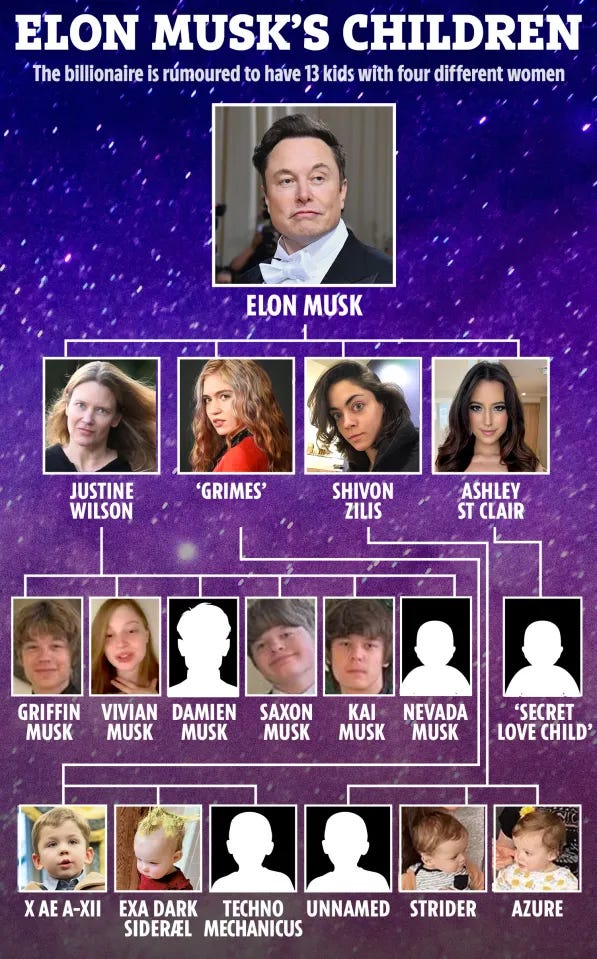
The contrast with the public behavior of Trump’s band of uber-wealthy is startling:
In addition to modeling upstanding behavior, the extremely rich of the Gilded Age were expected to have, or pretend to have, some virtues that were part of the aristocratic ideal, including a sense of noblesse oblige displayed by good works. Veblen was quite cynical about philanthropy, yet even he didn’t dismiss it completely, stating that:
The fact itself that distinction or a decent good fame is sought by this method [such as the endowment of a university, public library or museum] is evidence of a prevalent sense of the legitimacy, and of the presumptive effectual presence, of a non-emulative, non-invidious interest, as a consistent factor in the habits of thought of modern communities.
(Veblen’s lasting intellectual influence did not come from his sparkling prose style.)
Today’s oligarchs, by contrast, have largely given up on the old norms of social and individual responsibility. They give very little money to good causes and their vulgar taste reflects their in-your-face attitude towards the public. In our current hyper-Gilded Age, extreme vulgarity and the decline of philanthropy are really different aspects of the same phenomenon: the rise of an elite so disconnected from ordinary Americans that it feels no need to even appear to be honorable.
So in a real sense we are living in the midst of a reenactment of the decline and fall of the Roman Republic, not a second American Gilded Age. No, I’m not one of those men who thinks about ancient Rome all the time. But there are some obvious parallels.
While the causes of the decline of republican government and Rome’s eventual transition to one-man rule were doubtless complex, there is broad consensus among historians that a key factor was the emergence of extreme inequality. A handful of men became incredibly wealthy from the spoils of Rome’s eastern conquests, and their wealth and power eventually became too great for the rules of constitutional, republican government to contain. Sound uncomfortably familiar?
The death throes of the Republic went on for many years. Politicians declared their rivals enemies of the state, deployed violent gangs to disrupt the rule of law, established temporary dictatorships, and more. The installation of Augustus as emperor in 27 BC was just the final act.
And during this long twilight of constitutional government, one of the ways the extremely wealthy and powerful sought both to demonstrate their wealth and to curry favor with the mob was by sponsoring gladiatorial games.
The vulgarity of the Trumpian elite isn’t in itself that important. But it’s a symptom of a collapse in values and norms that, unless confronted and reversed, may herald the end of the American experiment. We should heed the words of the Stoic philosopher Seneca about the rise and fall of the Roman Republic: “Increases are of sluggish growth, but the way to ruin is rapid.”
terça-feira, 9 de junho de 2026
Money and Machismo are Undermining America
Drones have rapidly transformed modern war. The U.S. military, the most sophisticated, best supplied force in history, has been humiliated by Iran, largely thanks to Iran’s effective use of inexpensive drones to menace shipping, energy production, and even U.S. bases. Meanwhile, Ukraine’s growing superiority in drone warfare is increasingly giving it the upper hand over Russia. Remember, not so long ago the American far right celebrated Putin’s macho posturing and his supposed military invincibility.
Given this radical turn of events, shouldn’t the United States be eager to make a drone deal with Ukraine, benefiting from its technology and expertise?
Apparently not. The Hill reports that Donald Trump has been dragging his feet on such a deal, quoting U.S. military analysts who say that they don’t understand the delay and that they are “mystified.” But I assume that they’re being disingenuous and prefer to avoid saying the obvious. In fact, Trump’s unwillingness to make a deal that would clearly benefit America’s national interest is no mystery at all.
I’ll get to the obvious in a moment. First, let me take a slight detour into something that seems unrelated but in fact helps explain drone aversion: this administration’s hostility to renewable energy and its desperate, doomed and wasteful effort to revive the coal industry.
There was a time when “drill, baby, drill” could be portrayed as a realistic, hard-headed position. Does anyone remember the Cheney Energy Task Force? However, in the past few years, radical declines in the cost of solar power, wind power, and batteries — which solve the problem that the sun doesn’t always shine and the wind doesn’t always blow — have made renewables the most cost-effective way to generate electricity. By contrast, coal is completely unviable. Here are the Federal Energy Regulatory Commission’s estimates for utility capacity additions in 2025:
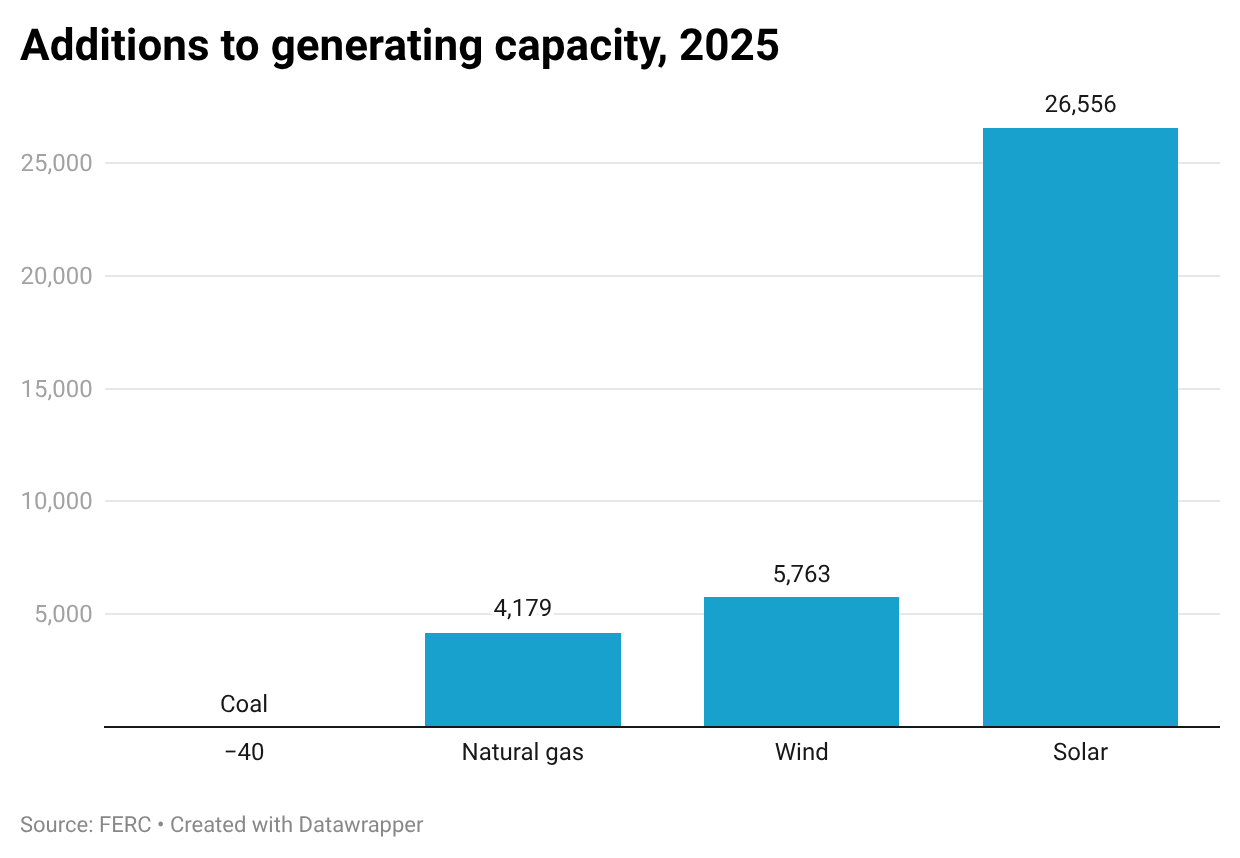
Yet Trump is trying to block renewable energy projects any way he can and has just invoked wartime authority to spend $700 million subsidizing new power plants using “clean, beautiful” coal.
Why? Part of the answer is big money. Fossil fuel interests were huge supporters of Trump in 2024. In fact, the Trump presidency is itself the result of billions of dollars spent by the Koch Brothers and others to corrupt and undermine U.S. political institutions -- the Supreme Court very much included. Anti-renewable, pro-fossil fuel policy is their reward, along with the destruction of the Voting Rights Act and the adoption of Project 2025.
What’s the other part? Clean energy has become a bogeyman in the culture wars: mining and burning coal are considered “manly” activities, while renewable energy is portrayed as woke and effeminate. Real men don’t worry about black lung and airborne particulates, let alone climate change.
So a combination of big money and fragile male egos drives Green Derangement Syndrome. And the same is true for both the Iran debacle and the refusal to learn from the catastrophe by turning to Ukraine.
Why was the United States so unprepared for the Iranian drone threat, despite the obvious successes of Ukrainian drones against Russia? Well, as investigative reporters delve into the story, I would urge them to follow the money.
America has a huge, highly profitable defense industry, dedicated to a suite of technologies that are rapidly being rendered obsolete, as $4 million Patriot missiles, that take years to build, are being used to shoot down $35,000 Shahed drones that can be manufactured in months.
So it wouldn’t be surprising if defense-industry interests are playing a significant role in the Trump administration’s refusal to admit that the rules of war have changed — the same way that fossil fuel companies have campaigned against the new realities of energy technology. After all, a deal with drone-savvy Ukrainians would mean less money going to US defense contractors.
While this is speculative, we do know that recognition of the drone revolution in warfare by Trump and his inner circle would require that they abandon their fantasy of macho military power. Pete Hegseth has been purging the military of capable officers — especially Blacks and women — he considers insufficiently loyal to Donald Trump. Beyond loyalty tests, however, he has exalted the importance of “warrior ethos” and physical fitness, as if he were leading the 300 Spartans rather than a high-tech military in an age of drones and electronic warfare.
It’s true that Hegseth, perhaps chastened by his abject failure in Iran — why does he still have a job? — recently admitted that the U.S. has learned from Ukraine. But an admission that his entire conception of war was wrongheaded will be a step too far for him.
Likewise, Trump himself is in love with big, expensive weapons as symbols of virility and power. He’s still pushing for giant “Trump-class” battleships, even though they would be sitting ducks in a modern war. Just ask the Ukrainians, who have used missiles and naval drones to force Russia’s once-vaunted Black Sea Fleet to cower in a fortified refuge. But Trump doesn’t want to give up his fantasies.
And he’s especially unwilling to learn from Ukraine. After all, he cut off aid to Ukraine in a hissy fit over Zelenskyy’s well-deserved reputation for heroism, only to he humiliated by Ukraine’s refusal to lose its war. Admitting that he needs Ukrainian help would be a further humiliation.
As I said earlier, there is no mystery about why Trump refuses to make a drone deal with Ukraine. Never mind the national interest. In military strategy as in energy policy, Trump is betraying America in the service of money and machismo.
terça-feira, 28 de abril de 2026
GENER8ION - STORM starring Yung Lean
[Verse 1]
I got, got, got
I-I-I
You got a death wish
Got a death wish
Someone said:
"Hey, you got a death wish"
It’s on my hit list
I’m on the blacklist
On the Forbes list
Put it on my lip
I take another one
[Pre-Chorus]
And you won’t die for some if you don’t stand for none
[Chorus]
So just go ahead and run
Run, run, run, run, run
Just go ahead and run
Run, run, run, just go a-
If you won’t die for some (If you won’t die for some)
If you don’t stand for none (If you don’t stand for none)
[Verse 2]
Got a death wish
It’s on my hit list
I’m on the blacklist
On the Forbes list
[Chorus]
So just go ahead and run
Run, run, run, run, run
Just go ahead and run
Run, run, run, run, run
If you won’t die for some (If you won’t die for some)
If you don’t stand for none (If you don’t stand for none)
[Outro]
Hey, hey (Hey, hey) 5X
You got a death wish
O significado da canção "STORM" reside na exploração do caos interior, da alienação e da busca por libertação num mundo que parece estar permanentemente à beira de um colapso. O título funciona como uma metáfora dupla, referindo-se tanto à turbulência emocional da juventude como a uma mudança social inevitável e, por vezes, violenta. Através da entrega vocal melancólica de Yung Lean, a letra evoca um sentimento de niilismo e sobrevivência, sugerindo a necessidade de resiliência individual dentro de um sistema opressor, onde o indivíduo se torna tão frio e implacável quanto o ambiente hostil que o rodeia para conseguir navegar a incerteza.
Musicalmente, a produção de GENER8ION utiliza sonoridades industriais e batidas metálicas que simulam uma maquinaria rígida, criando uma tensão constante entre a ordem institucional e o caos emocional. A canção sugere que este caos não deve ser evitado, mas sim abraçado como um catalisador para a transformação. O significado culmina numa ideia de catarse e transmutação, especialmente visível na transição para a segunda parte da composição, onde a música se torna mais melódica e coral. Este momento simboliza que, após a libertação da energia agressiva, pode surgir uma nova forma de união transcendente.
Em última análise, "STORM" aborda o vazio existencial de uma geração que, apesar da hiperconectividade, luta contra o ruído constante da pressão social e da informação. A obra representa, portanto, um momento de rutura: o som do colapso de velhas estruturas e o nascimento de algo novo e desgovernado através da força da juventude. É um comentário sobre a necessidade de encontrar uma voz própria e de transformar a dor em movimento coletivo antes que o sistema consuma a individualidade.
A colaboração entre o projeto francês GENER8ION, liderado pelo produtor Surkin, e o artista sueco Yung Lean, resultou numa obra audiovisual de impacto imediato que utiliza a música para explorar as tensões da juventude contemporânea. O tema "STORM" apresenta-se como um híbrido entre o eletrónico industrial e o Cloud Rap melancólico, mas é na sua representação visual, dirigida por Romain Gavras, que reside a maior carga interpretativa. As filmagens tiveram lugar na Bélgica, no Collège Cardinal Mercier, em Braine-l'Alleud, cuja arquitetura neo-gótica e imponente confere ao vídeo uma atmosfera de autoridade e tradição, evocando o imaginário dos colégios internos britânicos para criar um cenário de isolamento e claustrofobia.
A escolha do Collège Cardinal Mercier, na Bélgica, como cenário para as filmagens foi uma decisão estratégica que fundamenta toda a narrativa visual da obra. A arquitetura neo-gótica e o ambiente académico do colégio transmitem uma sensação imediata de tradição, autoridade e claustrofobia, servindo como o palco perfeito para representar uma instituição que molda, e muitas vezes limita, o comportamento dos jovens. Este cenário oferece um contraste estético poderoso, onde a beleza clássica e organizada do espaço serve de contraponto à energia caótica, brutal e moderna da música de GENER8ION e à performance de Yung Lean. Este choque propositado entre o "velho mundo", representado pelas paredes de tijolo e corredores históricos, e o "novo mundo", marcado pelo rap e pela agressividade juvenil, é uma das marcas registadas da direção de Romain Gavras. Além disso, ao filmar na Bélgica enquanto evoca um estilo visual internacional, o vídeo adquire uma qualidade universal, deixando de ser apenas um retrato de um problema britânico ou francês para se tornar uma observação abrangente sobre a condição da juventude europeia contemporânea.
Relativamente ao debate sobre a masculinidade, o projeto não parece ter como objetivo glorificar comportamentos tóxicos, mas sim expô-los como uma performance social inevitável em ambientes de repressão institucional. Ao retratar rituais de iniciação agressivos no interior deste colégio histórico, o realizador utiliza uma estética cinematográfica de luxo para evidenciar o vazio e a brutalidade dessas interações. A presença de Yung Lean, que encarna o papel de líder, reforça este sentimento; a sua postura não é a de um herói triunfante, mas a de alguém preso a um papel que exige uma dureza constante perante os seus pares.
O ponto de viragem para a denúncia surge através da coreografia de Damien Jalet, onde a violência física bruta se transfigura em expressão artística coletiva nos pátios e corredores do Collège Cardinal Mercier. Esta transição sugere que a energia canalizada para a masculinidade tóxica é, na verdade, uma forma distorcida de necessidade de pertença e movimento. Ao transformar o confronto em dança, "STORM" retira a máscara da agressividade e revela a vulnerabilidade escondida sob os códigos de conduta masculinos. Assim, a obra funciona como um espelho crítico, utilizando a beleza monumental do cenário belga para prender o espetador a uma reflexão desconfortável sobre como as instituições e os grupos moldam a identidade dos jovens.
segunda-feira, 27 de abril de 2026
Maioria dos homens não é tóxico, aponta estudo da Universidade de Auckland

Levantamento internacional aponta baixos níveis de traços problemáticos na maior parte dos participantes. No entanto, especialistas apontam que realidade do Brasil é diferente e é preciso cautela.
Por Poliana Casemiro,
A maioria dos homens é tóxica?
A maioria dos homens é realmente "tóxica"? Um estudo da Universidade de Auckland, na Nova Zelândia, com mais de 15 mil participantes, diz que não. A pesquisa revelou que 89,2% dos homens apresentam níveis baixos ou moderados de traços problemáticos.
O termo “homem tóxico” se popularizou e se tornou parte do vocabulário popular. Nas redes sociais, milhares de vídeos com essa tag trazem conteúdos que explicam sinais que podem indicar que um homem tem uma inclinação a ser machista, misógino ou violento.
A ciência já vinha tentando entender o que é o homem tóxico, e uma pesquisa apontou uma checklist que poderia colocar ou retirar homens dessa “categoria”. Agora, pesquisadores entrevistaram mais de 15 mil homens para entender: a maioria é ou não é tóxica?
Diferente do que muitos poderiam imaginar, a pesquisa aponta que não. Na verdade, a maioria dos homens entrevistados estava fora dessa categoria.
A pesquisa vem sendo replicada nas redes sociais, mas o que especialistas ouvidos pelo g1 explicam é que os dados são importantes, mas é preciso levar em consideração o abismo social entre a Nova Zelândia, onde o estudo foi feito, e o Brasil.
Aqui, o país vem batendo recordes de violência contra a mulher, e a maioria dos homens acha que há muita cobrança sobre eles para a igualdade entre os gêneros.
Homens não são tóxicos?
A pesquisa, conduzida por cientistas da Universidade de Auckland, na Nova Zelândia, analisou diferentes dimensões de atitudes associadas à masculinidade — incluindo agressividade, controle emocional, visões sobre mulheres e normas de gênero. A partir disso, os participantes foram divididos em cinco perfis.
O que eles descobriram:
O perfil “atóxico”, que não tem nenhum traço tóxico, representava o maior grupo. Cerca de 35% dos homens da pesquisa estavam nele e apresentavam os menores níveis de comportamentos considerados problemáticos.
O grupo mais extremo, denominado “tóxico hostil”, teve os menores índices, representando apenas 3,2% dos entrevistados.
Para identificar o grupo mais problemático, os pesquisadores analisaram respostas ligadas a oito indicadores. Os homens classificados como “hostis” se destacaram por combinar pontuações altas em temas como:
- crença de que mulheres buscam controlar os homens;
- valorização da agressividade e da dominação;
- dificuldade extrema de expressar vulnerabilidade;
- rejeição a traços considerados femininos e maior preconceito;
- tendência a comportamentos de controle em relações íntimas;
- baixa capacidade de lidar com emoções.
“Dizer que homens são tóxicos é uma forma solta de avaliar o momento que estamos vivendo. Se queremos uma mudança de comportamento, não tenho certeza se usar o termo como se usa, de forma ampla, como um rótulo para os homens, seja útil”, explica Deborah Hill Cone, autora do estudo.
Entre os dois extremos encontrados na pesquisa, ficaram perfis considerados intermediários, com homens que podem apresentar algum nível de sexismo ou visões tradicionais de gênero, mas sem traços de hostilidade ou agressividade elevada.
Foram eles:
- Moderados Tolerantes a LGBT (27,2%): Níveis baixos a moderados de traços tradicionais, mas com alta aceitação da diversidade.
- Moderados Anti-LGBT (26,6%): Perfil semelhante ao anterior, porém com maior preconceito sexual. Ainda assim, com poucos traços de agressividade relacionada.
- Tóxicos Benevolentes (7,6%): Homens que apresentam um sexismo "paternalista", acreditando que as mulheres devem ser protegidas e se manter em papéis sociais restritos. Ainda assim, com pouco índice de agressividade.
Isso vale para o Brasil?
O que Hill e a pesquisadora brasileira sobre género e doutora em psicologia Ana Maria Bercht explicam é que não.
A ideia da pesquisa é ter um norte, mas é preciso entender que existe um abismo social entre o Brasil e a Nova Zelândia.
O país está nas primeiras posições de rankings mundiais de paridade de gênero, enquanto o Brasil segue na 70ª posição.
"impossível que esses dados sejam aplicados ao Brasil, que tem a violência contra mulheres vivida como uma epidemia. O resultado da Nova Zelândia reflete uma trajetória de políticas públicas que colocaram as mulheres em pé de igualdade com os homens no país. Hoje, lá, elas são vistas como pessoas individuais, e não como alguém que deve ser submissa a seus maridos." - Ana Maria Bercht, pesquisadora sobre género.
Hill, autora do estudo, reforça que a pesquisa traz uma análise importante sobre o quão distorcidas podem ser essas “etiquetas sociais” criadas, mas que isso precisa ser analisado levando em conta o cenário do país.
“Podem existir diferenças transculturais significativas se a pesquisa fosse replicada em outro contexto cultural, como o caso do Brasil”, diz.
E por que o cenário no Brasil é tão diferente?
Para os especialistas, essa é uma questão cultural, em que, no Brasil, a mulher ainda é vista como um anexo do homem, e não em sua individualidade.
Para Bercht, isso tem relação com mudanças sociais tardias: No Brasil, tem menos de 100 anos que a mulher tem o direito ao voto, a ser eleita e ao trabalho formal. Isso tudo só aconteceu no país nos anos 30. E foi só nos anos 70 que a mulher recebeu o direito de se divorciar.
Para que um homem entenda uma mulher como pessoa, ele precisa vê-la nos mesmos espaços que ele, com o mesmo poder de decisão, pautando as discussões. Isso demorou para nos ser permitido no Brasil e ainda está longe de ser equilibrado. As mulheres ainda ganham menos no mercado e não somos nem mesmo a metade dos que nos representam nas esferas de poder. - Ana Maria Bercht, pesquisadora sobre gênero.
É a partir desse histórico que a mulher é vista na sociedade. E, ainda que algumas dessas conquistas tenham quase 100 anos, dados recentes reforçam essa percepção de que o Brasil ainda caminha a passos lentos na igualdade de gênero.
Uma pesquisa feita pela Ipsos em parceria com o Instituto Global de Liderança Feminina do King's College London mostra que no país:
- 70% dos brasileiros sentem que está sendo exigido demais dos homens para apoiar a igualdade (a média global é de 46%).
- 21% concordam que a mulher deve obedecer ao marido.
- 16% dos homens acreditam que cuidar dos filhos torna o homem "menos masculino".
Para Hill e Bercht esse contexto que traduz a violência quase epidêmica que mulheres vem sofrendo no país e que ainda não afastam uma parcela importante dos homens de uma postura de violência e subordinação.
"Vivemos uma violência quase epidêmica contra mulheres. Ainda não somos vistas no país de forma individual e livres. Muitos homens brasileiros sequer entendem a violência como tal. Pesquisas recentes mostram que autores de violência doméstica, mesmo após serem condenados, justificam seus atos culpando a vítima ou o ciúme, demonstrando uma forte desresponsabilização masculina", explica Bercht.
A misoginia não passa batido nem mesmo nas redes sociais. Ela se reflete nas trends recentes, que trazem dicas de como homens devem tratar mulheres, com conteúdos misóginos que acumulam milhões de seguidores. Além da incitação à violência.
Recentemente, o Senado aprovou o projeto de lei que equipara a misoginia ao racismo e prevê penas maiores para crimes de ódio contra mulheres. A votação na Casa foi unânime, mas o consenso encontrou resistência na Câmara dos Deputados, onde parlamentares da oposição fazem críticas e prometem trabalhar para barrar o avanço do projeto. Porém, até agora, o projeto não saiu do papel.
quarta-feira, 22 de abril de 2026
A petromasculinidade está a destruir o planeta. Será que a ecomasculinidade pode ajudar a salvá-lo?

A influenciadora feminista Liz Plank abre o seu livro inovador, "For the Love of Men", com uma afirmação ousada: "Não existe maior ameaça para a humanidade do que as nossas definições atuais de masculinidade". Ela refere-o a vários níveis, desde o mais íntimo: como os parceiros masculinos são a principal causa de morte das mulheres grávidas nos EUA; até ao mais macro: como associar "comportamentos ecologicamente conscientes à feminilidade e à rejeição da masculinidade" está literalmente a matar o planeta. Neste Dia da Terra, vale a pena refletir sobre o porquê de isto acontecer e o que pode ser feito a esse respeito.
Embora não seja novidade para a maioria que, em comparação com as mulheres, os homens deitam mais lixo para o chão , reciclam menos e deixam uma maior pegada de carbono , há algo mais extremo do que a simples falta de consideração que leva os jovens, numa forma de protesto anti-ambiental conhecida como " rolling coal " (soltar fumo negro), a modificar os motores a diesel das suas carrinhas de caixa aberta para expelir deliberadamente grandes quantidades de fumo cinzento-escuro e, em seguida, atropelar carros Prius e ciclistas .
Da mesma forma, a satisfação emocional de "humilhar os liberais" ou as dezenas de milhões em contribuições de campanha que Trump recebeu da indústria dos combustíveis fósseis não explicam totalmente o puro rancor que leva o seu governo a forçar centrais a carvão deficitárias no Michigan a continuarem a operar ou a cancelar projetos de energia eólica offshore perfeitamente viáveis e já 80% concluídos em Connecticut. Sem falar do lançamento de mais uma guerra pelo petróleo no Médio Oriente, em estilo cowboy, sem qualquer planeamento estratégico.
O que liga os pontos aqui é algo mais desarticulado e intrincado: uma versão hiperagressiva e impregnada de petróleo da masculinidade tóxica, conhecida como "petromasculinidade". E é crucial para compreendermos porque é que nós, enquanto sociedade, estamos a falhar na união em torno de uma visão ecológica partilhada.
Cunhado pela politóloga Cara Daggett num artigo de 2018 , o termo “petromasculinidade” descreve uma fusão perniciosa entre o uso de combustíveis fósseis, a negação das alterações climáticas e a defesa da masculinidade patriarcal branca autoritária. Observando como a extracção e o consumo de combustíveis fósseis são codificados como “masculinos”, enquanto o ambientalismo e a tecnologia verde são codificados como suaves, fracos e “femininos”, o termo demonstra como os homens inseguros estão cada vez mais a apoiar-se numa identidade petromasculina para afirmar a autoridade masculina tradicional face às alterações climáticas, às ameaças às indústrias extractivas tradicionais e à transformação das normas sociais.
Para a maioria das pessoas, a petro-masculinidade veio ao de cima de forma dramática durante o confronto de 2022 no Twitter/X entre o rufia da manosfera Andrew Tate e Greta Thunberg.
"Por favor, forneça o seu endereço de e-mail para que eu possa enviar uma lista completa da minha coleção de carros e as suas respetivas emissões enormes", tweetou Tate para a Greta, juntamente com uma fotografia dele a abastecer um deles.
Percebendo as conotações sexualmente jactanciosas daquelas "emissões enormes", Greta respondeu com um tom malicioso: "Sim, por favor, esclareça-me. Envie um e-mail para smalldickenergy@getalife.com."
Com 3,3 milhões de gostos e mais de 500 mil retweets, tornou-se “o tweet que teve impacto em todo o mundo” e, nas palavras de Rebecca Solnit, “um lembrete da interseção entre machismo, misoginia e hostilidade à ação climática”, impulsionada por “versões de masculinidade em que o egoísmo e a indiferença – o individualismo levado ao extremo – são características definidoras e, por isso, importar-se e agir para o bem coletivo é a sua antítese”.
Como activista climático de longa data, tenho assistido de perto a esta divisão de género na luta climática. Sejam comentadores da Fox News a proferir negações climáticas sem qualquer fundamento ou trolls machistas a chamarem-lhe "corno" nos comentários só por se preocuparem com o planeta, era impossível não reparar num certo tipo de homem com um certo tipo de atitude: geralmente branco e zangado, defendendo agressivamente – e visivelmente imbecil – o status quo dos combustíveis fósseis. Isto era geralmente acompanhado de uma ostentação arrogante de prerrogativa e privilégio masculino, incluindo o privilégio de destruir o planeta, se fosse o que lhes desse na telha.
Embora Andrew Tate provocar uma adolescente com fotos sensuais dos seus 27 carros desportivos seja inquestionavelmente repugnante e patético, parte da agressividade defensiva associada à masculinidade ligada ao consumo de petróleo é compreensível.
Imagine que extrair carvão é algo que você e os seus antepassados fizeram durante gerações, e que pagou a renda e deu uma sensação de masculinidade e heroísmo (apesar dos malefícios e perigos). E então, aparece um ambientalista bem-intencionado num Prius a dizer que não se devia fazer mais aquilo. Mas ele não está a oferecer uma alternativa de sustento viável, certamente não uma com dignidade e aquela aura misteriosa de "virilidade" que a extracção de carvão tinha. Quem não ficaria na defensiva?
Se aceitar a realidade das alterações climáticas conduz logicamente a certas soluções que perceciona como ameaças à sua identidade e estilo de vida, faz sentido que se agarre firmemente à negação climática. E depois, mostre o dedo do meio àqueles arrogantes condutores de Prius com uma bela "soltada de fumo negro".
Então, o que fazer? Em primeiro lugar, como o movimento de transição justa sabe desde o início, precisamos de oferecer uma alternativa económica concreta. A postura de repreensão liberal não vai funcionar aqui e, na verdade, faz parte de um problema maior: os democratas estão a perder eleitores e eleições (recorde-se a piada/perceção de Marc Maron de que a esquerda "irritou as pessoas ao ponto de as levar ao fascismo" em 2024). Em vez disso, precisamos de oferecer uma alternativa real, como um Novo Acordo Verde, que de facto cumpra a promessa de "milhões de empregos bons e bem remunerados", como Bernie Sanders, Alexandria Ocasio-Cortez e o Movimento Sunrise (e, em menor medida, Biden através do seu IRA) têm tentado fazer.
Para aqueles de nós que tentam desesperadamente construir um consenso público para a transição dos combustíveis fósseis para as energias renováveis, a petromasculinidade sugere que combater as alterações climáticas não é apenas um desafio tecnológico, económico ou político, mas também uma luta cultural e psíquica contra uma "petrocultura" enraizada e fortemente marcada pelo género.
O chamamento vem de dentro da casa. O patriarcado está profundamente enraizado. Ultrapassá-lo é um esforço multifacetado, que se estende por gerações. Envolve tanto uma reestruturação do poder (com benefícios indirectos para o planeta, como demonstram inúmeros relatórios que mostram que quanto maior a igualdade de género numa sociedade, mais robustas são as suas políticas climáticas), como uma profunda viagem de cura interior por parte dos homens, para desfazer condicionamentos nocivos e encontrar o caminho para um novo tipo de masculinidade ecológica.
“Não é que os homens não se preocupem com o ambiente”, defende Liz Plank. “Simplesmente são ensinados a preocuparem-se mais com as ameaças à sua masculinidade.” Para ajudar os homens a inverter a importância destas prioridades, os defensores do ambiente têm adoptado três abordagens básicas: descodificar, recodificar e “codificar para a masculinidade”.
Através da literacia mediática, da crítica social, das batalhas ideológicas diretas na internet e de uma inteligente subversão e sátira cultural , os ativistas climáticos e de outras causas estão a trabalhar para descodificar a petromasculinidade. Estão a salientar o quão ridícula, "construída" e autodestrutiva a petromasculinidade é para os homens, as suas comunidades e o próprio planeta, e a esperar que, com o tempo, isso ajude a desvendar a forte associação entre os combustíveis fósseis e uma identidade masculina fragilizada. A crítica de Greta Thunberg a Andrew Tate é um exemplo; este artigo, suponho, é outro.
Uma segunda abordagem é recodificar – ou, como gosta de dizer a botânica indígena Robin Wall Kimmerer, “recontar a história” – a escolha entre combustíveis fósseis e energias renováveis. Um bom exemplo actual desta abordagem é a iniciativa Energia do Céu – Não do Inferno, que a rede inter-religiosa de cuidado da criação GreenFaith (com – para ser totalmente transparente – alguma ajuda da minha parte) está a promover.
Utilizando uma variedade de abordagens, desde sermões do Dia da Terra a banda desenhada ao estilo de panfletos religiosos, a iniciativa sugere que “Deus deixou claro de onde quer que obtenhamos a nossa energia”: não do fogo venenoso do inferno, mas do sol e do vento nos céus. Uma vez compreendida, esta alegoria é difícil de ser desvista. E se a consonância moral e cosmológica com Deus tiver agora mais força do que alguma ameaça percebida à sua masculinidade por parte das energias renováveis “femininas”, então alguns homens podem mudar de ideias.
Por fim, ao retratar a tecnologia verde de uma forma mais tradicionalmente masculina e "viril", os defensores estão a tentar associar as soluções climáticas a um código masculino. O lançamento da pick-up totalmente elétrica F-150 Lightning da Ford em 2023 é um exemplo disso. Entretanto, várias equipas de relações públicas de energias renováveis têm utilizado cenas de homens a colocar cintos de ferramentas e a subir degrau a degrau a 90 metros de altura para reparar uma turbina eólica, a fim de convencer os homens de que têm um lugar no futuro verde e promissor da América.
A mensagem principal aqui é: pode ser másculo sem combustíveis fósseis.
Olhem para mim, sou provavelmente a pessoa menos "petro-masculina" que conheço. O que não me torna menos masculino, muito obrigado, apenas menos "petro" . Não tenho carro; em vez disso, liberto a minha testosterona ao andar de bicicleta um pouco agressivamente demais pelas ruas de Nova Iorque. Não tenho um desportivo para acelerar, mas ir dos 0 aos 100 km/h em 3,7 segundos no Tesla Model 3 turbinado do meu amigo (comprado em segunda mão antes de Elon Musk se tornar fascista) foi uma experiência emocionante que repetiria a qualquer momento.
Não desafio os pacatos ambientalistas "carregando" o meu camião turbinado com carvão, mas já desafiei a corporação mais poderosa do mundo ao coproduzir um anúncio chamado " A Exxon Odeia os Seus Filhos ", destacando as dezenas de milhares de mortes por problemas respiratórios causadas pelo principal produto da empresa, e transmitindo-o mesmo no quintal da Exxon, em Irving, no Texas. Dediquei a última década da minha vida a fazer com que a nossa civilização abandonasse os combustíveis fósseis e migrasse para fontes de energia mais limpas, ecológicas e pacíficas, e isso nunca me fez sentir menos homem – muito pelo contrário.
Um homem bom deve assumir responsabilidades, não se esquivar a elas. Entristece-me que a resposta de tantos homens ao perigo ecológico em que nos encontramos seja renunciar à responsabilidade, ficar na defensiva e agir de forma impulsiva. Quando o perigo chega, um homem bom deve proteger o seu lar e os seus entes queridos.
Ora, neste Dia da Terra, como em todos os outros, é evidente que, seja pelo aquecimento global, pela perda de biodiversidade ou pelo racismo ambiental, a nossa única casa está em sérios apuros. Por isso, homens, neste Dia da Terra, comprometamo-nos a libertarmo-nos da petromasculinidade e a abraçar a nossa ecomasculinidade. Vamos mobilizar o nosso engenho e reunir a nossa coragem – e sentir a nossa tristeza, se necessário – para que nos possamos lembrar do quanto realmente nos preocupamos com este planeta lindo e milagroso em que todos vivemos juntos. E depois, vamos mobilizar-nos para protegê-lo. Afinal, o que é mais "masculinidade protectora" do que proteger a Terra?
Ler mais:
sexta-feira, 10 de abril de 2026
Exit North - Harm
- "Manosphere": Mantive o termo original, pois é o conceito usado internacionalmente para designar o ecossistema online de movimentos masculinos (muitas vezes ligados a ideologias de extrema-direita ou misoginia), que encaixa bem na tua observação inicial sobre o J.D. Vance e o fenómeno do "penedo" (alguém rígido ou retrógrado).
- "Simian elements": Traduzido como "elementos simiescos"
- "Survival of the friendliest": Esta é uma brincadeira com a famosa frase de Darwin (survival of the fittest). Em Portugal, usamos "sobrevivência do mais apto", por isso a tradução "sobrevivência do mais amigável" mantém esse contraste evolutivo que o Feiner quis destacar.
Página Oficial
Exit North (youtube)
segunda-feira, 9 de março de 2026
‘A very dangerous person’: alarm as Pete Hegseth revels in carnage of Iran war
 |
| Not a single senator probed the most dangerous part of Hegseth's background: his support for white Christian nationalism [Fonte] |
Critics say brash, bombastic Fox News host out of his depth to guide US military through murky new Middle East conflict

Brash and bellicose, he sounded more like a cartoon bully than a sombre statesman. “Death and destruction from the sky all day long,” Pete Hegseth, wearing a red, white and and blue tie and pocket square, bragged to reporters at the Pentagon near Washington. “This was never meant to be a fair fight, and it is not a fair fight. We are punching them while they’re down, which is exactly how it should be.”
Hegseth, 45, a former Fox News TV host who now commands the world’s most powerful military, has this week become the face of Donald Trump’s war in Iran. That has set off alarm bells for critics who warn that the Secretary of Defense – pointedly rebranded “Secretary of War” – has rapidly transformed the Pentagon into the staging ground for an ideological and religious crusade.
With machismo, Christian nationalism and callousness toward the lives of US troops, they say, Hegseth’s puerile displays on TV are aimed at sating Trump’s desire for a warmonger worthy of the manosphere. This was reinforced by a lurid social media video that intersperses clips from Hollywood blockbusters such as Braveheart, Gladiator, Superman and Top Gun with Hegseth and real kill-shot footage of the attacks in Iran.
Janessa Goldbeck, chief executive of Vet Voice Foundation, a nonprofit advocacy organisation, said: “Pete Hegseth is a very dangerous person. He’s a white Christian nationalist and has the arsenal of the United States government at his disposal and a permission slip from President Trump to deploy carnage wherever he wishes against whomever he wishes.”
Hegseth’s rise would have been unthinkable under any other commander-in-chief. Born in Minneapolis, he studied politics at Princeton University and became publisher and editor of the Princeton Tory, a conservative student journal, where he frequently waded into culture-war issues such as feminism and homosexuality.
After leaving Princeton, Hegseth joined the US army national guard as an infantry officer. His service included deployments to Guantánamo Bay in Cuba and tours of Iraq and Afghanistan. He later revealed in a book that he told soldiers under his command in Iraq to ignore legal advice about when they were permitted to kill enemy combatants under their rules of engagement.
Hegseth became chief executive of Concerned Veterans for America, a conservative advocacy group, but departed in 2016 amid allegations of financial mismanagement, sexual impropriety and personal misconduct.
In 2018 Hegseth’s mother, Penelope, sent him an email that said: “You are an abuser of women – that is the ugly truth and I have no respect for any man that belittles, lies, cheats, sleeps around, and uses women for his own power and ego. You are that man (and have been for years) and as your mother, it pains me and embarrasses me to say that, but it is the sad, sad truth.”
Hegseth subsequently became a familiar face on TV as a contributor and co-host of Fox & Friends on Fox News, frequently interviewing Trump and defending his policies. He once wrote that, in the event of a Democratic election win, “the military and police … will be forced to make a choice” and “Yes, there will be some form of civil war”.
But Trump prevailed in 2024 and nominated Hegseth to serve as secretary of defence. At his confirmation hearing, senators raised serious questions about his record: disparaging remarks about women serving in the armed forces; allegations that he drank while on duty; claims of sexual assault and misconduct; his troubled tenure running two small veterans’ nonprofit organisations; and his lack of experience for a post overseeing the world’s most powerful military.
The Senate ultimately split 50–50, forcing the vice-president, JD Vance, to cast the tie-breaking vote. As defence secretary Hegseth has vowed to “unleash overwhelming and punishing violence” on enemies and promised to dispense with “stupid rules of engagement” – rules designed to restrict attacks on civilian populations.
Now, in his first week guiding the nation through a murky new Middle East conflict, Hegseth has largely forgone the solemnity of a traditional defence secretary in favour of the performative antics of a partisan broadcaster revelling in America’s capacity to inflict violence.
For years he had cultivated a hypermasculine “muscleman” aesthetic designed to play to Trump’s sensibilities and the rightwing media ecosystem. Now, faced with a geopolitical crisis that demands nuance and strategic foresight, he appears to many to be out of his depth.
Goldbeck, a Marine Corps veteran who was deployed overseas as a combat engineer officer, commented: “I wish I could say how cavalier, obtuse and hopeless Secretary Hegseth is at leading the Pentagon. I can’t even muster the words to describe his self-adulation, matched only in scope by his apparent moral depravity.”
She added: “Let’s not forget that Pete Hegseth is a former morning-show Fox News TV host, and has this cartoonish persona, speaking what he thinks is tough-guy language, but sounds to me as a veteran and to many of my peers who served in combat like somebody who is completely inept and pretending to have this macho persona.
“Honestly, it’s embarrassing. We know this guy is incompetent. I wouldn’t feel safe leaving Pete Hegseth in charge of putting together a DoorDash order.”

Hegseth at the International Christian Media Convention in Nashville last month. [Fonte]
Former White House officials share the concerns. Brett Bruen, president of the public affairs agency Global Situation Room and former global engagement director of the Barack Obama administration, said: “Hegseth is ill-suited for the kind of reassurance and strategy that Americans and our allies need to hear from the Pentagon right now.
“They don’t need a bumper sticker. They don’t need the bravado and the brashness that he brings. They need to know that America’s military is in strong, stable hands and what we have seen in his first couple of war press conferences is an inability to move beyond this Fox personality and into the role of leader of our nation’s military at a time of war.”
During his Pentagon briefing on the war on Wednesday, Hegseth adopted a bombastic tone, saying of Iranian leaders: “They are toast and they know it. Or at least soon enough they will know it. America is winning – decisively, devastatingly and without mercy.”
He bashed “fake news” while addressing the six army reservists killed in an Iranian attack on an operations center in Kuwait. “When a few drones get through or tragic things happen, it’s front-page news. I get it. The press only wants to make the president look bad. But try for once to report the reality. The terms of this war will be set by us at every step.”
The comments provoked uproar for their lack of empathy for America’s fallen. Jeremy Varon, a history professor at the New School for Social Research in New York, said: “That’s outrageous. You have a national effort by all media regardless of partisan bent to memorialise and honour the dead and he sees that simply as a tactic to bring down Trump.”
There was another aspect of Hegseth’s personality barely addressed by the Senate: his sympathy for Christian nationalism. Photos have shown him bearing two tattoos associated with crusader imagery. One depicts the Jerusalem cross – a cluster of five crosses long connected to medieval crusader iconography – on his chest.
Nearby is an image of a sword accompanied by the Latin phrase “Deus vult”, meaning “God wills it”, a slogan historically linked to the crusades and revived in recent years by various far-right groups. It appeared on clothing and flags carried by some participants in the January 6 Capitol attack.
Nor are the references merely symbolic. In his 2020 book, American Crusade, Hegseth wrote that those who benefit from “western civilisation” should “thank a crusader”. The book suggests that democratic politics alone may not suffice to achieve the goals of his political allies, declaring: “Voting is a weapon, but it’s not enough. We don’t want to fight, but, like our fellow Christians one thousand years ago, we must.”
There have been reports of more troubling behaviour. The New Yorker reported that a colleague at Concerned Veterans for America complained that he and another man repeatedly shouted “Kill all Muslims!” during a drunken episode at a bar while travelling for work.
Hegseth has previously endorsed the doctrine of “sphere sovereignty”, a worldview derived from the extremist beliefs of Christian reconstructionism (CR). The philosophy calls for capital punishment for homosexuality and strictly patriarchal families and churches.
The defence secretary attends Pilgrim Hill Reformed Fellowship, a church linked to the Communion of Reformed Evangelical Churches, a denomination co-founded by the pastor Doug Wilson, who has openly advocated a theocratic vision of society in which wives should submit to their husbands and women should be denied the vote. Wilson recently led a worship service at the Pentagon at Hegseth’s invitation.
Robert P Jones, president and founder of Public Religion Research Institute thinktank in Washington, said: “This is not one or two comments. It’s not a kind of one-off behaviour. This is like a longstanding publicly demonstrated orientation that Hegseth has. It’s not just a glorification of violence but a glorification of violence in the name of Christianity and civilisation.”
The Military Religious Freedom Foundation (MRFF) says it has received more than 200 complaints from service members about military commanders invoking extremist Christian rhetoric about biblical “end times” to justify involvement in the Iran war. Such language could also be offensive to Arab allies and provide Iran with the fodder it needs to justify its own holy war against the US.
Jones warned: “It casts this not as anything related to the public – is it about a nuclear programme? Is it about sponsoring terrorism? – which are legitimate political concerns. It takes it out of the realm of politics and casts it as a holy war of a supposedly Christian nation against a Muslim nation.”
Doug Pagitt, a pastor and executive director of the progressive Christian group Vote Common Good, compares Hegseth’s worldview to the historical heresy of Constantine, who allegedly painted a cross on his shield to conquer in the name of God – a theology the broader Christian church has spent centuries trying to distance itself from following the horrors of the Crusades.
Pagitt said: “It seems to me that Pete Hegseth has a worldview, which is contorted toward thinking that this administration has a particular divine calling. He believes – because he said it – that God has uniquely ordained Donald Trump and those that he chooses to accomplish very specific purposes in the world.
“Pete Hegseth’s own version of Christianity is one that’s built around a certain Christian advancement that comes through the domination of the governments of nations. He believes that not only is the military at his disposal to use for his purposes but it’s there to fulfill God’s agenda for the world.”
Saber mais
Subscrever:
Mensagens (Atom)