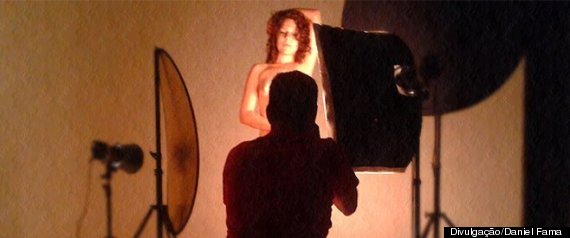
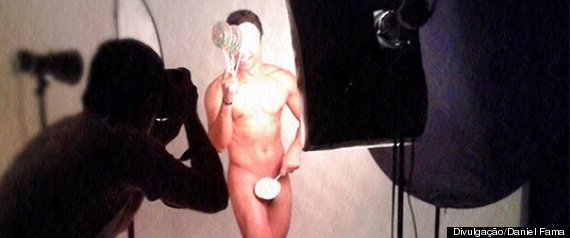
It’s a Sunday night in Friedrichshain, and four tourists are queued to get into Monster Ronsons, a karaoke bar that bills itself as the most famous in Europe. They’re English, here on an Interrail pass. At the door someone stops them: tonight, to croon out of tune, you gotta lose the clothes. It’s naked karaoke.
“They were like, ‘Okay, when in Berlin!’,” the event’s host recalls. “All night they were walking around like, ‘Oh my god, this is crazy! Are you like this every night?’”
In Berlin, the answer is almost certainly yes. Somewhere in the city, someone is offering space to strip down to skin. The recent rise of these events across the city puts a fresh twist on a long German tradition.
Social nudity – what English speakers might call naturism and what Germans refer to as Freikörperkultur (“free body culture”), or
FKK – is as much a part of the national identity as
rock-hard bread, airing out the room in the dead of winter and making schport. It’s also changing: across the country, long-running FKK groups are largely failing to captivate young people, address fears about uncomfortable gender dynamics or respond to complaints of rigidity.
Meanwhile, Berlin’s brand of nude attitude is broadening, making room for events previously unexperienced in the buff. It’s not just confined to the lakes and saunas but found at themed parties, yoga classes, art studios, DJ sets. It’s growing in popularity, making statements about consumerism. But it’s also still finding its footing in a city that
easily sexualises nudity, still asking the question: where in society should you be allowed to take your clothes off, and how should we act when you do?
Dance Your Pants Off
Break it down this way: you spend two minutes in the morning getting dressed, maybe three. Another few at night. Ten minutes in the shower. On days you have sex (for the average person, once a week), you might spend a little extra time naked, maybe 30 minutes. About a quarter of people sleep naked, but most don’t. Occasionally, you go to the doctor. Occasionally, the sauna. Maybe once or twice a summer, you slip bare into a cool body of water. It’s not unreasonable to assume that on a regular day, you spend less than an hour naked – and likely none of that in front of strangers.
This is what Danielle Barnett is out to offer Berliners: a chance to spend a greater percentage of their lives nude, and a chance to meet in the flesh. The 33-year-old is responsible for adding regular naked opportunities on Berlin’s social calendar – typically two a month. In 2019 she founded The Naked Tea Party, a joyous stripped-down shindig that runs regularly at clubs like Sisyphos,
KitKatClub and Kater Blau and holds private events at Pankow House and a sauna in Treptow. “Meeting people without clothing on, there’s this instant feeling of intimacy,” Barnett says. “Like okay, I feel safe with you. I feel like I can see you.”
The name isn’t just an expression – there is tea, though her team is careful that it’s not too hot. (“We definitely have a rule that you should be able to get it on your body and not scream.”) At the private events there’s an opening workshop, and then the night devolves into dance and performance. “We usually have DJs who are playing – sometimes we also have live music, but it’s usually DJ-focused,” Barnett says.
Are the DJs naked too? Absolutely. “A few years ago when I would ask, people were like, you’re crazy. But now DJs who are regularly in the scene, they’re really excited to get an out-of-the-ordinary invitation like this.” Participants at the private events have to apply to attend, to ensure they understand the ethos going in, Barnett says. “We say it explicitly, and I think it’s underlying in what we’re creating: a safer space. Really honouring how vulnerable it is for each of us to do this and be nude in front of one another, and really giving each person the responsibility – it’s up to all of us to make this comfortable.”
Barnett has a long history with nakedness; raised in Southern California, she later moved to San Francisco and started attending naked protests and festivals. “Growing up in Southern California – I mean, I would say it had to do with where I was growing up, but I think any teenage girl – I was never thin enough, I would always be on some sort of diet. I was pretty unhappy with how I looked,” she says. “But then I was up in San Francisco, at a hot spring. And I was seeing people of all ages and sizes naked, seeing people with cellulite and saggy boobs – you know, everything. I remember just crying, and being so touched by this. It was really in seeing other naked bodies more and more over time that I realised oh my god, every single body has curves, has dimples, has hairs, has scars, has all of these things I also have. And I am not so bad after all.”
She also discovered that she loved to host, and she started where she would stay – with tea. “Every Tuesday, I would invite people to my house, and we would all be topless and be drinking tea,” Barnett says. “I also quickly realised I’m an exhibitionist, because I get this thrill when I’m nude in public spaces.”
Today, the events she hosts range from 80 to 200 people, about half of whom are regulars. “We do get a lot of people who come in and they’re so curious and courageous, they join and they’ve never heard of us before,” says Barnett.
“I hear from so many guests, time and time again, that say their lives have been changed by this.” – Danielle Barnett, Naked Tea Party
The nude mood they encounter is often silly and playful. “There’s lots of laughter and lightness in the space. It’s really an innocent, childlike space,” she says, with “people’s booty or penis really jiggling, breasts jiggling – everything”. Accessories are also very welcome, as long as you still bare the important bits. “You can totally wear earrings. Some people wear gloves. Someone came in with a giant hat, which is kind of out of the ordinary, but it was very funny. They said, ‘I’ve never had an opportunity to wear this hat before and I knew this was perfect.’ It was a very big hat.”
In May, Naked Tea Party hosted their first weekend festival at a lake in
Brandenburg; it sold out. “I mean, plain and simple, people want more of this,” Barnett says. The demand is such that she’s hired assistants. “I hear from so many guests, time and time again, that say their lives have been changed by this. I think once you’ve made contact with who you are when you’re comfortable, when you’ve accepted yourself being naked, you can’t just forget that overnight.”
Still, there’s resistance in the mainstream, Barnett thinks – last summer, Instagram deactivated the Naked Tea Party account. “Capitalism doesn’t want us to feel good being naked,” she says. “How much can you really sell to someone who’s comfortable being naked and doesn’t need your products? Doesn’t need your makeup? Doesn’t need your fancy yoga clothing?” (Barnett also teaches yoga and works as a birth doula.)
Among devotees, this lack of garb is an equaliser: “The first time we see each other with clothes on we’re like, oh my god, I hardly recognise you.”
Despite a far higher nude-to-clothed ratio than the average person, the profundity of being naked among strangers hasn’t dulled for her. “I feel more connected to my body… being more regularly in nude spaces is also definitely elevating me to take care of myself in other ways.” Nakedness for her is both literal and symbolic. “Yes, we’re removing our clothing, but what else are we allowing ourselves to let go of when we take off our clothes? Shame. Guilt. Fear. Self-doubt,” Barnett says. “Still, I don’t feel safe being naked everywhere. As a society, we have a lot of [room] to grow in just normalising the body.”
Barnett thinks Berlin is progressing – for example, the city’s municipal pool operator
adjusted their rules last year to allow women to swim topless. But many of the spaces that allow nudity are still highly sexualised, she says, which can dilute the spirit of getting naked for one’s own empowerment. “I think the individual has to have a really thick skin to not be disturbed by people who might have a different intention. Which is hard sometimes,” she says.
The Naked Tea Party isn’t a sexual space, but it does encourage sexuality. “It’s no explicit sexual interaction – but we are acknowledging our turn-ons, acknowledging eroticism, acknowledging that we’re humans who feel attracted or sexy, and that is a full yes, a full fuck yes.”
Free Association
On June 5, a headline in the German tabloid BILD
proclaimed a new national plight: “Nackt-Krise in Deutschland!” A naked crisis in Germany. The alarm was sounded after the German Association for Free Body Culture (DFK), an umbrella organisation for nude-centric groups across the country, cancelled its upcoming 75th anniversary celebration,
citing a lack of interest and low registration. At their 50th anniversary, the group boasted 65,000 members; today, participation has plummeted to just over half that: 34,000 members who are on average 60 years old. (One might say things are sagging with age.)
One Cologne resident BILD spoke to compared the national exodus to a religious one. “Naked is no longer popular. Fear of the sun, of drones, of mobile phones. The [FKK] clubs are hit particularly hard. They are losing more members than the Catholic Church,” he told the tabloid.
For a country often associated with guilt, FKK – a culture dedicated to rejecting shame – has a long history in Germany; so much so that Deutschlandfunk radio
once called social nudity “a specifically German phenomenon”. FKK traces its roots back to the late 19th century, when new ideas about health and hygiene were on the rise. Early fathers of FKK included Karl Wilhem Diefenbach (for whom a street in Kreuzberg is named), a reformer who rejected monogamy, ate vegan so religiously that he was known as “the kohlrabi apostle” and thought clothing was an “epidemic”. Diefenbach was arrested after a policeman spotted him walking naked outside his Munich home in 1888 (according to a Der Spiegel article, newspapers at the time described him with his “butt irreverently pointed towards the sky”), and sentenced to six weeks in prison for the indecency.
This prudish predilection would soon fall, though. In 1893, several dozen Esseners, compelled by the health benefits of sunlight and air on bare skin, founded the country’s first official FKK association. In 1903, a man named Paul Zimmermann opened the first open-air nude area near Lübeck. The movement climbed in popularity after World War I; hundreds of clubs popped up, with as many women as men. In 1920, Germany’s first nude beach was established on a resort island in the North Sea. And in 1924, a
man named Adolf Koch founded a socialist school in Berlin based on the ideals of naturism and naked gymnastics; eventually there were 13 such institutes, and his movement had hundreds of thousands of followers globally.
“What began in the late 1800s as a kind of philosophy of physical health transformed, under authoritarian rule, into a mode of quasi-dissident leisure, and then later into something more temperate, a culturally ingrained but ultimately apolitical national pastime,” The New York Times
wrote in 2016.
It wasn’t always apolitical, though. Early German nakedness had ties to antisemitism; other pioneers of the movement, like Heinrich Pudor and Richard Ungewitter, were into many forms of alternative hygiene – including racial. The Nazis, however, weren’t especially big fans, though they ultimately relaxed their crackdown. After World War II, FKK as we know it today became particularly associated with East Germans on their Baltic beaches; the Communist regime initially attempted to stifle naturism, but it prevailed as a symbol of resistance against a repressive state, and by the 1980s was widely practised across East Germany.
It was around this time that nakedness became something Germans did largely with family or close friends; fewer FKK clubs were formed, and more time was spent at shores and saunas – a trend that has continued through the last few decades. Naturism also
slowly gained an image problem (the image being old, white, naked men).
DFK president Alfred Sigloch chalks up the clubs’ struggle to retain members to generational problems – the younger naturists don’t enjoy the old guard’s strict rules, like “specified afternoon nap or quiet times”, and there are technological challenges: “Wi-Fi is essential for the young, but for the old, naja,” Sigloch told German media. Of course, it may not be the Wi-Fi that’s the issue so much as the advent of smartphones, leaving the ever-present possibility of being photographed in an FKK space.
Berlin has long been a stronghold of social nudity, and
it remains popular here, both at spas like Vabali and the countless surrounding
lakes with designated areas for buff-happy bathers to let it all hang loose. Residents native, international and porcine seem to enjoy FKK (in 2020, a wild boar at Teufelssee
gleefully snatched a naked sunbather’s laptop; its bare-bottomed prey gave chase). “We don’t go to clothes beaches or lakes. For what reason?” says Berliner Marcel Martin. “If you are nude, if you go somewhere where everyone is nude, the community, the connection, the possibility to actually talk to people is way better than if you go there in a swimsuit.”

Accessibility can be a challenge, though, says Vijay Vijess, a Berlin university employee who uses a wheelchair. “I’ve been to some naked gatherings. Not FKK, but naked parties, events, gatherings, private events. But I want to be part of FKK. I was not sure how I should or where I should go or [who I should] ask,” he says. “I was told that, okay, it’s not for people with [a] disability, because they’re gonna have these kinds of gatherings outdoors, in places where you can not access. But I was not 100% convinced about that answer.”
US-born journalist Mary Katharine Tramontana says she’d be loath to see the naked scene shrivel up. “It’s a nice thing to do with strangers, to be naked,” she says. “It’s sad that the culture is dying out, because it’s a really simple, basic pleasure to feel the sun on your skin.” She may be in luck, because Sigloch and the DFK aren’t tapping out just yet: “We will fight for every naked person. FKK is an ancient culture that will not die out.”
Actively Nude
Getting naked is a solo activity, but being naked, that’s a group one – at least at family sports club
FSV Adolf Koch, an FKK group out to preserve the original spirit of social nudity. Founded by the Berlin-based FKK pioneer nearly 100 years ago, they meet almost daily to get a little sweaty and a little skin-ny. Their events calendar offers naked table tennis, volleyball, gymnastics, water sports, workouts and even naked hikes and overnight trips.
“It’s not so much about specific sports, although there are some that are more popular than others. It’s more about this lifestyle and this kind of social nudity, and to combine it with doing something for your health and moving,” says Julian*, a board member and organiser at the club. “I mean, it’s not so uncommon in Berlin to be naked among other people… it’s also quite common at sauna and at lakes. But it’s maybe another level when you are in the community, and when you have a certain commitment to do it with regularity in a group.” FSV Adolf Koch currently has about 110 members who pay monthly dues – though non-members can always come and pay a guest fee.
When Julian, 38, discovered the club in 2012 – initially, he just went to volleyball – he was already interested in trying nude activities; growing up near Frankfurt his parents had been open to it, and he swam naked with friends as a teenager. He spent years attending FSV Adolf Koch as a guest, until the group came under threat in 2016.
“There was a point when the club was in crisis, there were only about 30, 35 members [left], most of them over 70. It was about to be dissolved. So we decided with other people that we could take responsibility and enter the board and try to make it fresh and new again,” he says. “We started to do things like a summer camp or a canoeing weekend or yoga weekend. We tried over the years to connect with other, more progressive collectives that have a connection with social nudity.”
Keeping the club alive is a big undertaking, and none of the four board members get paid. “For every sport you need at least one person that feels responsible for the keys and for welcoming new people, and for this organisational stuff. And so you have to find the people, because the board members can’t do all the work,” he says. If someone leaves and nobody wants to take over, that sport might fall off their calendar – the club has lost badminton and football, though Julian is hopeful that they might return.
There’s also the challenge of outreach – like The Naked Tea Party, FSV Adolf Koch had their Instagram account shut down. But people can find them through their website (feat. a nude blog) and through Meetup, which is how many of their international members stumble on the group, he says. In the meantime, he and the other members work tirelessly to try to expand the club’s reach.
“It’s definitely difficult to reach younger people, but it’s possible. You always have to fight against the negative image that FKK and especially FKK associations have. We are really doing a lot for it, and I think most of the other clubs don’t do it, because they have no awareness that this is important.”
For example, he says, they created an inclusivity group that could shepherd new members who were nervous about trying it out. “There are often people, especially younger people, that kind of have an ambivalence – they’re interested, but they’re also frightened a little bit. They’re afraid that there are only older people, only men, and they don’t feel comfortable. This is why we put a lot of effort into establishing a FLINTA* group, to kind of build a bridge – a safe space where people can arrive first.”
Reports of FKK’s death, Julian says, are somewhat exaggerated. “As with every social movement, it’s going in waves. [There are] phases when it’s more popular, and then it’s kind of out.” In fact,
headlines have proclaimed the demise of the movement for years; in 2014, one read “FKK on the decline”, in 2018, another predicted “The return of modesty”.
Julian understands that clubs might need to change their rules to meet the times but laments that some FKK organisations have loosened principles of nudity. “I also know associations, even in Berlin, where most of the members don’t know that they are in a naturist organisation, because they just go to the volleyball training and it’s clothed,” Julian says. “From my point of view, it’s something very special that should be conserved.”
One of the club’s members, a Berlin care worker named Eric*, says for him the appeal is in the community, which is family-friendly and has members of all ages and gender identities. “The special thing for me is you meet people differently than in their normal life. In normal life, you see people with clothes and you make a decision – is he cool, is he not cool?” he says. “Normally in life, I think we are sometimes rude with each other – with social media, dating apps. Sometimes I feel like we go shopping with humans. But this is different. You’re more sensitive, you think about how you behave, how your body is in a room.”
Eric birthday-suits up for yoga, volleyball and the Tuesday night swim, the best part of which is “you don’t have wet clothes”. He’s felt comfortable going textile-free since he was a teen, but naked sports came later.
“Everything around us tells us how we have to be and who we have to be. I think especially in my case, my whole life I had some issues with my body. To be naked gives me more self confidence and more acceptance about my body and how my body is,” he says. “Then I found this association and I thought, to be naked and to do sports would be good.” There’s an extra plus, Eric reports, come winter, when he can attend the indoor activities and stay a naked athlete through the cold months.
Ultimately, the point of naked sports isn’t competition, it’s teamwork. “Everybody has to take a job. For example, the next yoga weekend, I have to take care of the food for everybody,” Eric explains. “This is the idea of an association in Germany – to be together, and everybody gives a part, a small thing, and then it becomes bigger and nicer.”
Mic On, Clothes Off
Back at Monster Ronsons, some 200 people have shown up to sing – and the group was achieving some of the demographic diversity that FKK clubs are still working on. “I’ve been to many naked parties that are predominantly gay men’s spaces. But this was a mixed party with all different trans bodies and female bodies. So I was really happy and proud of the people that turned up,” says BLEACH, Monster Ronsons booker and promoter, and the host of the evening.
A naked drag queen who performs across the city, BLEACH came up with the idea for Naked Karaoke last year. It first ran as a collaboration between Monster Ronsons and Schwuz’s SchlagerNackt-Party. Now, she runs the show herself.
The June singalong was only their second iteration – but the event isn’t going anywhere. “The reaction was so big – everybody wanted to sing. Normally when there’s karaoke, maybe a group of people come and two people want to sing and the rest just want to watch. But everybody wanted to sing,” she says. The skin-baring soloists tend to eschew the karaoke classics (“There was only one Britney”) and put on more of a mobile performance, BLEACH says. “In normal karaoke, you can kind of get away with just standing there and singing, but in naked karaoke, nobody stands still.”
Being naked also erases the judgement of being in the vocal spotlight; who’s going to cringe at your shaky soprano when you’re up there strutting your stuff? “I think there’s a lovely essence – there’s the relationship of being sexy and naked, and then there’s another relationship of just being childish and free. You feel like a little weird kid running around,” BLEACH says.
There’s a moment in the night where it crosses into a kind of delightful mania. “We did ‘Bohemian Rhapsody’ and I split the audience in two. So they did the ‘scaramouche, scaramouche, can you do the fandango?’, and then someone was climbing up the pole, completely naked, and you’re just like, what is going on? It feels like you break into another universe – a naked universe that you didn’t know was possible.”
BLEACH has been a resident of this universe for years. “I used to watch the burlesque girls get naked every night, and that was obviously when I found out that being naked gets the biggest applause,” she says of her first foray into naked drag queendom eight years ago. “I also found it made more people in the audience comfortable. And now if you meet anyone that’s seen me perform, they’ll probably say they’ve seen me more naked than with clothes on.”
A big bonus of nudity, she says, is how quickly you get over the idea that your dick isn’t big enough, so to speak. “I don’t know how they’ve implemented it so deep into everyone’s psyche that your body is not correct – either your penis is too small or you’re too fat or your tits are too tiny. They have literally from birth somehow made us embarrassed of our bodies.”
This was true of her childhood in Essex, where her family made comments about her weight. “That kind of diluted into my psyche for a long time. I didn’t stand up very tall, I didn’t spread my shoulders,” BLEACH says. “But it’s such a magical sight seeing people naked, because then you release all the anxiety you’ve put on yourself and on your body and the way you look. When you see everybody naked, you realise oh, we’re all just like, freaky, jiggly, beautiful things.”
For BLEACH, getting naked is also a potentially revolutionary act: “I was told to wear clothes all my life. Now I’m not wearing clothes, and everything’s fine. So if I was told to pay taxes to fund a government that is doing things that I don’t agree with, maybe I can imagine an alternative world where I don’t do that. That’s my dream, I guess,” she says.
“We are clothing ourselves in fabrics that are bad for us, bad for the planet, that are being produced en masse on cheap labour. And then to take that away, to take all those labels and logos and clothes off the body – I think it gives us an alternative. It gives us a view outside of capitalism.”
The June Naked Karaoke (€10 a ticket) caught the attention of Trisha*, a 21-year-old American student who had been waiting to try her hand (and the rest of her body) at nudity. “It seemed like a good way to experiment with it, at the karaoke party, because it’s kind of activity-based. And also, I think karaoke is way more embarrassing than being naked,” she says.
At the beginning, it was great; she sang ‘
99 Luftballons’. “For the first two hours, it was some of the most fun I’ve ever had at an event. Super freeing, very surreal. You don’t feel like you’re naked. You feel very able to connect with people, you feel very unashamed. You feel very welcome to be yourself, to kind of do things that are embarrassing – like karaoke – without thinking too much of them, because you’ve already bared so much of your person and your personality,” she explains. “Everyone was very chatty and very friendly – it’s kind of like this unspoken inside joke with everyone.”
As the night wore on, Trisha – who had come alone – socialised with her fellow singers, some of whom were in harnesses or other fetish wear. A few acted suggestively towards her; one man asked if she had a boyfriend. “I think a lot of people were coming from kink spaces, and because of that, people were bringing kink ideas, behaviours and practices into a space that wasn’t really about that,” she says. “I’ve been in
kink-forward Berlin spaces like KitKat and Insomnia, and that’s completely different, because you go into it in the agreement that it’s a sex-focused space, and you don’t feel strange when these things happen, because it’s kind of what you sign up for.”
Ultimately, she’s satisfied her curiosity about nude spaces, and she’s not sure she’ll return. “I think maybe in a few years I’d try it again, but only if I could accept that all of these things might happen and not be in denial that these sexual aspects of this space can be levied against you a little bit non-consensually,” she says. “I don’t regret going – it gave me a lot of food for thought.”
Naked Karaoke does have a designated sex-positive space, but the party is billed as “for nudism and singing naked at its core”. Maintaining that spirit during the night is something BLEACH is focused on. “In all these spaces, as safe as we try to make them, there’s always people there with maybe a different narrative or a different reason for being in that space than the majority of people that are there.”
BLEACH and her team are happy to ask anyone making people uncomfortable to leave. “We had one guy that I think was not there for the naked singing and was there for sexual interaction. But then I found the interesting thing was, boundaries were clearer when people were naked,” she says. “With naked karaoke, obviously there’s a heightened sense of vulnerability. It looked like it gave people more strength to be like, ‘Get the fuck out my fucking face, you fucking weirdo’. Which I thought was really kind of empowering.”
BLEACH acknowledges that there are some naked spaces in Berlin that “lean too much on the sex”. “It can be overwhelming and takes a little bit of time to understand your body in those spaces, and what you want,” she says. She’s also very conscientious of the experience that trans people might have. “If your body is different to everybody else’s – maybe you’ve got tits and a dick, or maybe you’ve chopped your tits off and you’ve got a vulva and you’ve got a beard – this adds another layer of judgement onto you,” she says.
“But when granted a space that is not judgemental, that wouldn’t stare or look or fetishise, which usually happens to naked trans bodies, there’s another element of liberation I’ve seen that has been so magical. And I hope that all naked spaces encourage trans bodies as well intersex bodies. The more that we learn about different kinds of bodies, the more we understand that we are all different – but we are all connected, because we are all the same.”
Body of Art
In the tall grass of
Tempelhofer Feld, the hosts of one of Berlin’s newest naked events have laid out the trappings of a picnic: blankets, sunscreen, potato chips, a container of apricots. But it’s not a picnic, and they’ve picked the knee-high vegetation intentionally: this is the Naked Drawing Salon, and atop the blankets, the pastels and coloured pencils are waiting.
Nude models are common in art classes, but here, there’s a twist: not only are the models naked, but the artists get naked too. “The idea [is] that everybody sits as a model – you know how it feels, so there shouldn’t be a hierarchy between the model and [the artists],” says Ninja*, a psychotherapist who founded the monthly salon series with her partner, UK-born sound designer Guy Henderson.
In the winter, they hold the sketching sessions at an old factory space in Neukölln. Now that it’s summer, the artists pose in the natural light of the Feld; when they’re not in the spotlight, they draw in varying states of undress.
Each salon starts with warm-ups, where participants spend a few minutes rendering the person sitting across from them, then move on to 10-minute poses. There’s no pressure to be a master of technique, Henderson says. “None of us are really professional artists,” adds Ninja. “So it’s not that it’s a class, really. It’s nobody teaching somebody something. It’s more the idea of making some time on a Sunday or during the week, and getting inspired by each other.”
The pair came up with the idea for the salon after watching some naked artists perform at last year’s
48 Hours Neukölln, after which they began to search for a creative project to put their energy toward. They invited friends to join them for life drawing, and the idea has grown. “Now it’s really friends of friends of friends of friends,” Henderson says.
Most people at the salon use pastels or pencils on sketchpads, but people can bring anything; they’re hoping someone will bring clay someday. “There was even one person joining us once where she didn’t draw at all, she was just writing poems about what she saw,” Ninja says. “It’s always interesting to see what the people see and how they interpret, or what they focus on,” she adds. “We’ve laughed so many times when [people] focus so much on the butt – it’s so often that people really highlight the butt, you know? Or that you get really into a specific detail of the body. And usually it’s the butt, because it’s so nice to draw.”
There’s little focus on technique. “It’s more about different styles, and really encouraging people when you see, like, wow, that’s a really cool style, kind of unique or different,” she says.
Centring the artistic endeavour is music: each model gets to choose a curated playlist for the group to listen to while they’re being drawn. “In many ways, I think it’s the expression of modelling that is almost as important as the expression of the drawing and painting,” Henderson says. “There’s a lot of creativity in setting up the poses, as much as there [is] in actually drawing and painting the poses.”
A friend of Ninja’s often brings props – an apple, stick, an axe – to hold. Once, they tried using sex toys as props – but it wasn’t as popular. “I got feedback from a friend, and she was saying, ‘Oh, when I read that I was actually getting a little bit upset’, because she really enjoyed that it wasn’t connected to kinky Berlin at all,” Ninja recalls. “She was like, ‘I really enjoy this more artistic view of the naked body and not sexualising the body’.”
The pair do support feeling sexy, though – if you’re going to pose as a naked muse, you might as well feel like one. “When we encourage erotic poses, it’s more that you give the person the space to feel erotic, to express themselves – and then actually, it’s really nice to be drawn. [You] then look at yourself like, wow, that looks actually super hot.” You could use the final art as a Christmas card, she jokes: “Hi, Mom and Dad – greetings from Berlin!”
In this city, both say, it’s not hard to find people who are open to coming to a naked art salon. “People in Berlin carve out space in their lives for experimenting in different cultural activities and adventures,” Henderson says. “If you’re someone who is going to visit Berlin from abroad, or come to live in Berlin from abroad, or from a different corner of Germany, I’m pretty sure there’s going to be an awareness that it’s a city where you can find naked activities, and there might be a reason that you want to come here.”
One attendee, Berlin-based writer Nils Philipp, talks about it almost reverently. “It’s one of those rare occasions where we focus on one thing. There’s no distractions. You and the paper and the model. I like the atmosphere of concentration. You are active with the body, and you also create,” he says.
Like the tourists at Monster Ronsons, he’s discovered that an event like this embodies the city’s spirit. “I mean, we do naked drawing on Tempelhofer Feld. How Berlin can it get?”
O que o texto aborda:
- A História e as Raízes da FKK: o texto recua às origens do movimento nudista alemão no início do século XX e o papel de figuras históricas como Adolf Koch, um pedagogo e entusiasta da saúde que promoveu a ginástica sem roupa nos anos 1920 como uma forma de libertação física, higiene e democratização social (a nudez vista como um elemento que eliminava as barreiras de classe social).
- Nudismo na RDA (Alemanha Oriental): aborda como o nudismo se tornou uma prática massiva e amplamente integrada na Alemanha de Leste (DDR) durante a Guerra Fria, funcionando muitas vezes como uma forma subtil de escapismo e liberdade individual num Estado altamente controlado.
- Positividade Corporal Natural (Body Positivity): o artigo analisa a FKK sob uma perspetiva moderna de aceitação corporal, onde estar nu em público não tem conotação sexual, mas sim de respeito pelo corpo humano em todas as suas formas, idades e tamanhos.
- Novas Vertentes e Eventos Sociais Descontraídos: o foco principal do texto está em como a nova geração e a comunidade de Berlim estão a reinventar o nudismo. Em vez de se focar apenas em praias ou lagos tradicionais (Teufelssee, Plötzensee), o artigo destaca eventos sociais modernos de "nudez casual", tais como:
Naked Tea Parties: Encontros sociais para tomar chá e conviver sem roupa.
Karaoke e Life Drawing: Atividades em espaços fechados onde os participantes cantam ou desenham modelos, partilhando o espaço em total nudez, desmistificando o corpo nu em contextos urbanos e artísticos.
Diferenças Culturais e o Choque de Expatriados: Relata a perspetiva de estrangeiros e expats a viver em Berlim que inicialmente se sentem chocados com a naturalidade do nudismo alemão, mas que gradualmente compreendem e adotam a filosofia.
.jfif)


.jfif)