Drones have rapidly transformed modern war. The U.S. military, the most sophisticated, best supplied force in history, has been humiliated by Iran, largely thanks to Iran’s effective use of inexpensive drones to menace shipping, energy production, and even U.S. bases. Meanwhile, Ukraine’s growing superiority in drone warfare is increasingly giving it the upper hand over Russia. Remember, not so long ago the American far right celebrated Putin’s macho posturing and his supposed military invincibility.
Given this radical turn of events, shouldn’t the United States be eager to make a drone deal with Ukraine, benefiting from its technology and expertise?
Apparently not. The Hill reports that Donald Trump has been dragging his feet on such a deal, quoting U.S. military analysts who say that they don’t understand the delay and that they are “mystified.” But I assume that they’re being disingenuous and prefer to avoid saying the obvious. In fact, Trump’s unwillingness to make a deal that would clearly benefit America’s national interest is no mystery at all.
I’ll get to the obvious in a moment. First, let me take a slight detour into something that seems unrelated but in fact helps explain drone aversion: this administration’s hostility to renewable energy and its desperate, doomed and wasteful effort to revive the coal industry.
There was a time when “drill, baby, drill” could be portrayed as a realistic, hard-headed position. Does anyone remember the Cheney Energy Task Force? However, in the past few years, radical declines in the cost of solar power, wind power, and batteries — which solve the problem that the sun doesn’t always shine and the wind doesn’t always blow — have made renewables the most cost-effective way to generate electricity. By contrast, coal is completely unviable. Here are the Federal Energy Regulatory Commission’s estimates for utility capacity additions in 2025:
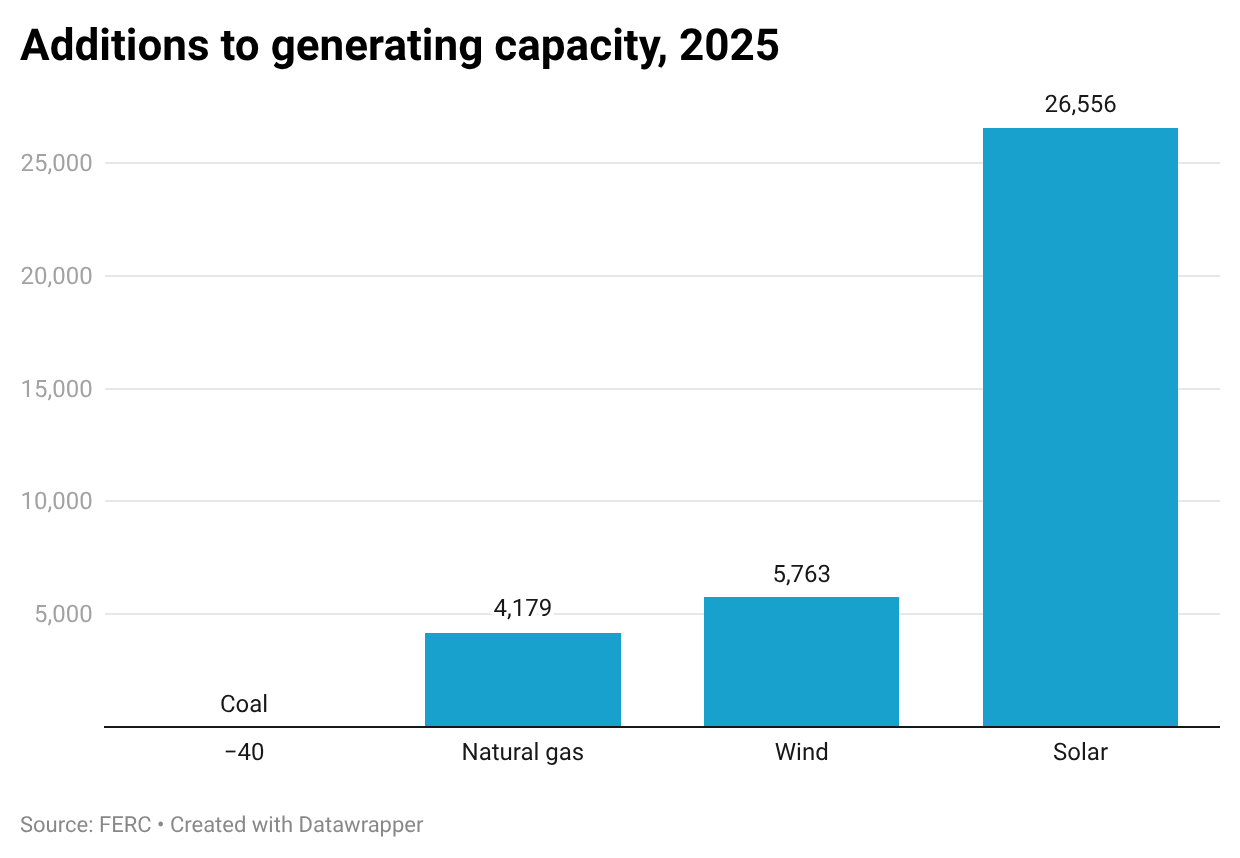
Yet Trump is trying to block renewable energy projects any way he can and has just invoked wartime authority to spend $700 million subsidizing new power plants using “clean, beautiful” coal.
Why? Part of the answer is big money. Fossil fuel interests were huge supporters of Trump in 2024. In fact, the Trump presidency is itself the result of billions of dollars spent by the Koch Brothers and others to corrupt and undermine U.S. political institutions -- the Supreme Court very much included. Anti-renewable, pro-fossil fuel policy is their reward, along with the destruction of the Voting Rights Act and the adoption of Project 2025.
What’s the other part? Clean energy has become a bogeyman in the culture wars: mining and burning coal are considered “manly” activities, while renewable energy is portrayed as woke and effeminate. Real men don’t worry about black lung and airborne particulates, let alone climate change.
So a combination of big money and fragile male egos drives Green Derangement Syndrome. And the same is true for both the Iran debacle and the refusal to learn from the catastrophe by turning to Ukraine.
Why was the United States so unprepared for the Iranian drone threat, despite the obvious successes of Ukrainian drones against Russia? Well, as investigative reporters delve into the story, I would urge them to follow the money.
America has a huge, highly profitable defense industry, dedicated to a suite of technologies that are rapidly being rendered obsolete, as $4 million Patriot missiles, that take years to build, are being used to shoot down $35,000 Shahed drones that can be manufactured in months.
So it wouldn’t be surprising if defense-industry interests are playing a significant role in the Trump administration’s refusal to admit that the rules of war have changed — the same way that fossil fuel companies have campaigned against the new realities of energy technology. After all, a deal with drone-savvy Ukrainians would mean less money going to US defense contractors.
While this is speculative, we do know that recognition of the drone revolution in warfare by Trump and his inner circle would require that they abandon their fantasy of macho military power. Pete Hegseth has been purging the military of capable officers — especially Blacks and women — he considers insufficiently loyal to Donald Trump. Beyond loyalty tests, however, he has exalted the importance of “warrior ethos” and physical fitness, as if he were leading the 300 Spartans rather than a high-tech military in an age of drones and electronic warfare.
It’s true that Hegseth, perhaps chastened by his abject failure in Iran — why does he still have a job? — recently admitted that the U.S. has learned from Ukraine. But an admission that his entire conception of war was wrongheaded will be a step too far for him.
Likewise, Trump himself is in love with big, expensive weapons as symbols of virility and power. He’s still pushing for giant “Trump-class” battleships, even though they would be sitting ducks in a modern war. Just ask the Ukrainians, who have used missiles and naval drones to force Russia’s once-vaunted Black Sea Fleet to cower in a fortified refuge. But Trump doesn’t want to give up his fantasies.
And he’s especially unwilling to learn from Ukraine. After all, he cut off aid to Ukraine in a hissy fit over Zelenskyy’s well-deserved reputation for heroism, only to he humiliated by Ukraine’s refusal to lose its war. Admitting that he needs Ukrainian help would be a further humiliation.
As I said earlier, there is no mystery about why Trump refuses to make a drone deal with Ukraine. Never mind the national interest. In military strategy as in energy policy, Trump is betraying America in the service of money and machismo.

Sem comentários:
Enviar um comentário