
After the award-winning 2014 Cowspiracy documentary funded by Leonardo di Caprio and the 2017 What The Health film, now we have from the same people Seaspiracy – out on Netflix since 24 March 2021. Cowspiracy argued that animal farming is the primary source of environmental destruction, What The Health advocated for a plant-based diet. Seaspiracy, directed by Ali Tabrizi, a British film-maker using the same narrative framework as Cowspiracy, aims a powerful “J’accuse!” to the sustainable seafood movement and suggests that the Dolphin Safe and Marine Stewardship Council labels probably do not give the assurances consumers expect.
George Monbiot, the noted environmentalist and Guardian columnist who was given a prominent role in the documentary as a commentator, described it on Twitter as “a brilliant exposé of the greatest threat to marine life: fishing”.
Should we believe everything this sleuth-like, conspiratorial documentary says and stop eating seafood? The title – a playful pun on conspiracy and piracy – certainly suggests we’re in for a ride.
The public instantly fell in love with the film, it’s been praised by celebrities including “Rock legend” Bryan Adams, the vegan Canadian musician who urged his 655,600 Twitter followers to watch it and stop eating fish. The fishing industry reacted even before the documentary came out, seeing it as an “unacceptable and dishonest attack”, in short, “vegan propaganda”. It was also bashed by the New York Times: The reviewer did not like the documentary’s format because “its rhetorical methods distract from its revelations.”
The New York Times reviewer is right, the Seaspiracy message tends to get “lost in a sea of murky conspiratorial thinking”. We get told about having to use spy cameras in China, about threats to the filmmaker’s life, about having to evade pursuit from Japanese police and Yakuza types, accompanied by the sound of wailing sirens and flashing lights in the night. We see whales killed in a sea that turns deep red with blood, bycatch dropped into the sea like so much garbage and shark fins slashed with razor-sharp knives.

But the “conspiratorial thinking” is not the only problem. It looks now like the Seaspiracy film will go the way What The Health did, accused by experts and investigative journalists of confusing causation with correlation, cherry-picking science studies, using biased sources, distorting study findings, and relying on “weak-to-non-existent data”.

Seaspiracy is Going Viral on Social Media
The theatricality doesn’t help the argument. But it helps to get the public’s attention.
In just one week since its release, Seaspiracy is already among Netflix’s top 10 most popular films and TV shows in several countries worldwide. Loved by Rotten Tomatoes’ audience with a 92 percent score, it is doing equally well on the online platform IMDb, achieving an 8.6 rating.
Everywhere on Social Media, it’s a roaring success. The film’s account on Instagram has already over 300,000 followers (with only 31 posts). On Twitter, the #seaspiracy hashtag grows by the hour with comments like “horrible”, and “I shall never eat fish again”. But also benefits from additional evidence, like this one from The Economist:
And the film necessarily gives a boost to vegans:
Not a Success with Film Participants or the Fish Industry or Fisheries Experts
Seaspiracy is obviously not a success with the people featured in the film, as the U.K. Guardian reports. And surely not a success with Japan, singled out as the country most responsible for overfishing, environmental destruction of the ocean floor caused by trawling, and near collapse of bluefin tuna stocks, not to mention the massacre of dolphins and sharks. They all complained that they have been misrepresented with distorted interviews and that the reported statistics are “erroneous”.
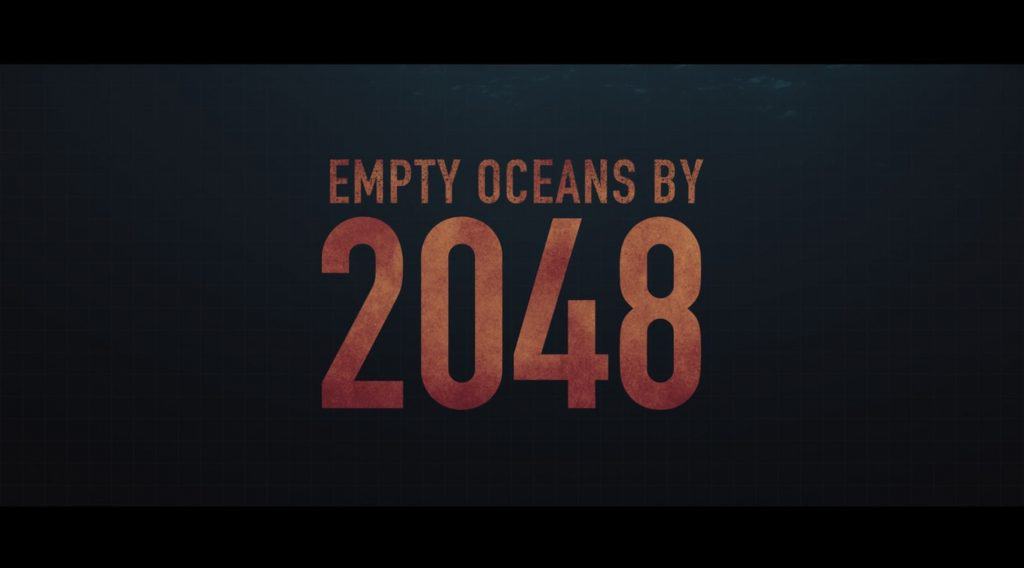
There is a lot to be said about the use of wrong data. Most notably, the prediction that the oceans will be emptied of life by 2048: Coming from a 2006 study, it has been contradicted by the forecast’s author as long ago as 2009. As environmental statistics go, that’s pretty old stuff.
More importantly, the film makes the claim that sustainable fishing is impossible. This is patently wrong, we do have examples of fisheries recovering from depletion, as for example, the Patagonian toothfish in the Southern Oceans. Predictably, a spokesperson for the Marine Stewardship Council slammed the film because of its many “misleading claims”, in particular, that there is no such thing as “sustainable fishing” and that MSC certification was “not credible”:
“Some of the known problems that the film highlights – bycatch, overfishing and destruction of marine ecosystems – are precisely the issues the MSC certification process is designed to address. The positive impact of our programme has been recognised by the United Nations, as being important in helping to support ocean biodiversity. Fisheries that ask to go through an MSC assessment work hard to reach the verifiable and science-based standards we set, ensuring that fish stocks are conserved for future generations.” (highlight added)
Yet the situation is far from rosy. Cases of successful sustainable fisheries are unfortunately extremely rare due to wrong-headed political choices (more about that later). Look at the finding of the FAO, one of the United Nations major technical agencies whose Fisheries Department monitors 600 marine fish stocks: only 3% were found to be underexploited and 20% moderately exploited. More worryingly, 52% are fully exploited, 17% are overexploited, 7% are already depleted. Just 1% of fish stocks are recovering from depletion. That is regrettably very little, but it does show that it can be done.
Unsurprisingly, the filmmaker defended himself from resorting to wrong data, pointing out instead to the overall trend, which is indeed towards fisheries destruction, something that nobody denies. “We are not scientists,” he said, “nor did we claim to be. Despite there being some confusion about this particular projection [that the oceans will be depleted by 2048], the overall state of fisheries is in severe decline.”
Perhaps they are not scientists, but it behooves documentary filmmakers to go to the best, most reliable sources of information in order not to mislead his audience – and that clearly was not done. Remarkably, they never contacted the FAO Fisheries Department, even though it is the recognized world fisheries data center.
When it comes to the interviews, misleading presentations abound. For example, the scene in Seaspiracy with Mark Palmer, the associate US director of the International Marine Mammal Project (IMMP – operated by the Earth Island Institute). When asked whether his group could guarantee that no dolphins were ever killed by any tuna fishery around the world, he said (rightly upset):
“The film took my statement out of context to suggest that there is no oversight and we don’t know whether dolphins are being killed. That is not true. […] I answered there are no guarantees in life but that drastically reducing the number of vessels intentionally chasing and netting dolphins as well as [putting] other regulations in place, that the number of dolphins that are killed is very low”
In a follow-up statement, David Phillips, the director of the IMMP, added:
“The Dolphin Safe tuna programme is responsible for the largest decline in dolphin deaths by tuna fishing vessels in history. Dolphin-kill levels have been reduced by more than 95%, preventing the indiscriminate slaughter of more than 100,000 dolphins every year.” (highlight added)
As might be expected, the filmmaker denied Palmer’s allegations:
“We asked if they could guarantee ‘Dolphin Safe’ tuna is in fact dolphin-safe, to which Mark Palmer replied that they could not guarantee it and that their observers, who oversee these fishing vessels some of the time, can be bribed. The label does not say 95% dolphin-safe. It claims to be dolphin-safe. In the words of Mark Palmer himself, ‘one dolphin and you’re out’. This wasn’t taken out of context.”
What is obvious to me is that the interview derailed: Mark Palmer didn’t realize he was talking to someone trying to set up a trap to shock viewers. See it for yourself and you’ll realize that Palmer thought he was expressing himself as one always does in private, acknowledging that nothing in the world is perfect. And of course, nothing ever is.
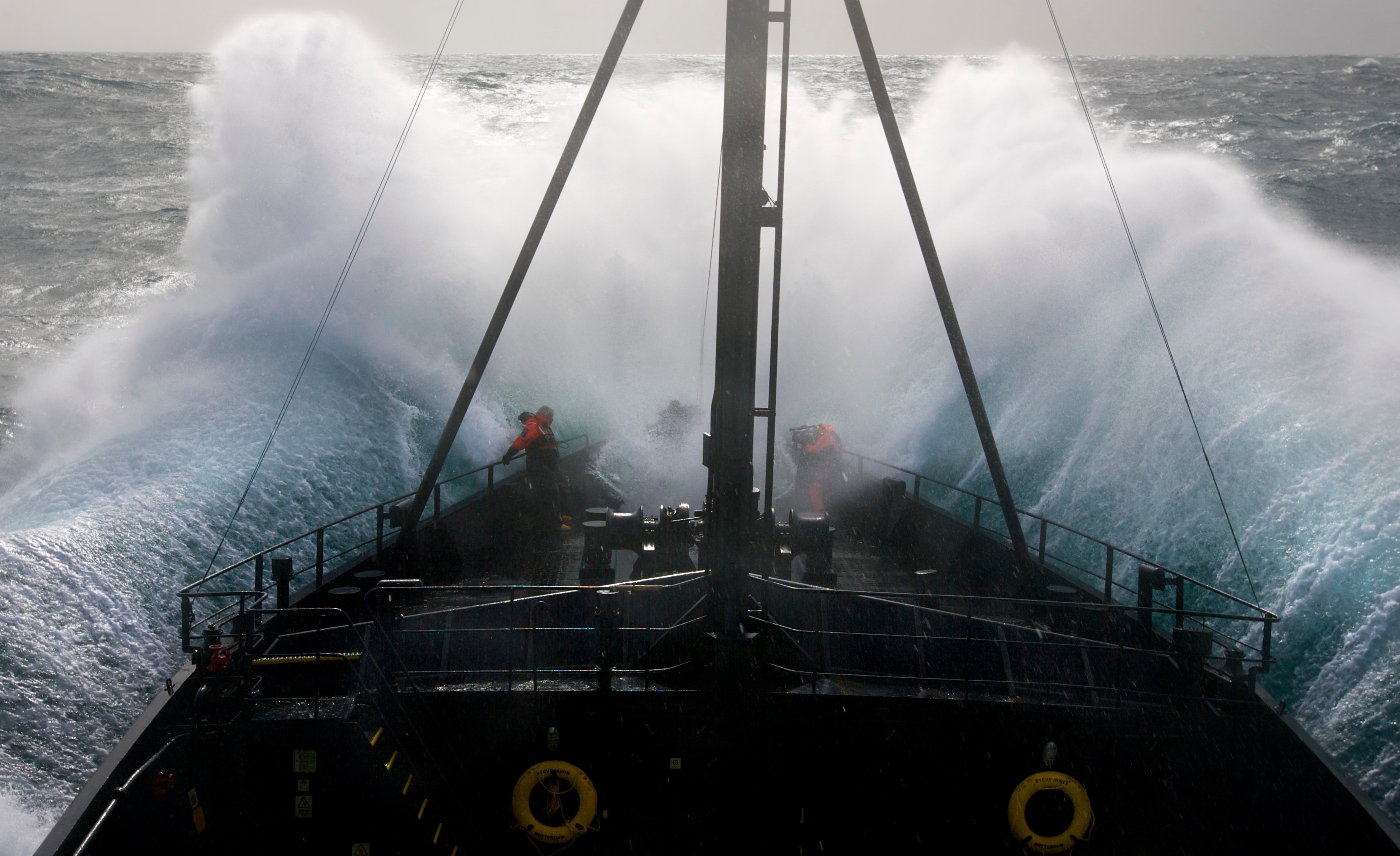
Because to stop that kind of deadly “by-catch”, you’d need 24/24 hour military oversight. Not yet feasible in the high seas, no government will commit to that kind of military marine operations. Theoretically, it’s not impossible, as the hunting with the Sea Shepard and others organized by Captain Paul Watson and his Sea Shepherd Conservation Society demonstrate. The film appropriately catches Captain Watson’s crew in some highly charged night scenes of stopping with rifles a Chinese vessel engaged in illegal fishing off the coast of West Africa. But the numbers of illegal vessels caught this way are woefully small.
A Systematic Lack of Sound Information
Incredibly, instead of going to the one source of information everyone who is serious about fisheries turns to, i.e. the FAO Fisheries Department, the filmmaker went to a European Commission manager. Unsurprisingly, the interviewee was a bureaucrat and not an expert. Nothing was learned.
Seaspiracy reports not only on the fisheries’ destruction of the environment but also covers aquaculture which now provides nearly half the seafood the world consumes. Both salmon and shrimp farming get their fair share of accusations, ranging from organic pollution, sea lice and diseases caused by overcrowding the fish in cages to mangrove destruction caused by setting up shrimp farms on the coasts.
Cherry on the cake: fish farmers have the unfortunate habit of sourcing their feeds without checking provenance, and the cheapest source comes from the “ghost ships” associated with human rights abuses in Southeast Asia. On those ships, poor migrants work as modern-day slaves, unpaid and captive for up to 8-10 years, unable to go back home and many meeting an untimely death
Again, Seaspiracy’s coverage is scanty and incomplete. Yet there’s plenty of information available. Even though the film presents it as something it “discovered”, slavery on the high seas has been around a long time – we reported it here on Impakter in 2015. The issue is in fact well known to the international community, particularly in FAO that has repeatedly called the world’s attention to it.
Here as elsewhere, the filmmakers didn’t dig into the issue or find the right sources of information. They merely reproduced a heartbreaking interview with a victim whose face, for obvious safety reasons, was kept in the dark. But such a scene of course has a far greater shock value for viewers than would a serious interview with an expert engaged in fighting slavery on the high seas or trying to save mangroves.
Seaspiracy simply ignores (or won’t report) the efforts of groups such as the Seafood Task Force, which aims to ensure that shrimp producers stop sourcing their feeds from the infamous slave “ghost ships”. The Task Force started working in the Thailand shrimp sector and plans to expand to India, Indonesia and Vietnam; it brings together a coalition of agents across the supply chain – from fisheries companies to shrimp feed manufacturers and retailers – to jumpstart “pre-competitive collaboration” to address the abuses.
All these are serious people dedicated to fighting for a more sustainable world, but none got a chance for an interview. If you really want to know about high seas modern-day slavery, this short 2019 video (6 minutes) from German DW tells you far more about it than does Seaspiracy:
So is Seaspiracy really an “anti-fishing”, anti-sustainability and anti-UN documentary?
It pretends to be much more. What it is saying is that industrial fisheries are killing life in the oceans and that with dead oceans that no longer act as carbon sinks, every species, humans included, will face extinction.
This is unquestionably the strongest claim made by the film. And this focus on the pivotal role of the oceans is in line with what The Economist reminds us in the above-mentioned Tweet: one hectare of seagrass is 15 times more effective in removing carbon dioxide from the atmosphere than one hectare of rainforest. So why should we worry so much about the Amazon and forget about the oceans?
To get the answer, look no further than what commercial fisheries are doing, with Japan and China leading the pack. With modern means and scandalous labor practices, they have destroyed artisanal fishing that traditionally provided a decent livelihood to coastal communities everywhere. And with a devastating trawling technology, they have laid waste to the oceans’ floor, caused systematic overfishing and depleted fish stocks.
Industrial fisheries have been running loose and must be stopped. Yet that is not what Seaspiracy tells you.
Seaspiracy Ends on The Wrong Message
The film’s call is simplistic: Don’t eat fish, go vegan because sustainable fishing is impossible. This is not the solution: (1) people like to eat fish, it’s good for them and they won’t stop; (2) numerous fishing communities depend on fishing for their survival; (3) who says sustainable fishing is impossible?
Sustainability makes sense and can be actuated, successful examples of fisheries recovering from depletion exist – too few, certainly, but the science is there. The problem is a lack of political will, something the United Nations has grappled with over the last 40 years. Because this whole issue – despite what the documentary says – is nothing new.
For example, back in 2016, on World Fisheries Day, FAO and ILO together with the Vatican in a meeting in Rome condemned illegal fishing and forced labour on the high seas, “urging collective action” and announcing that enough countries had ratified Convention 188 so that it would enter into force in November 2017. The Convention ensures that workers in the fishing sector benefit from safety and health care, written work agreements, and social security protections.
In addition, another important tool, the FAO Port State Measures Agreement (PSMA) was activated to put an end to the problem of illegal, unreported and unregulated fishing (IUU). Vessels involved in illegal fishing are frequently the same ones where human rights abuses run rampant. The PSMA — the first-ever binding international treaty targeting IUU — is intended to trigger more port inspections of fishing vessels, allowing for better controls to ensure that the human rights of crews are not violated.
When announcing the news, FAO wrote:
“Both ILO Convention 188 and the PSMA — combined with increased international awareness on labour and social issues — provide FAO, ILO and partners in industry, labour and fisherfolk communities and consumers associations with a new momentum to end instances of labour abuses in the entire value chain.”
Why such a modest claim, why should these regulations only provide “a new momentum”? Simply because if FAO and ILO member countries (all members of the United Nations) do not apply the regulations, then the regulations are a dead letter. And the FAO and ILO secretariat staff that has been battling for decades for a more just and sustainable world (since the 1980s to be precise) knows well how partner countries pretend to apply regulations and then don’t.
It’s a huge political issue: Threats to the environment, like the one from the commercial fisheries to the survival of the oceans, need a strong international response. And that response is not coming simply because UN regulations have no teeth. What is required is to give the UN regulatory power – the power to carry out inspections, report on results and act on them via the application of fines and other internationally agreed-to punitive means to force straying member countries to hold the line.
The argument that the high seas cannot be logistically regulated, that it is out of reach of military marines, does not hold water. Think of it, fish catches must always reach their market and that’s where the FAO/ILO regulations are applied: They catch the illegal fishing not at sea but when the fish is brought to land, in the ports.

The main point is this: We have now in hand the necessary regulations and the methods, in short, we know how to deal with the problem and make all fisheries – and the oceans – sustainable. All that remains to do is to force rogue governments to apply them. And that means voting in the right politicians, those with a mandate for sustainability. And give the UN real legal binding powers – not just nice pieces of paper, as is the case now.
Likewise, sustainability in aquaculture can easily be achieved if the existing fish health regulations are enforced (including over the feed – again FAO is the source of information here). All that is needed is strict oversight to ensure the fish remains healthy and good for human consumption.
In short, politics are stopping us from dealing with the problem. Vested interests of the fishing industry, corruption of governments and bureaucracies, consumer ignorance and citizen indifference to environmental and human rights issues: They all have a role to play. And to stop eating seafood as Seaspiracy suggests won’t cut it.
It’s in fact irrelevant, powder in the eyes of the beholder. What Seaspiracy should have done was go to the original source of information, FAO. And it should have taken time to explain to the viewers the complexity of the problem, the real political barriers we are facing. So if there’s a political will to do it, it can be done.
Bottom line, it all comes down to politics and that is the message Seaspiracy should have made and failed to make.


