domingo, 17 de janeiro de 2010

Livro "Ecossistemas e Bem-Estar Humano - Avaliação para Portugal do Millennium Ecosystem Assessment"

O livro representa um esforço único no contexto científico nacional ao reunir o trabalho de mais de 60 cientistas, que de um modo integrado avaliaram o estado dos ecossistemas em Portugal.

A cerimónia de lançamento do livro foi presidida pelo Secretario de Estado do Ambiente, Prof. Doutor Humberto Rosa. O evento decorreu na livraria Escolar Editora, no edifício C5 da Faculdade de Ciências da Universidade de Lisboa, no dia 13 de Janeiro.

Capa e sinopose do livro aqui

Ricardo Garcia faz uma crónica sobre este livro, publicada no Público dia 14 de Janeiro, com o título sugestivo (e verdadeiro!)
"Deterioração dos ecossistemas pode trazer problemas ao país, da economia ao lazer
Aqueles que consideram que preservar a natureza é coisa dos "malucos do ambiente" estão redondamente enganados. Um livro lançado ontem, em Lisboa, deixa claro que se os ecossistemas do país se deteriorarem - e alguns estão neste caminho - estaremos em maus lençóis em vários domínios, da economia ao lazer.

"Ecossistemas e Bem-Estar Humano" é uma versão completa e actualizada da contribuição portuguesa para o Millenium Ecosystem Assessment, um programa lançado pela ONU no princípio desta década e concluído há quatro anos. O objectivo do programa global era o de avaliar como as actividades humanas interagem com os serviços que os ecossistemas colocam à nossa disposição - como produção de água ou de alimentos, protecção dos solos ou simplesmente fonte de receitas [ver nota minha 1] .

Uma das formas de se olhar para estes serviços é através do seu valor, em dinheiro. "É uma linguagem que todos percebem", afirma Henrique Miguel Pereira, do Centro de Biologia Ambiental da Universidade de Lisboa, que coordenou o livro com mais três investigadores - Tiago Domingos (Instituto Superior Técnico), Luís Vicente e Vânia Proença (ambos também do Centro de Biologia Ambiental).

Por exemplo, a água mobiliza um sector, o do abastecimento, que vale dois mil milhões de euros por ano. E para que haja água de qualidade é preciso que vários ecossistemas estejam a funcionar bem, como as florestas, os aquíferos subterrâneos ou os rios e albufeiras.

Facilmente se atribui uma cifra a outros serviços dos ecossistemas. O livro salienta que as florestas representam dez por cento das exportações nacionais. Além disso, retiram dióxido de carbono da atmosfera, ajudando a conter o aquecimento global. Em 2007, absorveram 5,44 milhões de toneladas de CO2, um serviço que vale 65 milhões de euros, aos valores de hoje do mercado do carbono.

Até uma paisagem pode ter um valor. Um estudo mencionado no livro concluiu que os portugueses estarão dispostos a pagar 30 euros para preservar um terço das estepes cerealíferas de Castro Verde, no Alentejo - o habitat de excelência de algumas aves ameaçadas, como a abetarda. Ajustando-se o resultado para toda a população e para as áreas em causa, chega-se ao valor da preservação de um hectare por ano em Castro Verde: 446 euros, muito mais do que a compensação a que os agricultores têm direito (73 euros por hectares) para conservarem aquele ecossistema.

A agricultura, porém, é um dos sectores que saem mal na fotografia do livro. A maioria das práticas actuais está a degradar o solo, sem conseguir suprir as necessidades de alimentação do país. "Temos muito poucos bons solos e não temos feito um bom trabalho para os proteger", diz Henrique Pereira.[ver nota minha 2]

Na água, o cenário é ambivalente. O país tem-na em excesso: apenas dez por cento da precipitação é utilizada. Mas, quando chega ao solo, a água confronta-se com a poluição, sobretudo a difusa, proveniente da agricultura, por exemplo. Resultado: 40 por cento dos rios e albufeiras estão poluídos.

Com isso, a água - uma matéria-prima gratuita - passa a ter um custo adicional à sua captação e distribuição: o tratamento. "Se os sistemas estiverem degradados, vamos ter de gastar mais", afirma o investigador.

O livro conclui que há uma tendência para se utilizarem mais "os serviços de produção" dos ecossistemas, em detrimento dos "serviços de regulação e culturais". Isto só poderá ser contrariado "se a sociedade se aperceber das implicações negativas para o bem-estar humano". Esperemos que sim.

[1] Esta publicação esclarece melhor todos os aspectos da estrutura conceptual da Avaliação do Milénio dos Ecossistemas
[2] Esta apresentação, de 2004, mostra já uma enorme preocupação desta equipa pelo estado da arte nas florestas, agricultura e da água em Portugal

Ler ainda:
Entrevista a Henrique Miguel Pereira, Confagri, 2004

sábado, 16 de janeiro de 2010

Ted Talk- "No-Impact Man" ou "Homem Sem Impacto"


Colin Beavan decide eliminar completamente o seu impacto pessoal no ambiente durante o próximo ano.

Significa comer comida vegetariana, comprar apenas alimentos locais e desligar o frigorífico. Isto também significa que não há elevadores, televisão, carros, autocarros ou aviões, produtos de limpeza tóxicos, eletricidade, consumo de materiais e lixo.

Não há problema – pelo menos para Colin – mas ele e a sua família vivem em Manhattan. Assim, quando a sua mulher Michelle, uma viciada em café expresso e apaixonada por compras, e a sua filha de dois anos são arrastadas para a luta, o Projeto Sem Impacto tem um impacto imprevisto.

Numa postagem no BioTerra, em 2007, fiz uma notícia sobre a incrível aventura deste nova-iorquino (agora em filme). Entretanto já muitos mais indivíduos fizeram o seu próprio No-Impact e agora o movimento cresceu e temos acessível em Inglês um enorme portal, multifuncional e que recentemente lançou um conjunto educativo gratuito e muito bom, disponibilizando materiais que os levam a reflectir e agir em defesa do meio ambiente de forma positiva. A ver, ler e partilhar: Colin Beavan

sexta-feira, 15 de janeiro de 2010

Educação Ambiental através do humor e jogos


A acreditar nos dois vídeos da Fun Theory, promovida pela VW, o humor e o jogo parece cativar e mobilizar mais pessoas para limpar parques, reduzir lixo e a reconhecer a sua importância. O público aderiu e os vídeos são surpreendentes. Veja-os.


quarta-feira, 13 de janeiro de 2010

Documentário- Mind Control: America's Secret War


This powerful History Channel video documents how for decades, top secret government projects worked virtually non-stop to perfect means of controlling the human mind. Though for many years the government denied that these projects even existed, the details have long been preserved in thousands of pages of now declassified government documents reluctantly released through the Freedom of Information Act. LSD and electroshock therapy in huge doses given to unsuspecting citizens are only a part of this unbelievable program.
Mind Control blows the lid off years of chilling experiments, drawing on the above-mentioned declassified documents and interviews with some of the victims. Hear from John Marks, the author of In Search of the Manchurian Candidate, who originally broke the story of the CIA's abuses by unraveling the mysteries contained in the declassified documents. Learn how many of the most important records pertaining to the mind control experiments were destroyed by the director of the CIA in an attempt to prevent the details from ever being known.
The projects involved brutal, at times lethal experiments on thousands of unsuspecting citizens in direct defiance of law, all ethical codes, and basic human rights. Interviews with top psychiatrists, lawyers, and victims send chills up the spine. U.S. intelligence agencies spent millions on these mind control projects with a goal of creating programmable human spies. A former head of the American Psychiatric Association, Dr. Ewen Cameron, is one of many highly respected doctors who erased the personalities of thousands of unsuspecting victims, while many in the profession simply turned a blind eye.
Among the captivating interviews presented, you will hear from Dr. Cameron's patient Linda McDonald, whose past was completely erased by a brainwashing experiment. Linda describes how at age 25 she was placed on a psychiatric ward and subjected to horrific shock and drug treatments which completely erased her mind and brought her back to being the mental age of an infant. She, along with many other victims of these highly unethical programs eventually won a significant lawsuit against the U.S. government for the crimes committed against her by one of the most respected doctors of psychiatry in the world.

For an abundance of reliable, verifiable information further describing these and other top secret mind control programs and their impact on our world, see our Mind Control Information Center available here. For an excellent two-page summary of the top secret government mind control projects, including numerous, verifiable footnotes, click here.

terça-feira, 12 de janeiro de 2010

Actas da Conferência sobre Decrescimento Económico, Paris 2008


Divers mouvements se développent en France et en Italie afin de promouvoir la Décroissance soutenable. Plusieurs politiciens ont repris le terme décroissance.La question se pose aux chercheurs : après des années d'améliorations de l'éco-efficacité, le supposé découplage entre la dégradation écologique et la croissance économique reste insuffisant. Plus de 150 personnes ont répondu à notre appel. Nous avons reçu plus de 90 contributions. 140 personnes venant de près de 30 pays ont participé à ce colloque. Les actes complets de la Conférence peuvent être téléchargés ici.
Vous pouvez aussi télécharger les résumés, les présentations et les articles séparément en cliquant sur les liens figurant dans le programme ici 

Taille du fichier : 6,1 Mo, 322p, il contient des contributions en sciences sociales, économiques, physiques et environnementales

finalement, vous pouvez télécharger la déclaration finale

segunda-feira, 11 de janeiro de 2010

As minhas leituras: Earthdance- Living Systems in Evolution, por Elisabet Sahtouris

EARTHDANCE:
Living Systems in Evolution
Elisabet Sahtouris [página pessoal]

Um livro de filosofia e ecologia excepcional. Editado originalmente em 1999, representa uma actualização de toda uma Escola baseada na Ecologia Profunda, Teoria Quântica, Evolução, Teoria dos Ecossistemas e na Teoria de Gaia. Podemos descarregar em pdf e depois ler com calma ou então em linha. Transcrevo aqui o preâmbulo e os agradecimentos da Autora.

Introduction
This book is a work of philosophy in the original sense of a search for wisdom, for practical guidance in human affairs through understanding the natural order of the cosmos to which we belong. It bears little resemblance to what we have come to call philosophy since that effort was separated from natural science and became more an intellectual exercise in understanding than a practical guide for living.
To find meaning and guidance in nature, I integrated my personal experience of it with those scientific accounts that seemed to best fit it. From this synthesis, meaning and lessons for humanity emerged freely. I wrote the original version in the peaceful, natural setting of a tiny old village on a small pine-forested Greek island, where I could consider the research and debates of scientists, historians, and philosophers, then test them against the natural world I was trying to understand.
Putting into simple words the specialized technical language of scientists and winding my way through labyrinths of philosophic prose, I gradually simplified the story of the origins and nature of our planet within the larger cosmos, and of our human origins, nature, and history within the larger being of this planet.
The Gaia hypothesis, now Gaia theory, of James Lovelock and Lynn Margulis -- the theory that our planet and its creatures constitute a single self-regulating system that is in fact a great living being -- is the conception of physical reality in which my philosophy is rooted. Quite simply, it makes more sense on all levels -- intuitive, experiential, scientific, philosophical, spiritual and even aesthetic and ethical -- than any other conception I know. And I have come to believe, in the course of this work, that this conception contains profound and pressing implications for all humanity.
To ensure that my vision of evolution and history would stay simple and in clear focus, I kept telling its essence and more than a few of its particulars in something of the style of an ancient storyteller during many social evenings among my Greek village friends. I also wrote the story for children before I set about an adult version. To my surprise, these deliberate exercises in simplicity proved more difficult than writing for professional audiences, for in stripping our intellectual language to the essence of what is being said, we must be very sure that essence is really there, really coherent. Science has been a process of differentiating our knowledge into an incredible wealth of precise details, but these details become ever more disconnected from one another and cry out for integration into coherent wholes. I have no doubt I will be accused of oversimplification, and perhaps rightly so, as one pays for scope in lack of detail and precision.
Friends and colleagues have asked me now and then why I insist on dealing with all evolution, even all the cosmos, to discuss human matters; why I don't narrow my scope to workable proportions. My answer is that context is what gives meaning, and a serious search of context is an ever-expanding process leading inevitably to the grandest context of all: the whole cosmos. As the nested contexts for the human story -- especially the context of evolution -- became clearer to me, they revealed a simple but elegant biological vision of just why our human condition has become so critical and what we might do to improve it.
Other people ask why I'm so eager to save humanity when it is proving such a social and ecological disaster. To this I can only answer that, as far as I can see, every healthy living being or system in nature has evolved survival oriented behavior, and I do not exclude myself from this natural health scheme. Of course my purpose is to show how we are straying from this course, so that we may correct the deviations.
I can no more proclaim the worldview arising from my work "reality" than can any particular philosopher working at creating a meaningful worldview in any particular place and time, drawing on the scientific and historical knowledge of that place and time. Philosophy is an intensely personal search that one hopes will have relevance to others, will be validated by their experience, will offer them some insight and guidance, or will at least stimulate them in their disagreement to search further on their own.
Yet a work of philosophy also reflects the broader context and search of a culture at a particular stage, and the biological evolutionary viewpoint of this book reflects a broadly emerging pattern of search for our origins and direction in nature -- a reawakening of that search begun by the original pre-Socratic philosophers, indeed that goes further back to the roots of religion -- the search for re-ligio, for "reconnection" with our origins in the nature or cosmos that gave rise to us and within which we continue our co-creation.
Paradoxically, our self-imposed separation from nature by way of an `objective' mechanical worldview during the past few millennia has led to the scientific knowledge that makes it possible to understand and reintegrate ourselves into nature's self-organization patterns. It has also brought us to a stage of technology that permits us to share our discoveries and our understanding planet-wide in no time at all, to work together as a body of humanity with hope of transcending our present crisis in a far healthier and happier future for ourselves and all the rest of Earthlife.
Although the original version of this book was done in relative isolation and without funding, I am indebted and profoundly grateful to many teachers and friends, from the forest creatures with whom I spent my earliest years to Jim Lovelock and Lynn Margulis, who have not only informed and inspired me in this work, but who gave me invaluable encouragement, confidence, and opportunities in seeing the work through.
As this edition goes to press, scientists have recognized that we are well into the sixth great extinction of species -- the first caused by a single species, and proceeding more rapidly even than the last one, which eliminated the great dinosaurs sixty million years ago because Earth's climate changed dramatically under the impact of a huge meteor in the Caribbean basin.
There is no doubt that we humans continue creating the chaos of ongoing disaster and denial. As I say in Chapter 19, Onondaga Chief Oren Lyons, at the Earth Summit known as Rio '92, reminded us that the passengers of the Titanic refused to believe that marvel of modern technology could go down on its maiden voyage. It did, of course, go down, as its extremely popular and timely Hollywood version reminded us. We may be a true biological marvel as a hi-tech human species, but we have truly gotten ourselves into serious trouble.
A healthy world for all cannot easily rise from total destruction; rather it must be formed now, in the midst of the chaos we create. Such a "new world order," I am again and again reminded by the indigenous elders I have listened to intently for their deep understanding of sustainability, must be based on a very old world order -- on the laws of nature as indigenous people understand them, on laws they have been trying to teach us for a very long time: laws of balance, harmony, of giving back in full measure for all you take; laws designed to insure survival at least seven generations into the future.
The conclusion reached in this book, that we humans as a species must learn quickly to fit our lifestyles harmoniously into the rest of nature, is what led me to seek out indigenous knowledge between editions. Indigenous peoples never saw themselves as anything but an integral part of nature, and so they tend to know much more about that than do industrial peoples. Once, I listened to Jeannette Armstrong, a wise woman of the Okinakan nation, which still lives traditionally, speaking in detail about her peoples' understanding of nature. It was precisely the understanding I had gained in the course of writing this book far off on a Greek island -- confirmation to me that I had gotten it right, for her people had the credibility of thousands of years of careful and scientific observation.
The immense knowledge of nature, the coherent philosophies and the non-technological achievements of indigenous people impressed me deeply. They have observed us far more carefully than we them. Their conscious choice not to develop technological consumer societies gave me a more balanced view of human life and some valuable insights I have shared in several new chapters. One of these insights -- that there can no more be one true science than one true religion -- was difficult to share with fellow scientists of my industrial culture. Almost invariably, they responded, "You mean indigenous knowledge; they don't have science, there is only one science." I have therefore taken some care to show that indigenous people do indeed have science, by our own definitions, as a deep aspect of their cultures (see Chapter 19).
The great effort of industrial culture to fragment our world, to separate science, religion, art, economics, politics and other social practices, has long seemed to me very costly in blinding us to their interrelations. Today this is expressed in such problems as the difficulty of integrating the economy with ecology, two words meaning, in their original Greek, the organizational design and the operating principles of a household. Clearly they should never have been separated! How could it have happened? As Janine Benyus pointed out in a speech at a Bioneers conference, we assigned one group of people -- biologists - to study how other species make a living, and another unrelated group of people - economists - to determine how humans make a living. Only now do we see interest in living systems enter the world of business.
Indigenous people have also taught me that good science can be done without tearing it out of the seamless and sacred fabric of life. They have always known this is a participatory universe, which Western scientists only now acknowledge. We simply cannot observe it without changing it. Indigenous people understand science and spirituality as aspects of the same reality -- an intelligent, conscious continuum with physical and non-physical aspects. They are aware that all parts and aspects of nature are in constant non-physical communication. In Western science, physicists only now discover the deep connectedness and dialogue of everything through concepts of non-locality and zero-point energy.
One crisp cool day in a cornfield on the barren Hopi reservation in Arizona, I watched Martin Gashweseoma -- now almost the only traditional Hopi elder still alive -- kneeling in the dry earth beneath a brilliant blue sky, picking dried ears of blue corn from the stubby plants rustling in a cold late fall wind. Martin continues to live in the sacred way, with only the digging stick given by the Great Spirit, Maasau, along with instructions for living in peace and simplicity. He stood up to greet me and began speaking of the eviction of the faithful Hopi from Old Oraibi in 1906 with only what they could carry, of his uncle Yukiuma who led his people like Gandhi on this exodus, even going to the White House to plead their cause, of the sacred stone tablets his uncle later entrusted to him, of the way they were taken away, of the Day of Purification the white man, Bahanna, is bringing on, with all its suffering as the world becomes desert....
What he said was familiar, as I had been working with the Hopi and other Indians for years by this time, but it took on new significance as it burned into my heart on that crisp, clear fall day, the azure sky blazing behind him as we talked. Three men who had brought me to the field stood behind me and never interrupted; Martin did not take his eyes from mine during our long interchange. It was an experience of total undivided attention I, as a woman, had never experienced from men. The intense energy flowing between Martin and myself created a dense whirlpool tangible even to me, a person normally insensitive to such things. A whirlpool, as I say in this book, is a living entity, and Martin wove such an entity.
Anguish flowed through me at his despair. He spoke of his and other elders' failure to reach the White Brother - our dominant culture - with the Hopi Prophecy, and of how even the Hopi were abandoning their traditions, their cornfields. The Hopi prophecy, discussed at the beginning of Chapter 19, says the world as we know it will end if the White Brother does not heed the Sacred Way of the Red Brother and share his mission to develop technology in that spirit.
His truth - the need for cooperation between the ways of indigenous and industrial peoples to build a sustainable world - is vital to our survival. I found this same truth over and over again in many teachings I have gained from indigenous peoples in many places. I explored this truth in many contexts, from presidential commission dialogues on a sustainable human future in Washington D.C. to traditional villages in the Peruvian Andes, where I spent a whole year studying the cosmology and science of ancient Andean cultures, and now in the corporate world of multinationals, the most powerful organizations humanity has yet devised.
This corporate world, which, along with science and technology, is often blamed for current crises, is suddenly in crisis itself because of a dramatic new development on the human scene: the Internet. From my perspective as an evolution biologist, this World Wide Web of information exchange is a kind of fractal biology repeat pattern of the first version, built by bacteria billions of years ago, as we see in Chapter 4. And just like its ancient counterpart -- still in existence among bacteria worldwide today - it is a self-organizing living system.
Chapter 20 describes the inherent organizational design and operating principles of this new Web as those of living systems, and that is why it has the power to force corporations with organizational designs and operating principles based on command and control mechanics to change their ways -- to become more like living systems themselves. As corporations, which play such a powerful determining role in our species' behavior as a whole, understand and abide by the sustainable survival principles of living systems, their goals will come into harmony with our personal and community goals. We can then mature like other species from competition to cooperation and build a human society in which the goals of individual and community, of local and global economy, of economy and ecology are met. This will shift us out of crises and into the happier, healthier world of which we all dream. Let it be so!
Elisabet Sahtouris, September, 1999
Thank you.
Special thanks to Jim Lovelock and Lynn Margulis for the original inspiration to write this book and for their encouragement over the years, also to Teddy Goldsmith for creating the Gaia Seminars in Cornwall. My deep appreciation to Dave Ratcliffe and Rebecca Lord for putting the book on the Web while it was out of print, and to Bruce Bigenho for his tireless efforts with the second edition. My gratitude extends as well to Nancy Larson for the original cover photo and to my son, Philip LaVere, for the cover design. Lastly, but certainly not least, I thank with a smile my sometimes enigmatic but wonderful editor at Praeger, Jeremy Geelan, for his great enthusiasm and effort to get Earth Dance out there!

sábado, 9 de janeiro de 2010

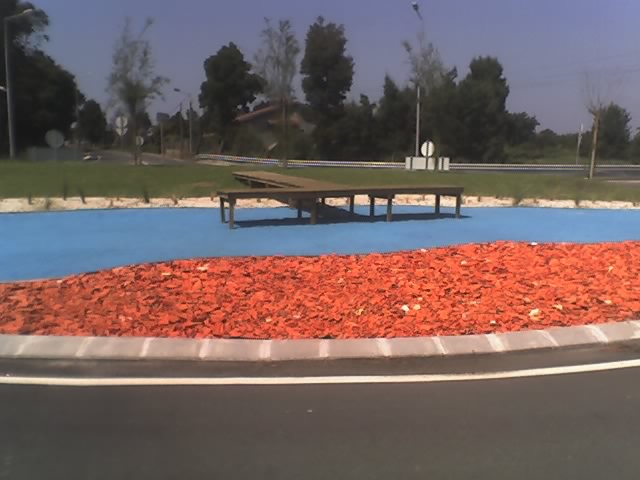
As mais belas rotundas de Portugal [via Dolo Eventual ]


As mais belas rotundas de Portugal


Consciente de que em Portugal é escassa a existência de rotundas;
Consciente de que muitas das rotundas deste país são seguras e realmente necessárias;
Consciente do louvável esforço épico do autarca português na construção de rotundas e respectiva inauguração;
Consciente de que a construção de rotundas é factor de crescimento económico, gerador de emprego e dinamizador do sector da construção;
Consciente das verdadeiras obras de arte concebidas no interior destes espaços circulares;
Consciente de que o condutor português é exímio na circulação automóvel em rotundas, contrariamente ao que sucede nos obsoletos cruzamentos;
Consciente de que o dinheiro gasto em rotundas e sua manutenção é bagatelar;
Consciente de que o dinheiro gasto em rotundas e sua manutenção é dinheiro que prepara um futuro melhor
o Dolo Eventual, orgulhosamente, vem por este meio anunciar a sua nova rubrica
As mais belas rotundas de Portugal
onde o leitor poderá admirar e maravilhar-se com a utilidade, as cores, a criatividade, a perfeição geométrica, a diversidade, o espaço envolvente, o fascínio, a beleza, a raridade, a magia destas magníficas e ímpares construções circulares e assistir à atribuição final dos dolosos prémios As mais belas rotundas de Portugal.

As mais belas rotundas de Portugal - as postagens [última actualização: 29 Abril 2009]

As mais belas rotundas de Portugal :

Mário Almeida [A Fonte], Luís Bonifácio [Nova Floresta], Rui Branco [Adufe 3.0], Jorge Ferreira [Tomar Partido e Comunicar a Direito], Nelson Peralta [A Ilusão da Visão], Francisco José Viegas [A Origem das Espécies], Pedro Correia [Corta Fitas], Nuno Gurosan [Espaço Cinzento], André Azevedo Alves [O Insurgente], António David [Pensatempos], Pedro Soares Lourenço [Arcadia], Tomás Vasques [Hoje há Conquilhas, Amanhã não Sabemos], Rui Costa Pinto [Mais Actual], Vítor Figueiredo [Textos Para Tudo], Edgar [The Sock Gap], Susana Barbosa [Arestália], Octávio Lima [Ondas3], Ana Ferreira [Simples Sopros], António Rosa [Postais da Novalis], Portus Alacer [Em Portalegre Cidade], João Correia [Hardblog], Sam [Serendipity], Maria Lua [Maria Pudim], António Paulino [Pra Melhor], Manuela Ramos [Dias com Árvores], Carla Bagão, Cristina Santos, Nuno Ricardo Rocha, Nuno Pereira [Nuno Pereira e o Mundo], NG [Palhaço], Paulo Amaral, Alfredo Caiano Silvestre [ACR Santa Cita], Ana Costa, Ana Sofia [Latitudes&Longitudes], José Paulo Andrade [José Paulo Andrade], Pedro Ponte, O Padrinho [Máfia da Cova], JG [Terra do Sol], Tata [Alandro al], Blogmora, Domingos Carreiro [Descontos Iguais], Ana Vasconcelos, Manuel Pinto, António Machado [O Despropósito], Hélder Guimarães [Filtragens], Vilória Irrisória, Rui Insano Oliveira [Gritos Insanos], Questiuncas Mor [Questiuncas], Mónica Pimentel [Buraco da Rotunda], Eduardo Cerqueira, Perdigão [Vida das Coisas], Sara Nóia, M. Vitória Nobre.


sexta-feira, 8 de janeiro de 2010

Pequeno e-livro sobre o importante papel das ONG na desburocratização

Pequeno e-livro sobre o importante papel das ONG na desburocratização e seu contributo para uma democracia mais "viva"
Eduardo Szazi1
1. General Overview

The strong democratic winds that have been sweeping the world since 1989 have ushered in an unprecedented situation, in which electoral democracies now constitute the predominant form of government in the world. They have also given birth to a steady increase in the people’s participation in public affairs, either at the national or international levels, through private bodies, the so-called non-governmental organizations (NGO).

The expression “non-governmental organizations” was coined by the UN Charter, which, by establishing consultative procedures with NGO (article 71), assumed that the public sphere was larger than the governmental one and that not only States had the legitimacy to be heard in matters affecting the needs and aspirations of citizens. This hard law recognition of the importance of NGO was followed by several similar provisions in the constitutive acts of intergovernmental organizations, both at the universal or regional levels, in UN programs and funds, as well as in other innumerous soft law instruments of interaction between governmental bodies and NGO.

Hence, one could affirm that, at the international level, pluralism is admitted by the UN Charter not only between States, but also beyond States, since the Charter acknowledged that individuals could interact with the United Nations not only through governmental organizations but also through non-governmental organizations. Some authors suggest that since 1945, the world has been living in a neo-Grotian era insofar as the principles of solidarity have been invigorated.2 Not coincidentally, this is the same period in which we observed the appearance of NGO, which experienced a particularly explosive growth after the adoption of the International Covenant of Civil and Political Rights (1966) and the end of the Cold War (1991), both pivotal moments for civil society at large. NGOs are new forms of people’s participation in public affairs, which, at the international level, is based on the international legal personality of individuals and the right of people to self-determination, which has expanded way beyond the de-colonization process of the last century to encompass the right to democracy.

However, if democracy provides the contractual arrangement framework for the participation of people in public affairs through periodic elections, it is currently not capable of ensuring the same participation in the operation of the “social contract,”3 the Weberian bureaucracy that controls the State and has replaced parliament as the main norm-creator. Civil society must control the State. Liberalism has adopted rationalism to ensure fundamental freedoms, hence, it is civil society that commands the State and not the other way around. The primacy of individual rights over State rights was acknowledged by international law when it accepted restrictions to the States’ sovereignty if this proved necessary to ensure human rights. Hence, bearing in mind Thomas Franck’s ideas on Democratic Governance,4 it is necessary to add another building block to his model, through mechanisms of civil participation to hold bureaucracy accountable for its acts and decisions.

One aspect merits attention: Even in solid democracies, while NGO cannot be regarded as being equal to civil society,5 they are relevant non-state actors in the contemporary world that have demonstrated a great capacity for gathering collaborators and financial supporters.6 Any survey will show that NGO are actively involved in the shaping of public policies, whether at a local, national, or international level, addressing a broad range of issues, sometimes as supporters but also—and more often—as critics.7

segunda-feira, 4 de janeiro de 2010

Curiosidade e criatividade: eis como Ernst Haeckel e taxonomia e ecologia se transformaram na imagem de um blogue sobre ecologia

Criar um banner é algo realmente difícil, ainda mais para um blogue sobre ecologia. Muitos podem ficar chocados da primeira vez que olham, pois esperavam algo com árvores, todo verde e encontram um bicho estranho, todo a preto e branco. Procuramos através do banner ressaltar o carácter da Ecologia como ciência e não como ela é tratada pelos média e pela blogosfera. Definindo Ecologia:
O estudo científico da distribuição e abundância de organismos e as interacções que determinam a distribuição e abundância
Begon M. et al. (2006)
O animal que introduz o nosso blogue é um equinoderme, mais especificamente chamado Astrophyton darwinium. Diferente de uma estrela-do-mar, os ofiúros (classe Ophiuroidea) apresentam braços mais bem demarcados do disco central e não evertem seu estômago para alimentação. A espécie do desenho acima é chamada popularmente de estrela-cesta devido ao seu modo de alimentação. Eles saem do seu esconderijo no início da noite, direccionando os seus tentáculos para a correnteza. Quando um animal toca nos seus braços (crustáceos ou poliquetas em geral), o apêndice se enrosca para capturar a presa. A ingestão é feita normalmente depois do período nocturno, sendo as presas transferidas dos braços para a boca. Os ofiúros tem até um sítio bem completo sobre eles, além de uma base de dados mundial sobre o grupo.

Basket star
Crédito: derekkeats

Mas porquê este animal e não outro? Bem, não é um desenho qualquer. Ele foi feito pelo naturalista alemão Ernst Haeckel, que entre outros feitos, cunhou a palavra Ecologia. Desenho do Haeckel descrevendo uma espécie que tem darwinium no nome. Algo poderia se encaixar melhor na nossa proposta?

Referências:
Begon M, Townsend CR e Harper JL (2006). Ecology, from individuals to ecossystems. Blackwell publishing. Quarta edição.
Brusca RC e Brusca GJ (2002). Invertebrates. Sinauer. Segunda edição.
Ernst Haeckel (1904). Kunsformen der Natur.

Fonte: Discutindo Ecologia

Mais textos sobre Ernst Haeckel

Biografia
Quebra-Nozes de Tchaikovski
Livro

sábado, 2 de janeiro de 2010

The Longest Way 1.0 — One Year Walk–Beard Grow Time Lapse

The Longest Way 1.0 - one year walk/beard grow time lapse from Christoph Rehage on Vimeo.


Selecção de melhor vídeo do ano
Christoph Rehage set out on his 26th birthday, in November 2007, to walk all the way from China to Germany. He also decided not to cut his hair or shave his chin. Starting off as shiny as Mr. Clean, he took daily photos of himself (at arm's length) to show the progress toward a furry head and face.

Rehage quit walking after 11½ months (and 4,646 km) and decided to go back to school. At home, he cut together a time-lapse video of his self-portraits, and it quickly caught on. What starts out with a melancholy title sequence, setting up an archetypal young man's spiritual quest through travel, kicks into gear at 45 seconds when the flip book of shots begins and his beard starts to grow. But it's more than just a shot-a-day look at his face; what's happening in the scenes around him makes this special. In less than three minutes, we get a unique traveler's tale — the joy, anguish, exhaustion and even heartbreak of a young man walking, very much alive.

COP15 / MOP5 – Copenhaga, Dinamarca (dezembro de 2009)


A Conferência de Copenhague marcou o ápice de um processo de dois anos de negociações sobre um novo acordo climático, iniciado no Plano de Ação de Bali em 2007. A COP15 / MOP5 reuniu um público sem precedentes na história das Conferências, contando com a presença de cerca de 115 líderes mundiais e mais de 40.000 pessoas representando governos, organizações não governamentais, imprensa, entre outros.

O encontro era considerado de elevada importância, pois tinha como principal objetivo estabelecer as metas de redução de gases de efeito estufa para o período que se inicia em 2013 e poderá ser finalizado em 2020; o período final também será definido pelas partes em COP. Porém, o que de fato aconteceu foi uma sucessão de discussões e embates entre países e blocos de países, que resultou no documento Acordo de Copenhague, formulado por Brasil, China, Índia, África do Sul e Estados Unidos, produzido em negociações por um grupo de 26 países.

Alguns países que não participaram da negociação, como Bolívia, Venezuela, Nicarágua, Cuba, entre outros, não aceitaram o acordo alegando que se tratava de um processo pouco transparente e antidemocrático.

Diante desse impasse, a solução foi a decisão da COP de “tomar nota” do Acordo de Copenhague, que significa que o texto deve funcionar como um adendo à COP, sem caráter decisório nem juridicamente vinculante como se esperava. Sua situação não oficial fez com que suas implicações práticas fossem questionadas, uma vez que o acordo não foi formalmente adotado como resultado das negociações.

O documento, baseado no Quarto Relatório de Avaliação do IPCC, aponta a necessidade de manter o aumento da temperatura global abaixo de 2°C, porém não menciona o corte nas emissões necessário para isso. Segundo ele, as Partes incluídas no Anexo I comprometem-se a implementar, individual ou conjuntamente, metas quantificadas de emissões para 2020 a serem submetidas ao Secretariado até 31 de janeiro 2010.

No Acordo de Copenhague, os países desenvolvidos assumiram o compromisso de contribuir com US$ 10 bilhões ao ano, entre 2010 e 2012, e com US$ 100 bilhões ao ano a partir de 2020, para a mitigação e adaptação dos países mais vulneráveis frente aos efeitos das mudanças climáticas. O texto ainda reconhece a importância de reduzir as emissões produzidas pelo desmatamento e degradação das florestas e concorda em promover incentivos positivos para financiar tais ações com recursos dos países desenvolvidos.

Apesar do esfriamento das negociações na tentativa de estabelecimento de um novo acordo global, essa Conferência teve como pontos positivos um reposicionamento da política climática dos EUA, a participação de países como o Brasil, a Índia, a África do Sul e a China assumindo, pela primeira vez, metas públicas de redução de emissões de CO2, e a participação paralela de empresas, organizações da sociedade civil e governos.

Saiba mais sobre a COP15


sexta-feira, 1 de janeiro de 2010

O meu desejo para 2010 - muita Paz e mais Justiça Climática - Peace on Earth and Climate Justice

Letra
Heaven on Earth, we need it now
I'm sick of all of this hanging around
I'm sick of the sorrow,
I'm sick of the pain
And I'm sick of hearing again and again
That there's never gonna be peace on Earth
Hello from London
And if the darkness is to keep us apart
And if the daylight feels like it's a long way off
And if your glass heart should crack
If for a second you turn back
Oh no, be strong

Oh, oh Walk on, walk on
What you got, they can't steal it
No, they can't even feel it
Walk on, walk on Stay safe tonight
You're packing a suitcase for a place none of us has been
A place that has to be believed, to be seen
You could have flown away
A singing bird in an open cage
Who will only fly, only fly, for freedom

Oh, oh Walk on, walk on
What you got, they can't deny it
Can't sell it, or buy it
Walk on, walk on
Stay safe, tonight
Yeah I know it aches
And how your heart it breaks
You can only take so much

Walk on
You gotta leave it behind
We've got to leave it behind
All that you fashion
All that you make
All that you build 
All that you break
All that you measure 
All that you deal
All you count on two fingers
And all that you steal
You've got to leave it behind

Halle, halle
You've got to leave it behind hallelujah
Halle, hallelujah
See you when I get home
See you when I get home, sister
Halle, hallelujah (Halle), home...
Halle, halle Halle, hallelujah
Halle, hallelujah Halle, halle

Justiça Climática- um e-livro actual e fundamental, lançado e preparado e que foi apresentado na COP15

Contours of Climate Justice:: Ideas for shaping new climate and energy politics Critical Currents no. 6, October 2009 Free E-Book Download the whole book here

The climate is changing in more ways than one. Not only has an increasing concentration of greenhouse gases in the atmosphere been wreaking havoc in the global biosphere, but there has also been a significant shift in the way the issue of climate change is debated. From being a marginal ‘green’ issue, it is now central to many a strategy for political and economic renewal. It has become ever more obvious that the image of climate change is not primarily the drowning polar bear, but the farmer without crops, the migrant without a home, the worker with no future. Yet international efforts to slow climate change have not advanced much beyond square one. At the same time, a new global cycle of struggle seems to be coalescing around the call for climate justice, in particular in the mobilisation around the 15th international climate summit in Copenhagen.

This collection of interventions contributes to the re-conceptualisation of climate change as an issue of justice, and therefore also of struggle. It further seeks to strengthen a climate and energy politics that will prove capable of solving the multiple crises that climate change is part of, and which humanity is facing.