segunda-feira, 27 de setembro de 2021

Water A Biography | Giulio Boccaletti in conversation


Humanos, animais e plantas precisam de água para sobreviver, tornando a água talvez a substância mais essencial em nosso planeta. Desde as primeiras civilizações, os humanos tentaram capturar e controlar a água, e o desenvolvimento das sociedades desde então acompanhou o desenvolvimento da infraestrutura hídrica.

Hoje, apesar de todos os nossos avanços, a humanidade é indiscutivelmente tão dependente – e à mercê – da água hoje como nunca. Mas com as mudanças climáticas ameaçando interromper o fornecimento e o acesso à água, precisamos aprofundar nossa compreensão do significado que a água tem e reconhecer como ela molda e moldará nossas instituições, nossas políticas e nossas vidas.

Giulio Boccaletti é um físico treinado e especialista em clima, e seu novo livro Water: A Biography viaja através do tempo e através das geografias para explorar como a água moldou a civilização humana. “A história da água”, ele escreve, “é realmente uma história sobre nós”.

Giulio estará conversando com Bianca Shead, que é a Diretora de Comunicações Estratégicas Globais da The Nature Conservancy.

Com as mudanças climáticas já acontecendo, Giulio e Bianca vão levar você a considerar como empresas, instituições e a sociedade em geral devem responder às mudanças na distribuição e disponibilidade de água. “Gerenciar a água envolve muito mais do que implementar um portfólio de soluções”, diz ele. “Trata-se das regras que uma sociedade se dá para conviver em uma paisagem em movimento.”

Se você já usou água, este evento pode lhe interessar.

Página Pessoal

domingo, 26 de setembro de 2021

Prosecutors in Mexico seeking arrest warrants for more than 30 scientists


Mexico’s scientific community has reacted with outrage after the country’s chief prosecutor requested arrest warrants for 31 scientists, researchers and academics on accusations of organised crime, money laundering and embezzlement – charges that could land them alongside drug cartel kingpins in one of the country’s most notorious lockups.

A judge at the maximum security Altiplano prison – from which Joaquín “El Chapo” Guzmán escaped in 2015 – denied granting the arrest warrants on Wednesday. But the federal prosecutor immediately announced plans to pursue arrest warrants for the third time.

The university professors have been accused of violating a law that prevents members of an advisory board from receiving money from a government science fund. But that law was passed in 2019, and the scientists got the $2.5m years earlier when it was apparently legal. Those involved have denied the funds were illegal or misused.

The National Council on Science and Technology (Conacyt) has described the reaction to the arrest warrant applications as “a concerted wave of disinformation,”, which was spreading “terror” in the scientific community.

“They’re talking about funds from illicit origins, and they’re calling it organised crime when it was a [non-profit] organisation,” said Alma Maldonado, investigator with the public research centre Cinvestav. “It’s completely absurd to take it to this level of accusation.”

But scientists and academics describe the prosecutions as an attempt at silencing them as the administration of President Andrés Manuel López Obrador imposes punishing austerity policies and pays short shrift to science in his response to the pandemic.

“The message from Conacyt and the prosecutor to the national academic community is strong and clear: if you think differently than us, it’s best you find something else to do,” wrote political economist Javier Aparicio in the newspaper Excélsior.

The criminal accusations have deepened the acrimony between López Obrador administration and the scientific community. AMLO, as the president is known, liquidated public trusts for funding academic and scientific research, alleging corruption and claiming the money would pay for pandemic relief.

Elena Álvarez-Buylla, the Conacyt director, often attacks “neoliberal science”, and said in 2020 it “produced the most splashy, and perhaps most useless advances, like reaching the moon”.

The attempt to criminally charge academics with organised crime offences raised questions in Mexico of prosecutorial priorities – at a time when the president, who often criticises journalists and scientists, promotes a policy of “hugs not bullets” and seldom has a cross word for drug cartel bosses.

The Associated Press contributed to this story

Is Parkinson's disease related to pesticide use?

Around the world, more and more people are developing Parkinson's disease. Many of those affected have chosen a supposedly healthy life among orchards or vineyards in the countryside. Is the disease related to the use of pesticides?

"I noticed it when I was pruning roses," says Ulrich Elixmann. His hands simply didn't function anymore. He saw a doctor, and the diagnosis was a shock: He had Parkinson's disease. Today he is 60 years old. He takes 13 tablets a day, does gymnastics, occupational therapy and speech therapy. He hopes to slow the disease’s progression, and with it symptoms like a stiffening face and increasing immobility. But the questions continue to gnaw at him: Why Parkinson's, and why him? And, why are other gardeners and farmers he knows also being affected?

The number of Parkinson's sufferers has doubled since the 1990s. In Germany alone, about 400,000 people have it. Researchers like Bas Bloem of Radboud University in the Netherlands are calling it a pandemic: They say it is the fastest growing neurological disease in the world, and is mainly caused by environmental factors. Heavily industrialized countries are particularly affected, as numerous chemicals find their way into the environment.

Despite more and more studies showing increased risks among agricultural workers and gardeners, Parkinson's is not yet considered an occupational disease in Germany. But in France, things are different. Sylvie Berger is from Bordelais, one of Europe's major wine-growing regions. Particularly high amounts of pesticides are used there, and Sylvie Berger, who worked in viticulture, now suffers from Parkinson's. If she receives an occupational disability pension, then why not the gardener Ulrich Elixmann from Germany?

Sweden’s green dilemma: can cutting down ancient trees be good for the Earth?

The country’s model for managing its trees is bad for biodiversity… and political unity


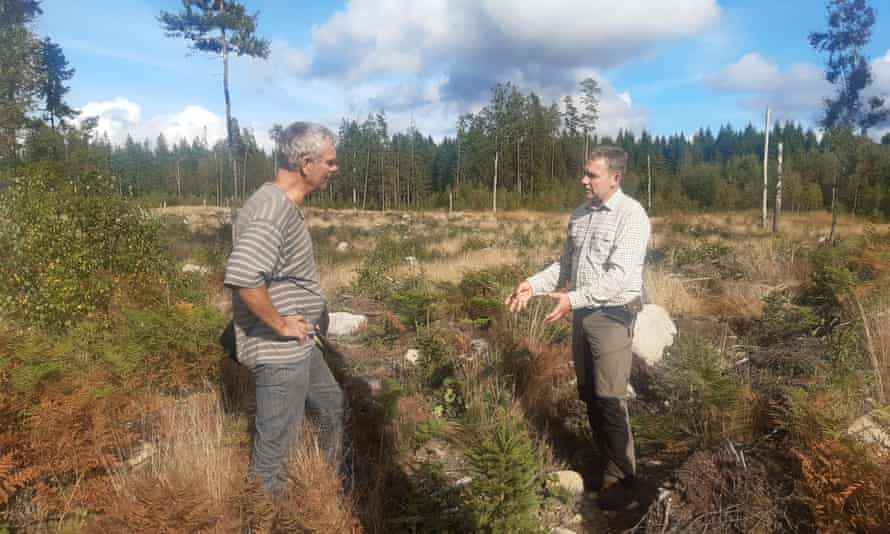
Forest-owner Lars-Erik Levin doesn’t seem like an environmental villain. As he walks through his 80 hectares (198 acres) of woodland in southern Sweden, he identifies goldcrests by their song, points out a cauliflower fungus and shows off the aspen in his wood that grouse feed on. This year he’s picked more than 100kg of chanterelles, and even more bilberries.

But this is the part of the property he manages by so-called continuous cover forestry, where he claims he only fells trees with trunks so thick his arms no longer reach around them. On the other side of his farmhouse is a wide-open space the size of two football pitches, where, five years ago, he cut the forest to the stumps. Little now remains but grass, brambles and young, waist-high spruce. “Animals and birds have legs and wings, they can move a little,” he protests when asked what happened to the wildlife.


“It’s devastation,” says Magnus Bondesson, the local officer for the Swedish Forest Agency. “It’s not a good thing for biodiversity.”

Clear-cutting, which sees a total forest area a third larger than Greater London cut to the stumps every single year in Sweden, has become a hot political issue after the EU’s new forest strategy in July said the technique should be “approached with caution”, and called for Sweden to protect more of its forests.

Forestry policy now threatens to cause clashes with the European commission. The Swedish prime minister, Stefan Löfven, declared in a speech to open parliament that “forestry should not be micro-regulated from Brussels”.

The issue also threatens the stability of the government. The Social Democrats’ coalition partner, the Green party, last week refused to bow to a demand from the agrarian Centre party that forest owners’ property rights should be strengthened, as part of its price for propping up the government.

The issue is even splitting the Green party itself, pitting those who see forest products as key to the green transition against those who want to protect biodiversity at all costs.

“I describe it as environmental destruction, the most serious damage ongoing in Sweden,” says Rebecka Le Moine, the radical runner-up in last year’s party leadership contest.


Unlike many other European countries, Sweden doesn’t have a limit on clear-cutting, meaning that areas of more than 100 hectares can be cut in one go, threatening the 2,000 red-listed species connected to the country’s forests.

Le Moine is pushing for her party at its October annual meeting to agree to campaign to limit clear-cuts to two hectares and to push for wood used for heating to no longer be seen as renewable and instead taxed on its emissions, like coal or oil.

Maria Gardfjell, the party’s spokesperson for forestry, who is herself a forest owner, admits the party is split.

“If you look at Green party policy, it’s not the same as what you hear from Rebecka. It’s not our politics,” she says. “If you take the climate law we have in Sweden, you can see that we will need forest products as substitutes for plastic, clothes, fuel and almost every kind of product. But at the same time, we need to promote biodiversity much, much more.”

At Levin’s property, he walks from his lush, natural-seeming continuous cover forest into an area he planted with spruce 30 years ago. It comes as a jolt. Whereas in the continuous cover area there are trees of all ages, and in places thick undergrowth, the spruce forest is a plantation, the trees evenly spaced and all the same age.

“It’s a bit darker,” says Bondesson, while admitting the biodiversity is “zero”. “It wouldn’t feed a mouse. There are mushrooms, but that’s it.”

It is by no means clear, however, which of the two areas brings the most environmental benefits. “The spruce produces 15 to 20 cubic metres of wood per hectare, and the continuous cover produces five,” Bondesson explains. “Do you understand the climate impact? How much more carbon dioxide it is binding?”

According to Tomas Lundmark, a professor of forestry ecology management at the Swedish University of Agricultural Sciences, harvesting forests by clear-cutting and then growing trees of the same age absorbs on average as much as 30% more carbon than if you use continuous cover forestry techniques, perhaps even more.

Trees of 30 to 50 years old, like those in Levin’s plantation, absorb the most carbon, while forests untouched for hundreds of years tend to be small net emitters. This is the industry’s big claim to sustainability.

The total volume of standing wood stored in Sweden’s forests has more than doubled over the past century, and its forests are still sucking in a net 48 million tonnes of CO2 a year as they grow, with another 7 million stored in long-lasting products made from Swedish wood. Taken together, that’s enough to make Sweden effectively carbon neutral.

Magnus Bondesson of the Swedish Forest Agency, right, inspects Levin’s clear-cut land.

Magnus Bondesson of the Swedish Forest Agency, right, inspects Levin’s clear-cut land.

The supply of biofuels in Sweden has tripled over the past 40 years and now provides close to 30% of its total energy supply, helping to halve its consumption of petroleum products.

For Le Moine, however, none of this is worth the loss of natural habitat. “They keep telling us we have more forests now than we had before,” she says. “My reply is we have never had this many trees, but never had such a little amount of forest ecosystem.”

Levin says that when he started doing continuous cover forestry back in the 1980s, he had to keep it secret as it was viewed by the forest agency as “almost criminal”. Now, others are starting to see the advantages. “It’s beautiful,” he says. “It produces money, and berries and mushrooms, and it’s not so much work.”

But he grimaces at the mention of activists such as Skydda Skogen (Save the Forests) or Le Moine, who want clear-cutting stopped altogether.

“They don’t understand that the forests have to do their work,” he says. “They need to make money for people, so that people can live out here.”

Música do BioTerra: Matt Berninger - One More Second


The last time we were together
Lately it feels like forever
And the way we talked last night
It felt like a different kind of fight

Baby, don't lie to me
You know that I believe you
Always in love with someone
If it ain't me, come on
Just give me a little more time
Give me a little bit of warning
Baby, I'm gonna be fine
When I figure out where I'm going

Why can't you just tell me what you're doing here?
Don't be cruel, if you're leaving me, just do it right here
'Cause the way you looked at me this morning
It gave my weak heart warning

Give me one more second to dry my eyes
Give me one more day to realize
Smoke's in our eyes or in the distance
Either way, we're gonna miss it
Give me one more year to get back on track
Give me one more life to win you back
Smoke's in our eyes or in the distance
Either way, we're gonna miss it
When it's gone

Baby, don't lie to me
You know that I believe you
Always in love with someone
If it ain't me, come on
Just give me a little more time
Give me a little bit of warning
Baby, I'm gonna be fine
When I figure out where

Pegadas de 23.000 anos são as primeiras evidências de atividade humana encontradas nas Américas


As pegadas encontradas no Parque Nacional White Sands, no Novo México, fornecem as primeiras evidências inequívocas da atividade humana nas Américas e oferecem uma visão da vida há mais de 23.000 anos.

As pegadas foram formadas em lama macia nas margens de um lago raso que agora faz parte de Alkali Flat, uma grande praia em White Sands. Pesquisadores do US Geological Survey dataram essas trilhas usando datação por radiocarbono das camadas de sementes acima e abaixo dos horizontes da pegada. As datas variam em idade e confirmam a presença humana ao longo de pelo menos dois milênios, com os rastros mais antigos datando de cerca de 23.000 anos atrás, o que corresponde ao auge do último ciclo glacial – tornando-os as pegadas humanas mais antigas conhecidas nas Américas.

A pesquisa, publicada na Science em 24 de setembro, foi conduzida por cientistas de Cornell, da Bournemouth University, do National Park Service, do US Geological Survey e da University of Arizona. As pegadas em White Sands foram descobertas pela primeira vez por David Bustos, gerente de recursos do parque.

Para investigar o local, a equipe foi pioneira em técnicas geofísicas não invasivas lideradas por Thomas Urban, cientista pesquisador da Faculdade de Artes e Ciências e do Laboratório Cornell Tree Ring.

“A detecção e a geração de imagens com tecnologia não destrutiva expandiram muito nossa capacidade de estudar essas pegadas notáveis ​​em seu contexto mais amplo”, disse Urban. “Agora temos uma janela única para a vida durante o Pleistoceno na América do Norte, e este novo estudo fornece a primeira evidência inequívoca de uma presença humana sustentada nas Américas milhares de anos antes do que a maioria dos arqueólogos pensava ser provável.”

As pegadas contam uma história interessante de como era a vida naquela época, dizem os pesquisadores. A julgar pelo tamanho, as pegadas foram deixadas principalmente por adolescentes e crianças mais novas, com um adulto ocasional. Rastos de animais – mamutes, preguiças gigantes, lobos terríveis e pássaros – também estão presentes.

“É um local importante porque todos os rastos que encontramos mostram uma interação de humanos na paisagem ao lado de animais extintos”, disse a co-autora Sally Reynolds, da Bournemouth University. “Podemos ver a coexistência entre humanos e animais no local como um todo e, ao sermos capazes de datar com precisão essas pegadas, estamos construindo uma imagem maior da paisagem.”

A arqueologia tradicional depende da descoberta de ossos e ferramentas, mas muitas vezes pode ser difícil de interpretar. As pegadas humanas fornecem evidências inequívocas de presença e também de comportamento. Anteriormente, pensava-se que os humanos entraram na América cerca de 16.000 anos atrás, após o derretimento das camadas de gelo norte-americanas, que abriu rotas de migração. No entanto, as pegadas mostram uma migração muito anterior de humanos para as Américas.

“As pegadas deixadas em White Sands dão uma imagem do que estava acontecendo, adolescentes interagindo com crianças e adultos”, disse Matthew Bennett, da Universidade de Bournemouth, que ajudou a conduzir o estudo. “Podemos pensar em nossos ancestrais como bastante funcionais, caçadores e sobreviventes, mas o que vemos aqui também é a atividade lúdica e de diferentes idades se unindo. Um verdadeiro insight sobre essas pessoas primitivas.”

Saber mais:

sábado, 25 de setembro de 2021

Cartoon- Covid-19

Bem cedo deparei com esta imagem. A mensagem é triste, mas de uma importância enorme. Muitos voltarão para as escolas faltando um pedaço em seus corações, então todos, professores, colegas, funcionários, alunos e uns com os outros terão que ter mais carinho, mais paciência, mais amor ao próximo, pois todos estarão de alguma forma machucados. Triste, mas a vida continua e aí teremos que ser e ter mais empatia.
Que o AMOR prevaleça.
autor : desconhecido

It’s shocking to see so many leftwingers lured to the far right by conspiracy theories


It’s an uncomfortable thing to admit, but in the countercultural movements where my sympathies lie, people are dropping like flies. Every few days I hear of another acquaintance who has become seriously ill with Covid, after proudly proclaiming the benefits of “natural immunity”, denouncing vaccines and refusing to take the precautions that apply to lesser mortals. Some have been hospitalised. Within these circles, which have for so long sought to cultivate a good society, there are people actively threatening the lives of others.

It’s not just anti-vax beliefs that have been spreading through these movements. On an almost daily basis I see conspiracy theories travelling smoothly from right to left. I hear right-on people mouthing the claims of white supremacists, apparently in total ignorance of their origins. I encounter hippies who once sought to build communities sharing the memes of extreme individualism. Something has gone badly wrong in parts of the alternative scene.

There has long been an overlap between certain new age and far-right ideas. The Nazis embraced astrology, pagan festivals, organic farming, forest conservation, ecological education and nature worship. They promoted homeopathy and “natural healing”, and tended to resist vaccination. We should be aware of this history, but without indulging what Simon Schama calls the “obscene syllogism”: the idea that because the Nazis promoted new age beliefs, alternative medicine and ecological protection, anyone who does so is a Nazi.

In the 1960s and 70s, European fascists sought to reinvent themselves, using themes developed by revolutionary anarchists. They found fertile ground in parts of the anarcho-primitivist and deep ecology movements, which they tried to steer towards notions of “ethnic separatism” and “indigenous” autonomy.

But much of what we are seeing at the moment is new. A few years ago, dreadlocked hippies spreading QAnon lies and muttering about a conspiracy against Donald Trump would have seemed unthinkable. Today, the old boundaries have broken down, and the most unlikely people have become susceptible to rightwing extremism.

The anti-vaccine movement is a highly effective channel for the penetration of far-right ideas into leftwing countercultures. For several years, anti-vax has straddled the green left and the far right. Trump flirted with it, at one point inviting the anti-vaxxer Robert F Kennedy Jr to chair a “commission on vaccination safety and scientific integrity”.

Anti-vax beliefs overlap strongly with a susceptibility to conspiracy theories. This tendency has been reinforced by Facebook algorithms directing vaccine-hesitant people towards far-right conspiracy groups. Ancient links between “wellness” movements and antisemitic paranoia have in some cases been re-established. The notion of the “sovereign body”, untainted by chemical contamination, has begun to fuse with the fear that a shadowy cabal is trying to deprive us of autonomy.

There’s a temptation to overthink this, and we should never discount the role of sheer bloody idiocy. Some anti-vaxxers are now calling themselves “purebloods”, a term that should send a chill through anyone even vaguely acquainted with 20th-century history. In their defence, however, if they can’t even get Harry Potter right (purebloods is what the bad guys call themselves), we can’t expect them to detect an echo of the Nuremberg laws.

I believe this synthesis of left-alternative and rightwing cultures has been accelerated by despondency, confusion and betrayal. After left-ish political parties fell into line with corporate power, the right seized the language they had abandoned. Steve Bannon and Dominic Cummings brilliantly repurposed the leftwing themes of resisting elite power and regaining control of our lives. Now there has been an almost perfect language swap. Parties that once belonged on the left talk about security and stability while those on the right talk of liberation and revolt.

But I suspect it also has something to do with the issues we now face. A justified suspicion about the self-interest of big pharma clashes with the need for mass vaccination. The lockdowns and other measures required to prevent Covid-19 spreading are policies which, in other circumstances, would rightly be seen as coercive political control. Curtailing the pandemic, climate breakdown and the collapse of biodiversity means powerful agreements struck between governments – which can be hard to swallow for movements that have long fought multilateral power while emphasising the local and the homespun.

So how do we navigate this? How do we remain true to our countercultural roots while resisting the counterculture of the right? There’s a sound hippy principle that we should strive to apply: balance.

I don’t mean the compromised, submissive doctrine that calls itself centrism, which leads inexorably towards such extreme outcomes as the Iraq war, endless economic growth and ecological disaster. I mean the balance between competing values in which true radicalism is to be found: reason and warmth, empiricism and empathy, liberty and consideration. It is this balance that defends us from both co-option and extremism.

While we might seek simplicity, we need also to recognise that the human body, human society and the natural world are phenomenally complex, and cannot be easily understood. Life is messy. Bodily and spiritual sovereignty are illusions. There is no pure essence; we are all mudbloods.

Enlightenment of any kind is possible only through long and determined engagement with other people’s findings and other people’s ideas. Self-realisation requires constant self-questioning. True freedom emerges from respect for other people.

Citação da Semana: Leo Tolstoi


"Pensei que, se devo servir as pessoas com a minha escrita, a única coisa a que tenho direito é denunciar os ricos pelas suas mentiras e revelar aos pobres o engano em que os têm mantido." ~ Tolstoi, Diário, 27.9.1900

sexta-feira, 24 de setembro de 2021

Bringing Fisheries Back from the Brink


Overfishing is wiping out commercial fisheries, and climate change is making certain fish species smaller. But Daniel Pauly says the world can still save endangered fisheries. Pauly is called “the ocean’s whistleblower” in a new biography, for good reason. The French-born marine biologist, who teaches at the University of British Columbia, spent much of the past quarter-century documenting the swift decline of fish within the seas. Now he says that warming waters are depleting the oceans of oxygen that fish need to grow to their full stature.

In an interview with Scientific American, Pauly addresses whether fisheries are doomed or if there is still hope for sustaining them. He speaks about how his early experiences working in Southeast Asia convinced him that fisheries sciencehad become a captive of the fishing industry, promoting industrial methods such as bottom trawling that devastated underwater ecosystems and threatened the livelihoods of small-scale artisanal fishers.

Pauly is credited with helping to develop a new kind of science, one that pays more attention to the ocean’s ecology and what fish need to thrive. He coined the term “shifting baseline syndrome” to describe how scientists and others forget the biological abundance of earlier times—thinking that today’s meager fisheries are somehow the norm. This “collective amnesia,” as he describes it, has led researchers and regulators to routinely misjudge the magnitude of the ecological disaster taking place in the seas.

In his most influential research project, Pauly assembled hundreds of scientists to create a global database to document the impact of fisheries on marine ecosystems. The team found that governments had routinely underestimated their catch and that fisheries everywhere are close to collapse. If current trends continue, Pauly warns, the world’s oceans will end up as marine junkyards dominated by jellyfish and plankton.

Nevertheless, the outspoken fisheries scientist says that solutions are readily available. If nations close the high seas to fishing and end wasteful government subsidies, fish populations would rebound, he claims. And of course, the world also ultimately needs to get climate change under control. Pauly is currently researching how global warming drives fish stocks toward the poles and makes fish smaller. The new biography of him is The Ocean’s Whistleblower: The Remarkable Life and Work of Daniel Pauly, by David Grémillet (Greystone Books). It was released on September 21.

[An edited transcript of the interview follows.]

You were born in Paris, the son of a Black American GI and a white Frenchwoman, and grew up in Switzerland, far from the ocean. Through some twists and turns, you became an employee of the German government in Indonesia in the 1970s, where you worked on a research trawler as part of a project to introduce industrial fishing to the country.
Yes, I regret that now. Trawlers in Southeast Asia devastated reefy habitat—giant sponges and soft coral that structured the habitat. [Trawling] transformed a productive, diverse ecosystem into a muddy mess. We simply didn’t know what we were doing. We didn’t even have the words to describe this kind of ecological destruction at the time. Trawlers [also] encouraged an immense waste of fish for export. There was little left over for local fishers. In Indonesia, I encountered such poverty among the fishers. They were going out with three or four men and coming back with one kilogram of fish. Introducing industrial trawling into such an environment was madness.

Trawling allowed the fishing industry to exploit places that had earlier been unreachable.
That’s right. This expansion of fisheries has eliminated all the protection that fish had naturally from us. Depth was a protection, cold was a protection, ice was a protection, rocky grounds were a protection. With successive technological developments, we can now go everywhere where the fish were protected before.

After working in Southeast Asia, you moved on to West Africa and Peru. Offshore fleets were putting small-scale fishers out of business. You’ve written that this is not just an economic problem, it is a health problem.
Up to 50 percent or more of the protein consumed in many poor regions comes from fish. In these countries, most of the calories come from carbs, from corn, cassava and rice. The only way these carbs are nutritionally efficient is by adding a little fish. Also, the micronutrients, the vitamins, the various minerals and metals such as zinc—all of this comes from fish.

Your work with a team of researchers in a group that you founded, the Sea Around Us, was critical in establishing the fact that industrial fishing was rapidly wiping out local fish stocks all over the globe. You basically created a massive data set that proved that we were fishing unsustainably. How did you pull that off?
Reconstructing the catch of every country from 1950 to 2018 was an immense job that involved about 300 researchers. We came up with a much higher catch than was being reported officially. Many countries had a completely distorted view of their own fisheries: recreational fisheries were not included in the catch totals; illegal fisheries, local artisanal fisheries were not included. We found that catches have been sharply declining globally since 1996.

Some scientists initially argued that fishing was not to blame but rather natural fluctuations in fish populations. It reminds me of the argument that climate change is a natural phenomenon, so we don’t need to worry about it.
I was about to say that!

Nations also denied that they were engaged in overfishing.
I remember talking to the minister of fisheries in Australia. She said fish in Australia are being exploited sustainably. But you look at the statistics, and the catch there is going down, down, down. So what can she possibly mean? In Canada, the fishery of cod has collapsed to 1 percent or 2 percent of its value in the 1950s. If a country can somehow maintain such a meager catch, they call it “sustainable exploitation,” but the bar is set so low that it is meaningless.

You’ve said that if human destruction of the seas continues unchecked, they will end up as marine junkyards dominated by jellyfish and plankton.
It’s already happening. Dead zones without oxygen are spreading; fish are getting smaller and smaller both because of being caught and also because of global warming.

Not only is this an ecological disaster, but in the long run, it is not in the interest of the fishing industry either.
I have described the form of fishing where you devastate one area, then move on to another, as a Ponzi scheme. As long as you find new suckers, you can go on. Bernie Madoff [a New York City–based financier who was convicted of running the largest Ponzi scheme in history] got money from investors and then paid them back with the money he got from new investors. That works so long as you find new investors, right? But ultimately you run out of investors—you run out of new areas to fish—and the whole thing collapses.
Your latest research has focused on the impact of climate change on fish size. Can you talk about that?
Our big problem for us mammals is getting enough food to maintain our temperature. Fish don’t need to maintain their own temperature, so basically they eat much less. Their problem is getting enough oxygen rather than eating enough food. Fish breathe through gills. As the fish grows, its volume grows faster than the surface of the gills. Also, as waters grow warmer, they contain less oxygen, and the fish themselves get warmer. And as fish get warmer, they need more oxygen. So you have a perfect storm—the fish are squeezed. The result is that they are getting smaller and smaller.

Fish are also moving to cooler waters.
Fish have to stay at the same temperature that they are adapted to because their enzyme system functions at a certain temperature. So as the seas warm, it means that South Carolina and North Carolina will be in conflict because the South Carolina stocks have moved to North Carolina. These migrations are occurring on a grand scale. In the tropics, the fish that leave are not replaced by anything else.

You say that we should stop fishing on the high seas to help fish stocks recover.
Fishing in the so-called high seas generates only about 5 percent or 6 percent of global catches, mostly tuna. The central part of the oceans are actually a desert. The tuna are like camels in the Sahara. They swim from one oasis to another. Tuna is not a fish that poor people in the developing world eat anyway, so limiting their catch would have no impact on food security.

If the high seas account for such a small percentage of the catch, how will closing them to fishing save fish populations?
Fisheries existed intact for hundreds of years because we couldn’t go after the last fish. But now we can. And you not only catch the fish you want but kill everything else in the process—there is a huge bycatch. If you close the high seas to fishing, you give fish a sanctuary where they can replenish themselves. Research shows that no-fishing sanctuaries help to rebuild stock, some of which then moves into coastal waters where it can be caught.

International negotiations are currently underway at the World Trade Organization about getting rid of subsidies given by most rich countries to their industrial fishing fleets. Are you hopeful?
I’m somewhat hopeful. I have researched subsidies myself. Many fishers nowadays don’t fish for fish. They fish for subsidies. They couldn’t operate without massive subsidies. So, yes, eliminating them would greatly reduce overfishing. Actually, fisheries issues are not difficult or intractable problems. We need to fish less and to create sanctuaries where fish populations can revive.

Throughout your career, you’ve done science that aims to help people. What is your advice to young scientists?
My advice is to choose problems that are global and not local. We need to attack problems that feed into policy. And we need solutions that can work throughout the world.

You have a reputation as a workaholic, as someone who has tackled ambitious scientific problems. Was there extra pressure on you to prove yourself in a way that a white scientist would not have to?
Yes. But the way that I experienced that is somewhat different. What motivated me is that I was living a privileged life and was working with colleagues in the developing world who were as smart and well educated as I was but were paid one tenth of what I was getting. I felt a responsibility to the people I was working with and the countries I was working in.

Some universities are trying to increase participation in the sciences among students from minority groups. Are they doing enough?
The problem is these kids don’t trust themselves to be scientists. The vision for minority students from poor backgrounds is to become a doctor or lawyer but not a scientist, because frankly, scientists don’t make money. What you understand when you are actually in science is that most people in the profession love what they do. They can’t believe that they are being paid to do it. Science, in its own way, is as creative as the arts. Impoverished young people don’t know that. They don’t know that science is fun and that you don’t have to be a robot or a nerd to do it.

50 years of history and 50 years of future – The Limits to Growth in a long-term perspective

Vast area of Scottish Highlands to be rewilded in ambitious 30-year project


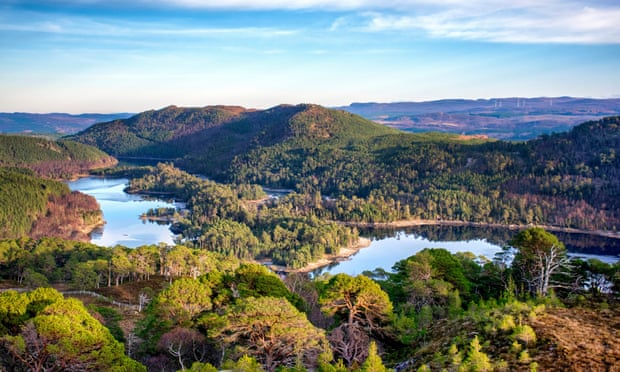
A large swathe of the Scottish Highlands stretching between the west coast and Loch Ness is to be rewilded as part of a 30-year project to restore nature.

The Affric Highlands initiative aims to increase connected habitats and species diversity over an area of 200,000 hectares (500,000 acres), incorporating Kintail mountain range, and glens Cannich, Moriston and Shiel. Plans include planting trees, enhancing river corridors, restoring peat bogs and creating nature-friendly farming practices.

The project has been launched after two years of conversations and meetings between local communities and conservationists from rewilding charity Trees for Life. Similar to the WildEast project in East Anglia, it is a community-led effort to restore nature over a large area, which organisers hope will be a catalyst for social and economic regeneration.

“This was once a much more peopled landscape that was rich with wildlife and we think we can find new ways to establish that connection again, today,” said Alan McDonnell, a conservation manager at Trees for Life, and the project leader. “The idea of doing it at scale is that you get a much bigger natural response because you’ve got room for change and dynamism in that landscape.”

The Affric Highlands initiative is located west of the Cairngorms Connect project, which is one of the UK’s largest land restoration projects at 60,000 hectares. In terms of total area, it is three times the size of Cairngorms Connect but at present only a quarter of the Affric Highlands area is managed by people who have signed up, including farmers, landowners and fishers. McDonnell hopes more will get involved once the project has launched.

One of the challenges has been bringing together people reliant on traditional land management practices to work on large-scale landscape restoration. McDonnell has had meetings with around 50 local stakeholders and has been working with a psychologist to help him communicate with people who might feel sceptical, and to allay the fears of damage to livelihoods that have accompanied other rewilding projects in the UK.

“Rewilding is a word that people define differently. For some people, it’s wolves and bears. For Trees for Life, it’s about the land, and what it can support,” he said. “We’re primarily motivated by the nature that will come with that, but that’s not to say that we don’t value everything that comes with it, so whether it’s opportunities for businesses and job creation, or natural capital and the ability to monetise that, there are a lot of ways we can use land better and increase what it can offer.”

Native wildlife set to benefit includes a range of river species such as salmon, trout, ospreys and otters, as well as montane species such as golden eagles, red grouse, short-eared owls and mountain hares.
The mountain hare (Lepus timidus) is one of the species set to benefit from the rewilding project. Photograph: Mark Hamblin

Rewilding Europe helped fund the work with a £30,000 grant and it will be the organisation’s first UK project, one of nine across the continent. Other projects include Romania’s southern Carpathians, Croatia’s Velebit mountains, Italy’s central Apennines and Bulgaria’s Rhodope mountains.

A £200,000 grant from the Esmée Fairbairn Foundation will help fund a two-year development period, during which time McDonnell will be recruiting three people to work on the project full-time. Practical work on the ground is set to begin in 2023.

Trees for Life has already established 2 million trees as part of the restoration of the Caledonian Forest. In 2022, the charity expects to open its rewilding centre on the 4,000-hectare (10,000-acre) Dundreggan estate. The centre will have 40-bed accommodation, events spaces, classrooms and a cafe.

McDonnell said: “In 10 years’ time I would hope to see some significant changes happening … in particular I would love there to be more riverbank woodlands, which would increase insect life, help fish species and support richer river ecosystems. That might mean fencing off part of a landowner’s riverbank, planting trees, or allowing natural regeneration.”

The project also aims to help individuals get funding from government and other sources for green initiatives on their land, so people who sign up to it can financially benefit.

Frans Schepers, managing director of Rewilding Europe, said: “Our decision to accept the project as our ninth rewilding area reflects the hard work and achievements of Trees for Life, its volunteers and its partners. Including Affric Highlands in our portfolio of major European rewilding areas will help magnify rewilding’s impact in the Highlands, and put it firmly on the global map.”

O campo é o teu templo

Jon Joanis

O campo é o teu templo

Acordar cedo, fixar-se em tarefas múltiplas
Esterco e higiene e suor misturam-se
Há ruína e generosidade da Natureza
São fractais
Caminhar descalço num prado
Ou andando vagarosamente pelo campo lavrado
O chilrear e os pássaros procuram as sementes
O agricultor preocupa-se e esculpe espantalhos e redes
A resiliência é dos dois: o agricultor e o campo
O solo belo é o suporte e segredo de melhores culturas
O clima, malvado ou abençoado
Sempre inquieta o agricultor
Vozes anoitecidas
Do lobo e da coruja
O mato, tão vazio de gente
no lugar dos bichos
O campo é o teu templo

João Soares, 16/09/2021

quinta-feira, 23 de setembro de 2021

Em vésperas de eleições autárquicas, inquérito da Quercus mostra que os municípios portugueses estão longe dos seus compromissos climáticos


Um inquérito promovido pela Quercus junto dos Municípios que se comprometeram publicamente a reduzir emissões ou a adaptar o seu território aos impactos das alterações climáticas, revela que a ação está bastante longe das promessas. Os discursos de campanha eleitoral para as Autárquicas demonstram também um alheamento geral em relação à necessidade de ação climática local e emergência de adaptação dos territórios aos impactos das alterações climáticas.

O Pacto de Autarcas para o Clima e Energia
A Comissão Europeia lançou, em 2008, o Pacto de Autarcas para o Clima e Energia, uma iniciativa de adesão voluntária por parte dos municípios europeus no sentido de assumirem a meta de reduzir pelo menos em 20% as emissões de carbono e para elaborar um plano de ação. Posteriormente, em 2014 a iniciativa “Mayors Adapt” promovia a adaptação dos territórios aos impactos das alterações climáticas. Finalmente, em 2015, houve uma fusão das duas iniciativas, tendo-se estabelecido como meta para 2030 a redução das emissões de dióxido de carbono para 40%. Dos 308 municípios existentes em Portugal, até agora 165 municípios aderiram ao Pacto de Autarcas, mas, infelizmente nem todos os signatários submeteram um plano de ação ou apresentaram provas de execução das medidas. Por outro lado, falta também que os municípios alinhem as suas metas climáticas com a ambição europeia de reduzir as emissões em 55% até 2030.

Inquérito aos municípios que subscreveram o Pacto
No âmbito do inquérito realizado pela Quercus aos municípios subscritores (2), para o qual foram contactados todos os municípios portugueses, apenas 86 responderam, ou seja, cerca de 52% do total dos inquiridos, apesar das várias recordatórias enviadas. Os principais resultados encontram-se nos slides e gráficos em anexo, que também comparam o grupo total dos signatários com o grupo que efetivamente respondeu ao inquérito, tendo em conta vários aspetos como a data de adesão, a dimensão do município, o compromisso a que aderiu, etc.

Falhas no sistema e falta de um acompanhamento sério por parte dos municípios
Comparando as respostas com os dados disponíveis no portal oficial do Pacto de Autarcas, foi possível verificar diversas incongruências. Em alguns casos, poderá tratar-se de um atraso na atualização de informação dentro do portal (por exemplo, sobre o cumprimento dos prazos de entrega de documentos dos Municípios, ou a suspensão dos mesmos, etc) embora se verifique que há muitos municípios com atrasos significativos na entrega de relatórios, planos ou outros documentos. Porém, noutros casos, é evidente que essas incongruências partem dos municípios, tais como:

– alguns municípios disseram não ter enviado qualquer Plano de Ação, quando é possível descarregar o seu plano no portal;
– 27 municípios responderam que tinham um compromisso diferente do indicado no portal;
– 11 municípios afirmam estarem alinhados apenas com a meta para 2020, quando no website aparecem como comprometidos com a meta para 2030 (na maior parte dos casos, tendo esses municípios aderido à iniciativa depois de 2015, nem seria possível terem aderido ao compromisso de 2020);
– 15 dos municípios que afirmaram não ter enviado nenhum Plano de Ação, têm na sua página do website a data da submissão do seu plano, e até, na maior parte dos casos, o próprio documento disponível para descarregamento;
– 13 municípios afirmam não ter enviado relatório, quando no portal é indicado que a sua atividade se encontra monitorizada;

Todas estas incongruências revelam que em muitos casos quem respondeu ao inquérito não está por dentro do assunto, seja por não haver um responsável para coordenar o processo; por o mesmo não estar a ser acompanhado de forma consistente, ou por ter sido até abandonado.

Execução dos compromissos e dos Planos de Ação
Dos 86 municípios, 53 afirmaram ter enviado um Plano de Ação, dos quais apenas 10 afirmaram ter posto em prática mais de 70% das ações propostas; 5 afirmaram ter posto em prática 50 a 70% das ações e 11 referem ter executado entre 30 e 50% das ações. Apenas 10 municípios afirmam terem enviado mais do que um relatório de monitorização para Bruxelas, os quais não obstante devem ser enviados de 2 em 2 anos.

Dificuldades sentidas pelos municípios
A falta de recursos humanos foi a principal dificuldade encontrada pelos Municípios, seguida de deficiências na recolha de dados necessários e, em terceiro lugar, da falta de financiamento. No que se refere ao impacto da pandemia, 30 municípios referiram que a mesma dificultou o processo, ou porque colocou o Pacto para segundo plano ou porque impossibilitou a realização de atividades.

A 26ª Conferência do Clima e o papel dos governos locais
“Juntos pelo Nosso Planeta” é o mote da 26ª Conferência das Partes da Convenção-Quadro das Nações Unidas sobre Alterações Climáticas, que se realizará de 31 de outubro a 12 de novembro em Glasgow, Escócia (3). “Trabalhar juntos para produzir resultados” é um dos 4 objetivos principais do encontro, pelo que para a Quercus também os municípios devem assumir que podem ser parceiros essenciais no combate às alterações climáticas, como fez a Associação de Governos Locais inglesa (4). Os municípios estão bem colocados para transformar as ambições climáticas em ação concreta no terreno, dado que contribuem em larga medida para a definição do território, das infraestruturas, do funcionamento dos transportes, da conectividade e dos serviços. Têm impacto nas compras públicas, detêm ou gerem terrenos, infraestruturas, edifícios de habitação e outros; e têm também um papel essencial de convocadores de parcerias e de comunicação entre partes e com o público.

Declaração de Glasgow Clima e Alimentação
A Quercus, no âmbito da sua participação na Rede Alimentar Cidades Sustentáveis, tem colaborado ativamente na divulgação da Declaração de Glasgow Alimentação e Clima (5), um compromisso feito pelos governos locais para dar resposta à emergência climática através de políticas alimentares integradas, incitando os governos nacionais a agir. Até agora aderiram apenas os municípios de Maia, Mértola, Montemor-o-Novo, Torres Vedras e a Região de Coimbra.

ANEXO: Apresentação dos principais resultados da análise dos dados disponíveis no portal https://pactodeautarcas.eu relativos aos municípios portugueses signatários e das respostas recolhidas no inquérito realizado junto dos mesmos.

Ailton Krenak - Não se come dinheiro


Quando falo de humanidade não estou falando só Homo sapiens, me refiro a uma imensidão de seres que nós excluímos desde sempre: caçamos a baleia, tiramos barbatanas de tubarão, matamos leão e o penduramos na parede para mostrar que somos mais bravos que ele. Além da matança de todos os outros humanos que nós achamos que não tinham nada, que estavam aí só para nos suprir com roupa, comida, abrigo. Somos a praga do planeta, uma espécie de ameba gigante. Ao longo da história, os humanos, aliás, esse clube exclusivo da humanidade - que está na declaração universal dos direitos humanos e nos protocolos das instituições -, foram devastando tudo ao seu redor. É como se tivessem elegido uma casta, a humanidade, e todos que estão fora dela são as sub-humanidades. Não são só os caiçaras, quilombolas e povos indígenas, mas toda vida que deliberadamente largamos à margem do caminho. E o caminho é o progresso: essa ideia prospectiva de que estamos indo para algum lugar. Há um horizonte, estamos indo para lá, e vamos largando no percurso tudo o que não interessa, o que sobra, a sub-humanidade - alguns de nós fazemos parte dela.

É incrível que esse vírus que está aí agora esteja atingindo só as pessoas. Foi uma manobra fantástica do organismo da Terra dizer: "Respirem agora, eu quero ver." Estamos sendo lembrados de que somos tão vulneráveis que, se cortarem nosso ar por alguns minutos, nós morremos. Não é preciso nenhum sistema bélico complexo para apagar essa tal humanidade: se extingue com a mesma facilidade que os mosquitos de uma sala depois de aplicado um aerossol. Nós não estamos com nada: essa é a declaração da Terra.
E, se nós não estamos com nada, deveríamos ter contato com a experiência de estar vivos para além dos aparatos tecnológicos que podemos inventar. A ideia da economia, por exemplo, essa coisa invisível a não ser por aquele emblema de cifrão. Pode ser uma ficção afirmar que se a economia não estiver funcionando plenamente nós morremos. Nós poderíamos colocar todos os dirigentes do banco central em um cofre gigante e deixá-los vivendo lá, qual economia deles. Ninguém come dinheiro.

Hoje de manhã eu vi um indígena norte-americano do conselho dos anciãos do povo lakota falar sobre o coronavírus. É um homem de uns setenta e poucos anos chamado Wakya Um Manee, também conhecido como Vernon Foster. (Vernon, que é um típico nome americano, pois quando os colonos chegaram na América, além de proibirem as línguas nativas, mudavam os nomes das pessoas.) Pois, repetindo as palavras de um ancestral, ele dizia: "quando o último peixe estiver nas águas e a última árvore for removida da Terra, só então o homem perceberá que ele não é capaz de comer seu dinheiro".

Ailton Krenak
Não se come dinheiro. In: A vida não é útil. 
SP: Companhia das Letras, 2020.